Prime Day Laptop Strategy: Where to Find Actual Value Amidst Rising Hardware Costs
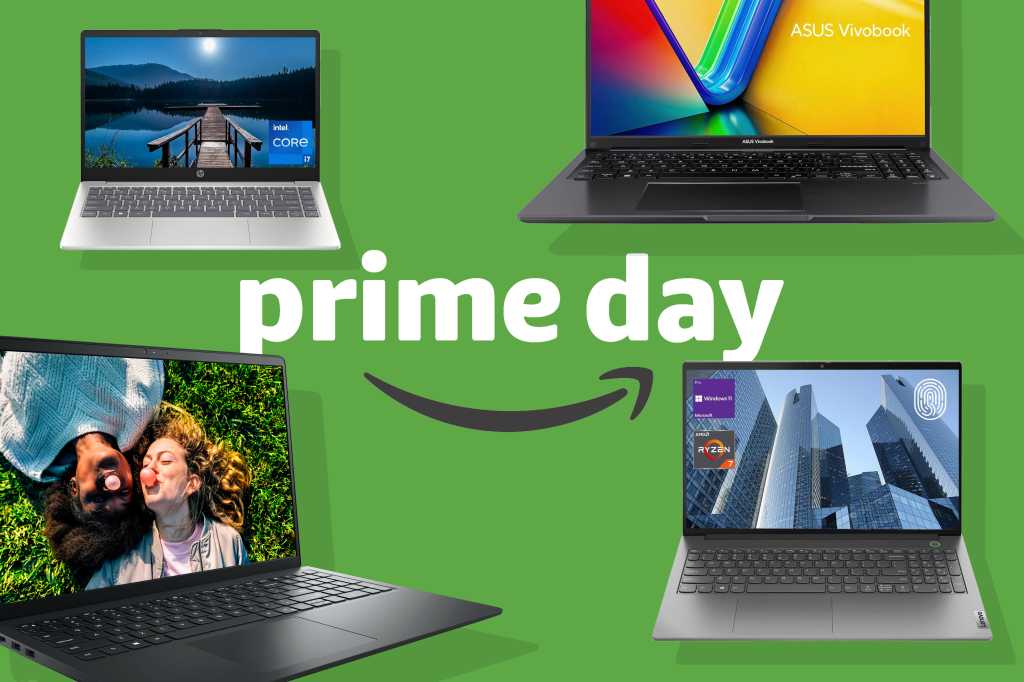
Table of Contents
The High Cost of Memory and the Prime Day Opportunity
For the better part of the last year, the laptop market has felt increasingly prohibitive. A combination of supply chain shifts and the rising cost of high-density RAM has pushed the floor price of “capable” notebooks higher than we’ve seen in a decade. For the average consumer, the gap between a machine that merely functions and one that feels snappy is widening.
Amazon Prime Day (running June 23 to June 26) presents a rare window to bridge that gap. However, the challenge in a modern sales event isn’t finding a discount—it’s finding a discount that isn’t manufactured. With dynamic pricing and fluctuating MSRPs, the real goal is identifying hardware that offers a genuine leap in performance-per-dollar.
The Efficiency Play: Microsoft Surface Laptop
The most significant shift in the laptop landscape is the arrival of ARM-based Windows machines. The Surface Laptop, powered by the Snapdragon X Elite, represents a departure from the traditional trade-off between power and portability. Weighing in at 3.7 pounds, it manages to hit a sweet spot for professional use while boasting a 15-inch PixelSense touch display.
The real draw here is the endurance. Microsoft claims up to 20 hours of battery life, a figure that puts the X Elite chip in direct competition with Apple’s M-series silicon. Paired with 16GB of RAM—now the baseline for any machine intended to last more than two years—this unit is currently positioned at $1,165, making it a compelling choice for those who prioritize mobility over raw gaming power.
High-Performance Gaming: Balancing Heat and Hertz
In the gaming sector, the divide between “entry-level” and “enthusiast” is stark. The Acer Predator Helios Neo 16 AI targets the latter, utilizing an RTX 5070 Ti GPU and an Intel Core Ultra 9 275HX. At $1,599.99, it is a heavy-duty machine, weighing six pounds. This bulk is a technical necessity; the thermal overhead required to keep a 1440p gaming experience stable is significant.
For those who cannot justify a $1,600 spend, the Asus TUF Gaming F16 offers a more grounded alternative. By pairing an Intel Core 5 210H with an RTX 4050, it delivers a reliable 1080p experience. The key to maximizing this machine’s lifespan is leveraging Nvidia’s DLSS upscaling, which allows the hardware to punch above its weight class in demanding titles without requiring a total hardware overhaul.
The “Just Enough” Category: Budget and ChromeOS
There is a growing market for what we call “just enough” computing—machines designed for browser-based workflows, streaming, and light productivity. The Asus Vivobook Go, powered by the AMD Ryzen 5 7520U, fits this profile perfectly, often dipping under the $400 mark. It isn’t built for creative suites, but for a student or a casual user, it provides the necessary stability without the cost of overkill specs.
Similarly, the Lenovo Chromebook Plus is an attempt to move ChromeOS away from the “cheap plastic” reputation of early Chromebooks. With an Intel Core 3 N355 and 8GB of RAM, the Plus designation ensures that the device can handle multi-tabbed browsing and Discord without the stuttering common in entry-level ARM Chromebooks. At $469.99, it serves as a low-maintenance portal for those who live almost entirely in the cloud.
Verifying the Deal: The Anti-Hype Toolkit
The biggest risk during Prime Day is the “fake discount,” where a price is raised weeks before the event only to be “slashed” during the sale. To combat this, seasoned buyers utilize tools like CamelCamelCamel. By inputting the Amazon Standard Identification Number (ASIN), users can view a historical price graph to see if the current “deal” is actually a yearly low or simply a return to the average price.
When auditing specs, the 8GB RAM threshold is the most critical metric. While some manufacturers still push 8GB as sufficient, the reality of modern browser memory leaks and background OS processes means that 16GB is the actual functional minimum for a smooth experience. If you are venturing into video editing or heavy data sets, 32GB is no longer a luxury—it’s a requirement.