Insta360 Luna Ultra attempts to bridge the gap between vlogging cameras and cinema rigs
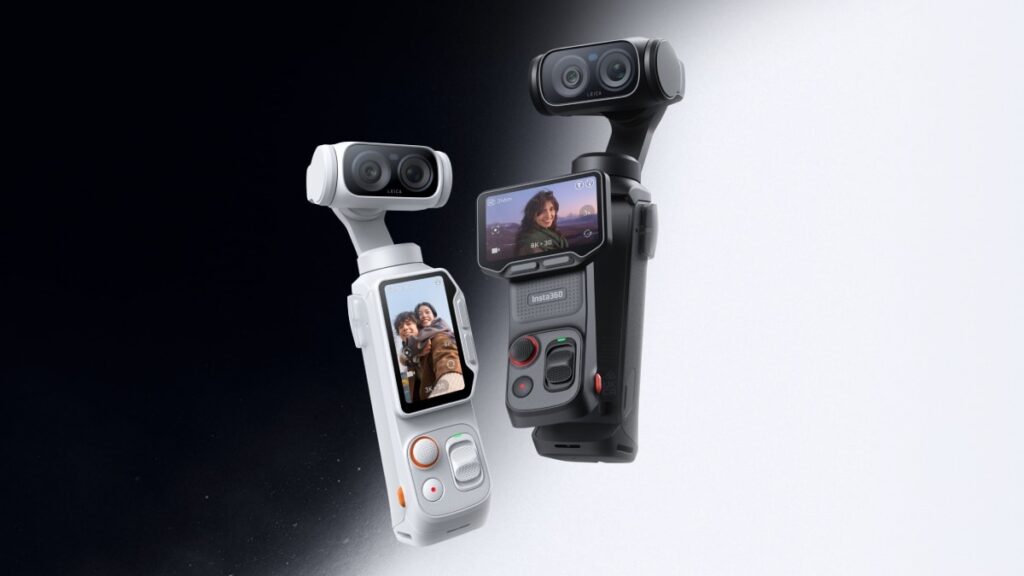
Table of Contents
A dedicated pivot toward high-end optics
Insta360 has long been known for pushing the boundaries of unconventional form factors—from the 360-degree spheres of the X series to the rugged invisibility of the GO series. However, with the unveiling of the Luna Ultra, the company is making a calculated move toward traditional, high-fidelity cinematography. By partnering with Leica, Insta360 isn’t just adding a brand name to the chassis; they are attempting to solve the perpetual compromise between stabilization and image quality.
The Luna Ultra is built around a three-axis gimbal system that integrates directly into the camera body, eliminating the need for bulky external stabilizers that often plague professional vlogging setups. The mechanical precision here is notable: the system supports a maximum control speed of 210 degrees per second with a stabilization accuracy of ±0.005 degrees. For the end user, this means the jittery, electronic-looking warp often seen in hypersmoothing software is replaced by the fluid, organic motion of a physical gimbal.
The Leica glass advantage
The core of the Luna Ultra’s imaging pipeline is a dual-lens array. The primary camera utilizes a Leica Summicron lens paired with a 1-inch sensor, featuring an f/1.8 aperture and a 20mm-equivalent focal length. This wide-angle setup is designed to capture the classic ‘vlogger’ perspective while maintaining enough light-gathering capability to handle challenging low-light environments without excessive noise.
Adding more versatility to the kit is a dedicated telephoto camera. Utilizing a 1/1.3-inch sensor with an f/2.0 aperture and a 60mm-equivalent focal length, the Luna Ultra can achieve up to 12x zoom. In a market where digital cropping often destroys image detail, having a dedicated optical telephoto lens allows creators to capture tighter shots without sacrificing the 8K resolution the device is capable of outputting.
Processing power and modularity
To handle the massive data throughput of 8K video and Dolby Vision recording, Insta360 has implemented a triple-chip architecture. The heavy lifting is shared between two dedicated imaging processors and a Qualcomm 4nm AI chip. This AI silicon isn’t just for marketing; it powers the device’s advanced tracking capabilities, allowing the gimbal to lock onto subjects with a level of fluidity that mimics a human camera operator.
One of the most striking design choices is the 2-inch detachable OLED touchscreen. By allowing the screen to be removed or repositioned, Insta360 addresses the awkwardness of monitoring a shot when the camera is mounted on an extended pole or used in tight spaces. It transforms the device from a standard handheld camera into a more flexible tool for solo creators who need to monitor their framing without a secondary crew member.
Pricing and availability
The Luna Ultra enters the market with two distinct tiers. The Standard Bundle is priced at $769.99, which includes the core unit, a protective cover, and a wrist strap. For those looking for a more complete production kit, the Creator Bundle is available for $969.99. This higher tier adds a Battery Handle—critical for extending the native 240-minute battery life—alongside a Mic Pro Transmitter and a Wide-Angle Lens for even broader perspectives.
Available in Cosmic Black and Stellar White, the Luna Ultra positions itself as a direct competitor to high-end compacts and specialized gimbal cameras. By combining Leica’s optical pedigree with Insta360’s expertise in stabilization, the company is betting that creators are ready to move away from smartphone-centric workflows toward dedicated, high-performance hardware.