Microsoft Returns to the Budget Market, But the 8GB RAM Problem Persists
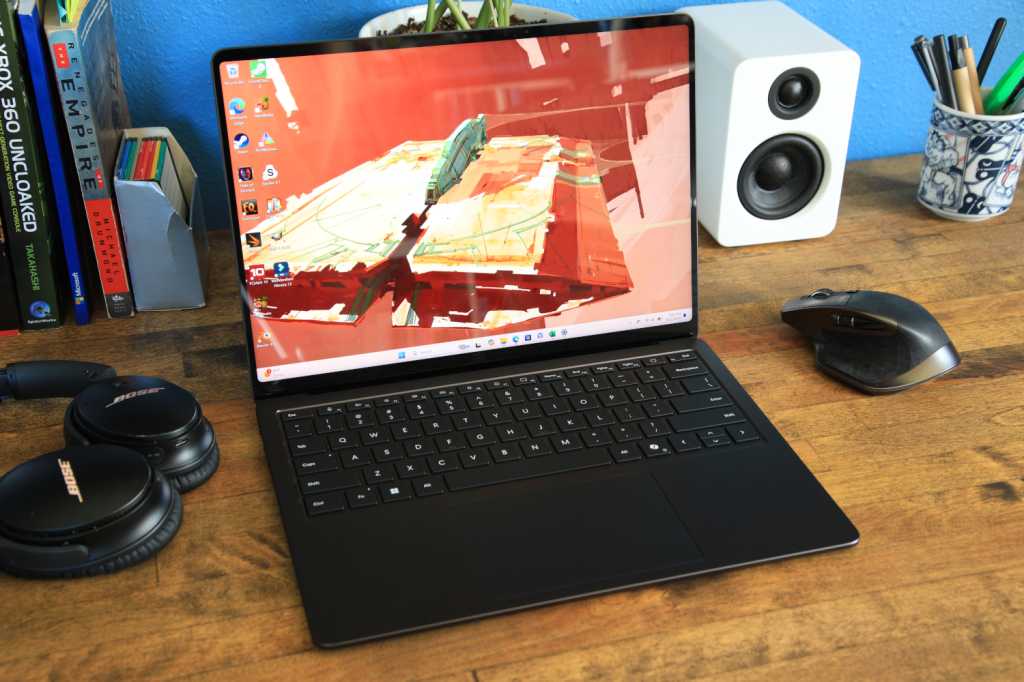
Table of Contents
A Strategic Pivot Toward the Mid-Range
After a period of pushing Surface devices firmly into the luxury and enterprise brackets—where business configurations can easily climb toward the $2,000 mark—Microsoft is making a calculated return to the budget-conscious consumer. The company has quietly introduced a 12-inch Surface Pro and a 13-inch Surface Laptop designed to undercut the $1,000 threshold, effectively attempting to recapture a demographic that has drifted toward more aggressive pricing from competitors like Dell and Apple.
The new Surface Pro 12-inch enters the market at $849, while the Surface Laptop 13-inch starts at $949. According to Brett Ostrum, corporate vice president of Surface devices at Microsoft, this rollout is a deliberate effort to provide a lower entry point for the Surface ecosystem. However, this accessibility comes with a significant technical compromise: the return of the 8GB RAM baseline.
The Memory Crunch in the AI Era
The decision to ship new hardware with 8GB of system memory is a contentious move, particularly as the industry pivots toward AI-driven workloads. While Windows can technically boot on 4GB of RAM, 8GB has increasingly become the floor for basic usability. In a modern multitasking environment, 8GB is quickly consumed by a handful of browser tabs and background system processes, often forcing the OS to rely on “swapping”—moving data to the slower system storage (SSD) when memory is full. This results in the stutters and lag that have plagued budget Windows machines for years.
This hardware choice isn’t happening in a vacuum. Market analysts have noted a tightening of the supply chain for memory and storage, driven in part by the massive demand for high-bandwidth memory used in AI training and inference. Microsoft’s pricing strategy reflects this volatility; Ostrum previously indicated that the company preferred a “step change”—a sharp, sudden price adjustment—rather than incremental increases over time.
ARM Efficiency vs. Windows Overhead
Both budget devices are powered by the first-generation Snapdragon X Plus. By leveraging ARM architecture, Microsoft is attempting to mirror the efficiency gains seen in Apple’s silicon. The goal is to create a device that is “good enough” for the average student or casual user who spends their day in Word, Netflix, and Chrome.
To mitigate the limitations of 8GB of RAM, Microsoft is tweaking how Windows manages resources. A company representative confirmed via email that Microsoft is working to reduce the memory footprint of system elements like Windows Widgets, implementing faster memory reclamation, and limiting the “pre-launch” of applications on low-capacity devices. Essentially, Microsoft is trying to optimize the software to hide the deficiencies of the hardware.
The Apple Comparison
The challenge for Microsoft is that they are fighting for the same customers as the Apple MacBook Neo. While the Neo also ships with 8GB of memory, Apple’s vertical integration—controlling the silicon, the kernel, and the OS—allows for memory compression and management that typically outperforms Windows in low-RAM scenarios. For a consumer, the choice is no longer just about the price tag, but about the perceived “hit” to performance.
While the $849 Surface Pro is a welcome sight for those priced out of the X2 Elite models, the 8GB limitation suggests that Microsoft is prioritizing the price point over long-term future-proofing. In a market where AI features are becoming integrated into the OS itself, 8GB may not just be a budget compromise—it may be a bottleneck.