The Efficiency Gap: Why Portable Air Conditioners Can’t Beat Window Units in Real-World Cooling
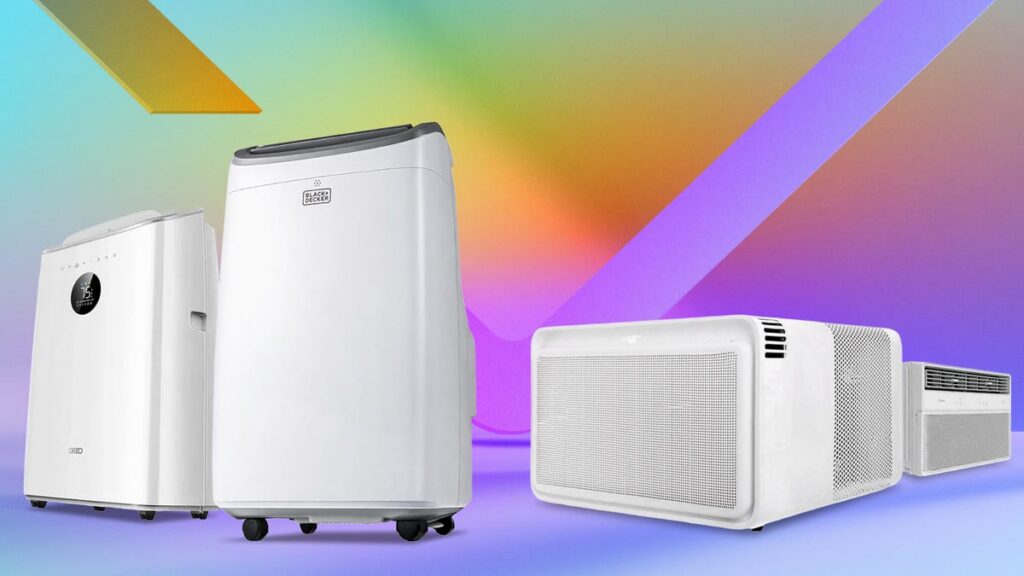
Table of Contents
The Thermodynamic Struggle of the Portable AC
For renters in older urban centers—where central air is a luxury and window frames are unpredictable—the choice between a window AC and a portable unit often comes down to convenience. But as new lab data suggests, that convenience comes with a significant thermodynamic penalty. When pushed to the limit, portable units struggle to maintain the same thermal equilibrium as their window-mounted counterparts, regardless of their advertised power.
The fundamental difference isn’t just about where the machine sits; it’s about how it manages air pressure. A window unit is designed to bifurcate airflow, effectively separating the cold air being pushed into the room from the hot exhaust being dumped outside. Because the heavy machinery and the primary heat exchange occur outside the building’s thermal envelope, the unit focuses almost entirely on recirculating and cooling the interior air.
The ‘Negative Pressure’ Problem
Portable ACs, conversely, operate under a different physical constraint. Because the entire chassis remains inside the room, they must rely on a flexible exhaust hose to vent heat through a window. This creates a phenomenon known as negative air pressure.
According to Bryan Adams, a senior lab engineer and former HVAC configuration manager, this setup essentially forces the room to fight itself. As the portable unit pushes warm air out through the hose, it creates a vacuum in the room. Nature abhors a vacuum, and the resulting pressure imbalance pulls warm, unconditioned air from outside—through gaps in doors, windows, and electrical outlets—back into the living space.
This creates a cycle where the AC is fighting a constant influx of new heat. Furthermore, the exhaust hoses themselves are often poorly insulated, radiating heat back into the very room they are attempting to cool, effectively acting as a small space heater while the cooling coils work at maximum capacity.
Lab Results: BTU Ratings vs. Actual Performance
To quantify this gap, testing was conducted in a controlled environment in Louisville, Kentucky. A room was heated to 90°F, and various units were tasked with bringing that temperature down to a target of 68°F over a 2.5-hour window. The units were split into three cohorts: window units, large portable units (over 8,000 BTU), and small portable units (8,000 BTU or lower).
The results highlighted a startling discrepancy between BTU (British Thermal Unit) ratings and actual cooling speed. The Windmill window unit, rated at 8,000 BTU, emerged as the overall champion, reaching 72°F faster and maintaining a stable range between 65°F and 71°F more consistently than any other device.
The most telling comparison occurred between the 8,000-BTU Windmill and the 14,000-BTU Dreo AC516S, the top-performing large portable unit. On paper, the Dreo has nearly double the cooling capacity. In the initial burst, the Dreo was faster, dropping the room from 90°F to 80°F in just 11 minutes, compared to the Windmill’s 20 minutes. However, as the room approached the target temperature, the window unit’s efficiency took over, reaching 72°F two minutes faster than the much more powerful Dreo.
The Performance Breakdown
| Unit Model | Type | BTU Rating | 90°F to 72°F Time |
|---|---|---|---|
| Windmill | Window | 8,000 | Fastest (Top Performer) |
| Dreo AC516S | Portable (Large) | 14,000 | 52 Minutes |
| Black & Decker BPP08WTB | Portable (Small) | <8,000 | 66 Minutes |
When Convenience Outweighs Physics
Despite the performance deficit, portable units maintain a stronghold in the market due to installation flexibility. They are the only viable option for those with sliding glass doors, non-standard window sizes, or strict lease agreements that forbid modifications to the window frame. They also offer the utility of being moved between rooms, a feat impossible for a window unit.
However, for those prioritizing energy efficiency and raw cooling power, the data is clear: the physical separation of the heat exchange process in window units provides a level of performance that portable hoses simply cannot replicate.