UK Political Chaos Returns: Starmer Resigns, Triggering Leadership Race Amid Digital Governance Crisis
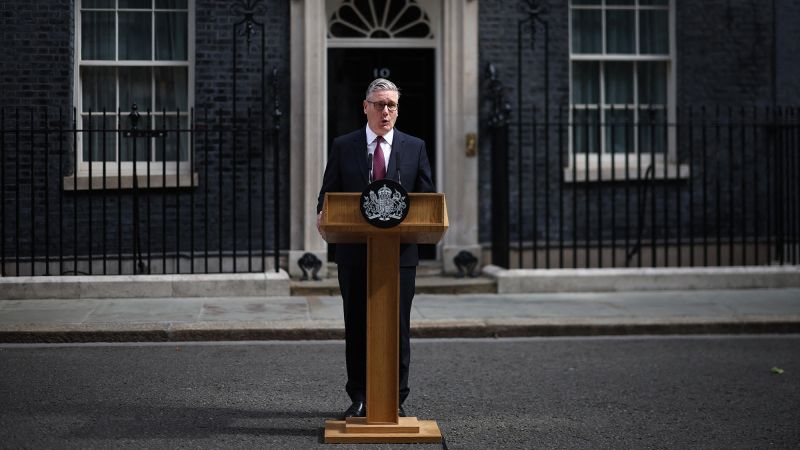
Table of Contents
A Sudden Vacuum at 10 Downing Street
In a move that has sent shockwaves through both Westminster and the City of London, Keir Starmer has announced his resignation as Prime Minister. The announcement comes as a stunning reversal of fortune for the center-left Labour party, which swept into power just two years ago with a mandate for stability and renewal after years of Conservative volatility.
Starmer’s departure marks the sixth British Prime Minister in seven years, a statistic that paints a grim picture of the UK’s current governance. The resignation follows weeks of mounting pressure from within his own party, as internal fractures over economic policy and public service delivery reached a breaking point. While the official statement cited a need for “fresh leadership,” the reality reflects a deeper systemic fragility in British politics that has persisted since the 2016 Brexit referendum.
The Burnham Ascent and the Power Shift
The vacuum is already being filled. Andy Burnham, the former mayor of Greater Manchester, has emerged as the frontrunner to take the helm. Burnham, who was recently sworn in as a lawmaker, is widely seen as the strategic choice to consolidate the party’s base. The momentum behind Burnham was further solidified when former health minister Wes Streeting—another heavy hitter in the Labour camp—publicly backed the Manchester politician and ruled himself out of the race.
For the tech and business communities, Burnham represents a different flavor of leadership than Starmer. His tenure in Manchester was characterized by a push for “devolved digitalism,” focusing on regional tech hubs and smart city infrastructure. However, the transition period—expected to take place over the coming weeks—leaves the UK in a precarious state of policy paralysis.
The Tech Sector’s Stability Anxiety
The primary concern for the UK’s technology sector is not who wins the leadership race, but the sheer frequency of the turnover. The UK has spent the last decade attempting to position itself as a “AI Superpower,” yet this ambition requires long-term regulatory consistency—something the current political climate cannot guarantee.
Industry analysts suggest that this instability directly impacts the UK’s ability to compete with the US and EU in AI regulation. While the US relies on market-driven innovation and the EU on the strictures of the AI Act, the UK has attempted a “pro-innovation” middle ground. However, when the head of government changes every 14 months on average, the risk of “policy whiplash” becomes a significant deterrent for venture capital and multinational tech firms considering London as a base.
Ten Years of Turbulence
The timing of Starmer’s exit is almost poetic in its misfortune, occurring nearly ten years to the day since the Brexit vote. That referendum acted as the catalyst for a decade of instability, stripping the UK of predictable governance and creating a revolving door at Downing Street.
The landslide victory two years ago was supposed to be the end of this cycle. Instead, the rapid collapse of Starmer’s authority suggests that the volatility is no longer just about a specific party or a specific issue like the EU, but is now baked into the operational rhythm of the British state. For the global markets, the UK is increasingly viewed as a high-beta environment where political risk often outweighs the fundamental strength of its tech and financial sectors.
As the Labour party moves to install its seventh leader in a decade, the focus shifts to whether Andy Burnham can provide the permanence required to execute the UK’s digital strategy, or if he will simply become another footnote in a period of unprecedented political churn.