Montreal Police Ambush Linked to 100-Page ‘Incel’ Manifesto
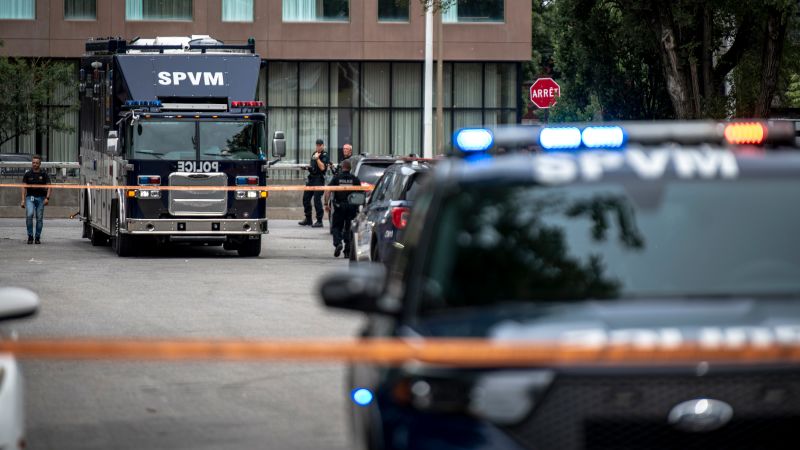
Table of Contents
A Rare Breach of Security in Côte-des-Neiges
The quiet residential atmosphere of Montreal’s Côte-des-Neiges borough was shattered Monday afternoon in what authorities are describing as a calculated ambush. The incident left two people dead, including a police officer, and marked the first time a Montreal officer has been killed in the line of duty in 24 years.
The violence erupted around 11:35 a.m. on Décarie Boulevard. Montreal Police Chief Fady Dagher confirmed that officers were responding to a 911 call reporting gunshots and a firearm protruding from a window when they were met with sudden, lethal fire in the street. The department has identified the fallen officer as 34-year-old Mohamed Lamine Benredouane, who had joined the force in 2021. A second officer was critically injured during the exchange; she has since been stabilized at a local hospital.
The suspect, who was killed during a subsequent shootout with law enforcement, is believed to have acted alone. While the identity of the gunman and the second victim have not yet been released, the investigation has quickly pivoted toward the motive behind the attack.
The Digital Footprint: A 100-Page Manifesto
At the center of the investigation is a document recovered by police that may explain the carnage. Sources within law enforcement indicate the suspect left behind a manifesto exceeding 100 pages. Preliminary analysis suggests the text is steeped in ‘incel’ (involuntary celibate) ideology—a digital subculture often characterized by extreme misogyny and a belief that society is fundamentally rigged against certain men.
This discovery connects the tragedy to a broader, disturbing trend of ideologically motivated violence in Canada. The ‘incel’ framework has previously fueled high-profile atrocities, including the 2018 Toronto van attack that killed 10 people and a 2020 stabbing in which a judge officially designated the crime as an act of terrorism—the first such classification for an incel-motivated crime in the country.
The historical weight of such violence in Montreal is particularly acute. The city remains scarred by the 1989 Montreal massacre at École Polytechnique, where a gunman murdered 14 women in a rampage fueled by the same hatred of feminism and women that characterizes modern incel forums.
A Community in Shock
For residents of Côte-des-Neiges, the attack felt surreal. The borough is one of the city’s most diverse and populous areas, known for its blend of residential pockets and Jewish cultural institutions. For hours, the neighborhood was under a strict shelter-in-place order, with residents locking doors as tactical units and K9 squads stormed buildings to secure the area.
Heidi Doctor, a local resident, described the chaos to CTV Network, recounting how she was on a work call after dropping her child at a hair salon when the perimeter was suddenly swarmed by officers with drawn weapons. “All of a sudden cops come swarming,” Doctor said, adding that she spent hours communicating with her children via phone while they hid in the back of the salon.
The Statistical Anomaly
The brutality of the event stands in stark contrast to Canada’s general safety record compared to its southern neighbor. According to data from Canada’s national statistics body, firearm-related homicides accounted for 38% of total homicides in Canada in 2023, compared to 76% in the United States. This disparity is mirrored in ownership rates; the Small Arms Research project estimates there are roughly 35 guns per 100 residents in Canada, whereas the U.S. sees that number climb to 121.
Despite these statistics, the targeted nature of this attack suggests a shift toward ideological radicalization that bypasses traditional crime patterns. Prime Minister Mark Carney expressed his horror in a post on X, stating his gratitude for the “heroic dedication” of the officers involved. Quebec Premier Christine Fréchette also noted that the incident was “so surprising,” reiterating that Montreal is generally a safe city.
Police have seized a long gun from the scene and continue to process the area for further evidence. The shelter-in-place order has been lifted, but the psychological impact of the ambush lingers as investigators dig deeper into the suspect’s digital life.