Zelensky Returns Poland’s Highest Honor as Historical Row Over WWII Paramilitaries Deepens
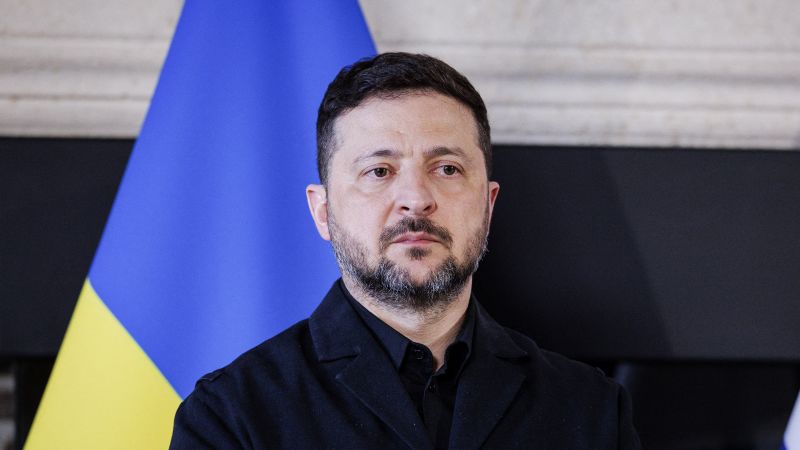
Table of Contents
A Symbolic Fracture in the Alliance
In a sharp escalation of diplomatic tensions, Ukrainian President Volodymyr Zelensky has returned the Order of the White Eagle, Poland’s highest state honor. The move follows a decision by Polish President Karol Nawrocki to strip Zelensky of the award, sparking a volatile row that connects modern military identity with the traumatic legacies of World War II.
The friction centers on a May 26 decree issued by Zelensky, which named a unit of Ukraine’s Special Operations Forces after the Ukrainian Insurgent Army (UPA). While Kyiv views the UPA as a symbol of resistance and the fight for territorial independence, the organization is viewed with horror in Poland. The UPA, which operated in the 1940s and 50s, has been accused of orchestrating massacres of ethnic Poles in the Volhynia and Eastern Galicia regions—acts that the Polish Parliament officially recognized as genocide in 2016.
Zelensky confirmed the return of the honor via a social media post on X, accompanied by a photo of the medal and a postal receipt. “I believe the future will confirm the respect Ukrainians deserve,” Zelensky wrote, asserting that the order was intended for the Ukrainian people and their armed forces rather than him personally.
The Nationalist Pivot in Warsaw
The decision to revoke the honor marks a significant shift in the rhetorical landscape of Polish-Ukrainian relations. The award had been bestowed upon Zelensky in 2023 by former President Andrzej Duda for his leadership in the defense of human rights and regional security. However, the current administration under President Karol Nawrocki has taken a harder line on historical grievances.
Nawrocki, a nationalist politician, used a 13-minute social media address to justify the revocation, stating that for the majority of Polish society, the UPA remains a formation responsible for “cruel crimes.” Analysts suggest that Nawrocki is leveraging anti-Ukrainian sentiment for domestic political gain, coinciding with a rise in prejudice against the millions of Ukrainian refugees who have integrated into the Polish economy since the 2022 invasion.
The ripple effect has extended beyond the presidency. Kyrylo Budanov, chief of the Ukrainian Presidential Office, characterized the revocation as an “unfriendly act” and a “gift to the Moscow aggressor,” arguing that such internal fractures only serve Russian strategic interests by weakening the unity of the Eastern flank.
Internal Dissent and Geopolitical Risks
The reaction within Ukraine has not been monolithic. While four high-ranking officials, including Budanov, announced they would also return their Polish honors in solidarity, some political veterans have cautioned against the move. Former Prime Minister Arseniy Yatsenyuk criticized the decision on X, suggesting that “one harmful and incorrect decision by the current president of Poland cannot be corrected by other incorrect decisions of ours.”
The timing of the dispute is particularly precarious. Poland is scheduled to host a major summit next week focused on Ukraine’s postwar reconstruction, an event Zelensky was expected to attend. The diplomatic frost threatens to cast a shadow over the logistics of reconstruction and military aid coordination.
Polish Prime Minister Donald Tusk, a political rival of Nawrocki, has attempted to dampen the fire. “The front line runs elsewhere,” Tusk wrote, urging both leaders to tone down emotions and avoid stoking tensions that “delight Putin and shock our allies.”
This clash highlights the enduring difficulty of the “politics of memory.” While Poland and Ukraine have recently made tentative progress on the exhumation of war victims, the naming of active military units after controversial historical figures continues to be a trigger for diplomatic crises, proving that the scars of the 1940s remain an active variable in today’s security architecture.