The T-Shirt Ban: How MSG’s Surveillance State Blacklisted a Fan Who Wasn’t Even There
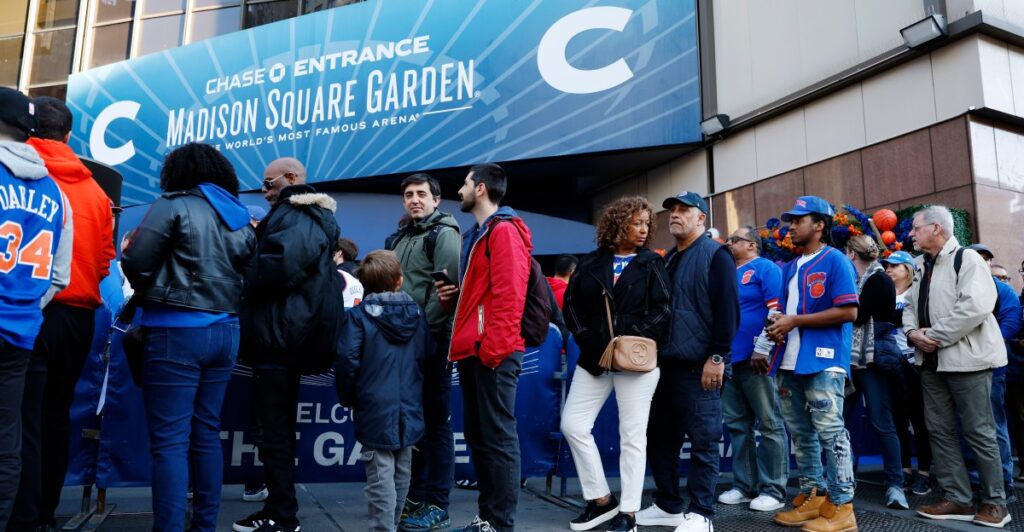
Table of Contents
A Digital Door Slam
For Frank Miller, a trip to Radio City Music Hall was meant to be a celebration of his parents’ wedding anniversary. Instead, it became a firsthand lesson in the reach of modern corporate surveillance. Before he could even clear security, Miller was intercepted by staff and informed that he was banned for life—not just from the hall, but from every property owned by Madison Square Garden (MSG) Entertainment, including the Sphere in Las Vegas and the Beacon Theatre.
The reason for the ban is as surreal as it is specific: a T-shirt design from years ago. Miller, a graphic designer based in Seattle, had created a shirt featuring a riff on the 1990s New York Knicks logo that read “Ban Dolan.” The shirt was a satirical nod to the infamous 2017 scuffle between Knicks legend Charles Oakley and MSG CEO James Dolan.
Here is the caveat: Miller says he hasn’t stepped foot in an MSG venue in nearly two decades. He didn’t wear the shirt to the event. In fact, he hadn’t worn it to any MSG event ever. The only connection between Miller and the physical premises of the Garden was a social media tag from a friend who had been kicked out of a Knicks game in 2021 for wearing the design.
The Invisible Filter
The mechanics of how Miller was identified remain opaque, as MSG Entertainment has declined to explicitly confirm the use of facial recognition in this specific instance. However, the pattern of behavior from the organization suggests a sophisticated biometric dragnet. Miller describes a process that felt less like a random security check and more like a targeted hit: after scanning his digital ticket, the line was stopped, he was pulled aside for ID verification, and he was escorted to a separate entrance by a phalanx of five staff members to be served with a trespass notice.
This is not an isolated incident of high-tech pettiness. In 2022, a New Jersey attorney was denied entry to Radio City Music Hall during a trip with a Girl Scout troop. She discovered she was on an “attorney exclusion list” because her firm was involved in litigation against MSG. Like Miller, she was identified via facial recognition technology, turning a public venue into a filtered environment where entry is contingent on your relationship with the ownership.
Corporate Conduct vs. Digital Rights
When pressed for a response, MSG Entertainment did not deny the ban but framed it as a matter of conduct. Mikyl Cordova, executive vice president of communications and marketing, stated in an email that Miller had “made threats against an MSG executive on social media and produced and sold merchandise that was offensive in nature.” According to the company, this behavior violated their code of conduct.
But this framing obscures the technical reality of the situation. The transition from “offensive merchandise” to “lifetime biometric ban” represents a significant escalation in how private companies police their spaces. By synthesizing social media data with real-time camera feeds, MSG has created a functional panopticon where a digital footprint—specifically a tag in a post from years prior—can trigger a real-world lockout.
The New Baseline of Public Spaces
Miller’s experience highlights a growing trend where the “terms of service” for entering a physical building now include the surrender of biometric anonymity. While these systems are almost always marketed under the guise of safety and security, the application in the MSG case appears purely retaliatory.
For the average consumer, the implication is clear: the data you generate online is no longer siloed from your physical movements. A meme, a design, or a professional affiliation can now be converted into a digital “blacklist” that triggers automatically at a turnstile. As Miller noted, the surveillance state is often framed as a safety measure, but in practice, it can be used as a tool for corporate deterrence and personal vendettas.
Miller did not receive a refund for his ticket, and his parents’ anniversary was marred by the scene in the lobby. For now, he has no plans to appeal the ban, viewing his situation as a cautionary tale about the invisible infrastructure now governing the modern city.