Epson Floods Indian Market With 15 New EcoTank Printers: A Strategic Pivot Toward Low-Cost Ownership
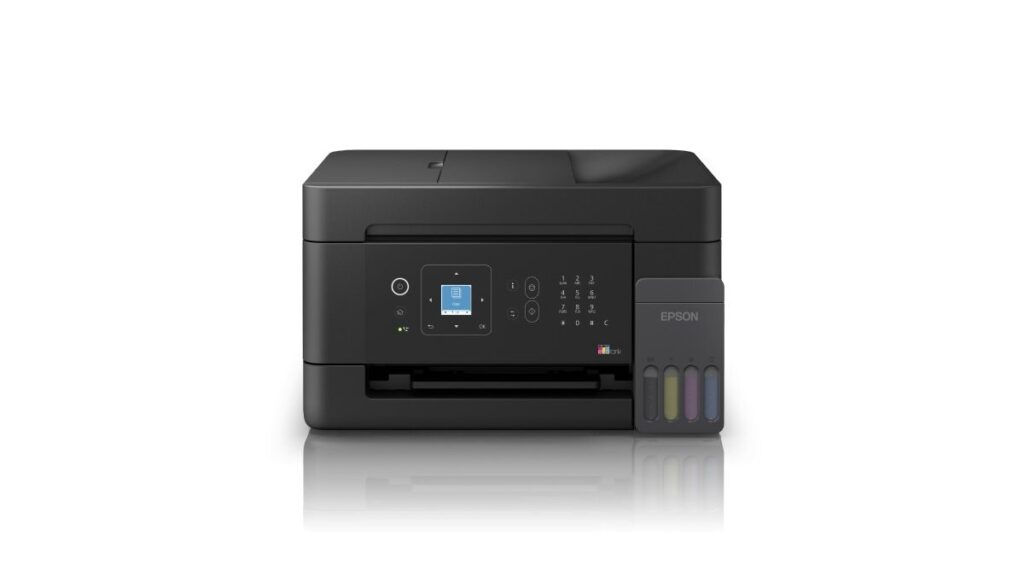
Table of Contents
The Ink Cartridge Era is Dying in India
For years, the home printing experience in India was defined by the ‘razor-and-blade’ model: cheap hardware sold at a loss, followed by exorbitantly expensive replacement cartridges that often cost as much as the printer itself. Epson India is attempting to decisively end this cycle by flooding the market with 15 new EcoTank models, ranging from the entry-level L1350 to the more robust L5390.
This isn’t just a product refresh; it is a calculated move to capture a diverse set of user segments—from students in Tier 2 cities to small-scale corporate offices—who are increasingly weary of the hidden costs of traditional inkjet printing. By shifting the focus to high-capacity ink tanks, Epson is betting that the higher upfront cost of these machines (starting at ₹13,999) will be offset by the drastically lower cost per page.
- Massive Scale: 15 new models launched simultaneously to cover every possible user need from basic printing to full-featured office hubs.
- Cost Shift: Higher initial investment (₹13,999 – ₹24,999) but significantly lower long-term operational costs via ink tanks.
- Hardware Maturity: Introduction of user-replaceable maintenance boxes reduces downtime and the need for professional servicing.
- Performance: Standardized speeds of 11ipm (B&W) and 6ipm (Color), focusing on reliability over raw velocity.
Breaking Down the Lineup: Which Model Fits Which User?
Launching 15 models at once can be overwhelming for the consumer. However, when you strip away the model numbers, the lineup falls into three distinct categories based on functionality and target audience.
The Minimalists: L1350 and Entry-Level Series
The L1350 targets the “light user.” These are individuals who may only print a few documents a week but want the security of not running out of ink during a project. These models prioritize a compact footprint and basic connectivity, removing the clutter of scanners and fax machines to keep the price point closer to the ₹13,999 mark.
The All-Rounders: L3300 Series (L3310 through L3366)
The bulk of the expansion lies in the L3300 series. These are the quintessential “home office” machines. They combine printing, scanning, and copying. The variation in model numbers (L3310, L3311, etc.) often relates to regional distribution channels or slight variations in bundled software and connectivity options. For the average user, the L3360 stands out due to the inclusion of a 1.44-inch color LCD panel, which transforms the user experience from guesswork to visual confirmation.
The Power Users: The L5390
At the top of the pyramid sits the L5390. This is where Epson moves from “gadget” to “infrastructure.” Including fax capabilities and more advanced connectivity, this model is designed for small businesses that require an all-in-one hub but cannot justify the massive energy footprint of a laser printer. Its pricing, peaking at ₹24,999, reflects its role as a productivity tool rather than a simple peripheral.
The Technical Pivot: The Maintenance Box Revolution
One of the most overlooked but critical updates in this rollout is the user-replaceable Maintenance Box. To understand why this matters, one must understand how inkjet printers actually work. Over time, waste ink from head-cleaning cycles collects in an internal absorbent pad. In older models, once this pad was full, the printer would enter a “service required” lock, necessitating a trip to an authorized service center.
By making this box user-replaceable, Epson is addressing one of the biggest pain points in the ownership experience. It transforms a potentially fatal hardware error into a simple consumer purchase, extending the lifespan of the machine and reducing the total cost of ownership (TCO) over a five-year period.
Comparing Performance: Is 11ipm Enough?
In the world of professional printing, 11 images per minute (ipm) for monochrome and 6ipm for color is modest. For comparison, high-end laser printers can hit 30-40 pages per minute. However, for the target demographic of the EcoTank series, speed is secondary to cost.
| Metric | EcoTank New Series | Traditional Inkjet | Entry-Level Laser |
|---|---|---|---|
| Speed (B&W) | 11 ipm | 8-12 ipm | 20+ ppm |
| Ink Cost | Very Low (Bottles) | High (Cartridges) | Moderate (Toner) |
| Maintenance | User-Replaceable | Service Center | User-Replaceable |
| Initial Price | Medium to High | Low | Medium |
The reality is that for a student printing a 20-page essay or a small business owner printing invoices, the difference between 11ipm and 20ppm is negligible compared to the psychological relief of not worrying about ink levels.
What This Means for the Indian Consumer
The expansion of the EcoTank portfolio signals a maturity in the Indian tech market. Consumers are no longer lured by the ₹5,000 “cheap” printer that eventually costs ₹15,000 in ink over two years. There is a growing preference for transparent pricing.
For the student, it means a one-time investment that lasts throughout their degree. For the small business, it means predictable overhead. This move also puts pressure on competitors like HP and Canon to further refine their own ink-tank offerings (like the HP Smart Tank or Canon PIXMA G-series) to maintain market share in a region where price sensitivity is the primary driver of hardware adoption.
Addressing the Nuances: Facts vs. Speculation
It is a fact that Epson has released 15 models with a price ceiling of ₹24,999. However, it is important to distinguish between the advertised speeds and real-world performance. The “11ipm” figure is typically achieved under ideal conditions using specific draft settings. In high-quality photo printing, these speeds will drop significantly.
Furthermore, while Epson claims a “refreshed compact design,” this is largely a matter of aesthetics and internal component optimization. Users should not expect a radical departure in physical size from the previous generation of EcoTanks; rather, the focus is on making the machines fit more naturally into modern, smaller home-office setups.
Common Questions About the New EcoTank Series
Will these printers clog if I don’t use them for a month?
Ink-tank printers are susceptible to print-head clogging if left idle for long periods. To prevent this, it is recommended to print at least one color page every two weeks. The new maintenance box helps manage the cleaning cycles, but regular use remains the best preventative measure.
How do the ink bottles work compared to cartridges?
Instead of replacing a plastic housing with a small amount of ink, you pour ink from a high-capacity bottle into a reservoir. This reduces plastic waste by up to 90% and significantly lowers the cost per page.
Is the L5390 worth the extra money over the L3360?
If you require fax capabilities or higher-volume document handling, the L5390 is a justified investment. For 90% of home users, the L3360 with its LCD panel provides the best balance of utility and value.
Are these printers compatible with Mac and Windows?
Yes, the entire new range is designed for cross-platform compatibility, supporting standard USB and wireless printing protocols common to both macOS and Windows environments.
What is the actual cost per page?
While Epson does not provide a fixed figure due to varying ink usage, ink-tank printers typically reduce printing costs by 70-80% compared to traditional cartridge-based systems.
Final Technical Verdict
Epson’s strategy in India is clear: saturation. By offering a model for every possible price point and feature set, they are attempting to make the EcoTank the default choice for the Indian household. While the printing speeds are not industry-leading, the shift toward user-serviceable parts like the maintenance box and the move away from expensive cartridges makes this lineup a pragmatic choice for a value-conscious market.