US and Iran Sign Memorandum of Understanding: Analyzing the 60-Day Window for Peace
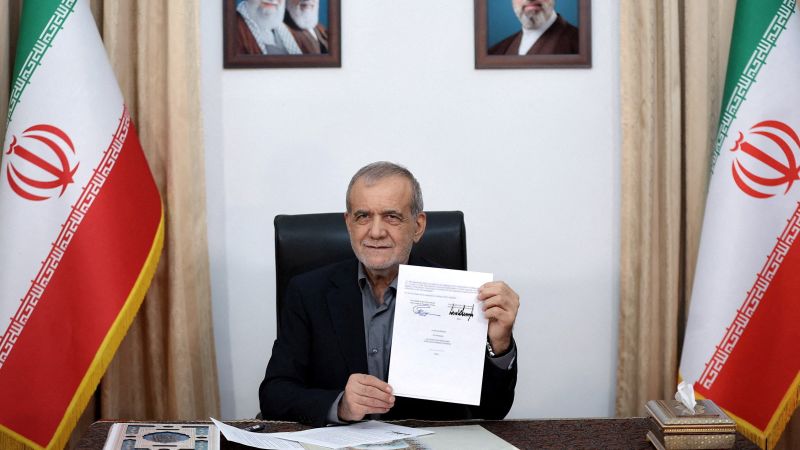
Table of Contents
A Fragile Truce: The Mechanics of the US-Iran Memorandum of Understanding
The United States and the Islamic Republic of Iran have officially entered a high-stakes diplomatic window following the signing of a Memorandum of Understanding (MOU) aimed at terminating the ongoing conflict. This agreement does not represent a final peace treaty but rather functions as a foundational framework, initiating a 60-day period of intense technical negotiations to finalize a comprehensive deal.
- The 60-Day Clock: The MOU establishes a strict two-month timeframe for negotiators to move from a preliminary understanding to a binding final agreement.
- Fragile Diplomacy: Despite the signing, Iran’s Supreme Leader maintains a “different view” of the conflict, and the National Security Council has cautioned of a “reciprocal response” to any US violation.
- Strategic Friction: Tensions are mounting between the White House and Israeli officials, with VP JD Vance defending the US approach against Israeli critiques.
- Uncertain Logistics: Technical talks were scheduled for the weekend, though VP JD Vance’s immediate travel to Switzerland has been delayed due to unresolved logistics.
The shift toward diplomacy comes after a period of intense volatility. President Donald Trump has framed the MOU as a victory, describing it in terms of “unconditional surrender,” though this characterization has drawn skepticism from both domestic political rivals and international allies. The reality on the ground suggests a more complex, transactional arrangement where both sides are hedging their bets.
The Diplomatic Framework: What is an MOU in This Context?
In international diplomacy, a Memorandum of Understanding (MOU) is a document that outlines an agreement between two or more parties. While it is not always legally binding in the same way as a formal treaty, it signals a serious intent to move toward a legal contract. In the case of the US-Iran agreement, the MOU serves as a “cooling-off” mechanism and a roadmap for technical experts to resolve specific grievances—such as troop withdrawals, sanction relief, and ceasefire zones—without the immediate pressure of active combat.
For the general public, this means the “war” is not technically over, but the transition to a negotiating phase reduces the immediate probability of large-scale escalation, provided the terms of the MOU are respected. However, the inherent lack of a formal treaty at this stage leaves the agreement vulnerable to political shifts or military miscalculations.
The 60-Day Technical Window
The core of this agreement is the 60-day window. During this time, “technical teams”—consisting of military strategists, legal scholars, and diplomatic envoys—will meet to hammer out the granular details of the peace. These discussions typically cover:
- Verification Mechanisms: How both nations will prove they are adhering to the ceasefire.
- Sanctions Architecture: Which US sanctions will be lifted and what triggers would cause them to be reinstated.
- Security Guarantees: The specific boundaries and “red lines” for military activity in the region.
The Role of JD Vance and the Switzerland Pivot
Vice President JD Vance has emerged as a central figure in the operational side of these talks. His role is to bridge the gap between the President’s broad strategic goals and the technical requirements of a sustainable peace. However, his recent travel schedule has become a focal point of scrutiny. While Vance had expressed a clear intention to lead the US negotiating team in Switzerland this weekend, the White House later clarified that he would not be departing immediately, citing “unresolved logistics.”
This delay is more than a scheduling conflict; it reflects the inherent instability of the negotiations. When high-level diplomats are unable to secure travel, it often indicates a lack of consensus on the agenda or a disagreement over the venue’s security and neutrality. Vance’s insistence that he is “certainly planning” to lead the team suggests that the US remains committed, but the friction in the process is palpable.
Strained Alliances: The US, Israel, and Lebanon
One of the most volatile aspects of the current agreement is the reaction from Israel. The Israeli government has expressed significant displeasure with the terms of the MOU, viewing the US-Iran rapprochement as a potential strategic vulnerability. This tension reached a boiling point during a White House press briefing where VP JD Vance issued a stern rebuke to Israeli officials.
“If I was in the Cabinet of the Israeli government, I might not be attacking the only powerful ally that I have anywhere left in the entire world,” Vance stated.
Vance’s comments highlight a shifting dynamic in the US-Israel relationship. By criticizing the Israeli offensive in Lebanon—claiming it “got in the way of negotiations”—the US administration is signaling that its priority is a regional ceasefire, even if that means contradicting the immediate tactical goals of the Israeli military. This represents a significant pivot in how the US manages its role as a regional power broker.
The Iranian Perspective: Reciprocity and Risk
Tehran’s approach to the agreement is characterized by deep suspicion. While the Supreme Leader authorized the signing, he explicitly noted that he holds a “different view” of the situation. This linguistic nuance is critical; it suggests that the Iranian leadership is participating in the negotiations not out of trust in the US administration, but as a tactical necessity.
Iran’s National Security Council (NSC) has been far more explicit in its warnings. Through IRIB news, the NSC stated that it has a “predetermined plan” for a “reciprocal response” should the US violate the terms of the peace agreement. This “tit-for-tat” strategy is designed to deter the US from using the 60-day window as a stalling tactic for further sanctions or military build-ups.
Furthermore, Mohammad Bagher Ghalibaf, the speaker of Iran’s parliament and a key negotiator, used aggressive rhetoric to warn against “excessive demands.” His mention that the US was “once slapped during the war” serves as a reminder that Iran is prepared to return to kinetic conflict if the diplomatic process is perceived as an attempt at surrender rather than a fair exchange.
What This Means: Practical Implications
For observers and stakeholders, the current state of the US-Iran agreement translates into several real-world impacts:
For Global Markets
Oil prices and gold markets typically react sharply to Middle East stability. A successful 60-day window could lead to a stabilization of energy prices, while a collapse of the MOU would likely trigger a spike in volatility due to the risk of renewed conflict in the Strait of Hormuz.
For Regional Security
The immediate impact is seen in Lebanon, where residents are already returning to destroyed homes in areas like Nabatieh. This suggests that the de facto ceasefire is holding, even as the de jure legal framework is still being negotiated. However, the risk of “spoiler” attacks from non-state actors remains high.
For US Domestic Politics
The agreement has created a rift within the GOP. While President Trump presents the deal as a total victory, a bloc of GOP senators is openly doubting the terms. The tension between the “America First” isolationist approach and the traditional hawk-like stance on Iran is creating a precarious political environment for the administration.
Technical Analysis: The ‘Unconditional Surrender’ Paradox
There is a stark contradiction between President Trump’s public rhetoric and the technical reality of the MOU. Trump’s claim of “unconditional surrender” is not supported by the documents, as the MOU is a mutual agreement to negotiate, not a surrender document. Even within the administration, this discrepancy was noted when an aide, Caputo, questioned whether the MOU actually looked like the “unconditional surrender” the President had previously demanded.
From a technical standpoint, a true “unconditional surrender” would involve the total cessation of all Iranian nuclear activities, the immediate removal of all IRGC assets from regional proxies, and the acceptance of a foreign-led administration. The current MOU, by contrast, is a bilateral negotiation framework. This suggests that the administration is using hyperbole for domestic consumption while pursuing a pragmatic, incremental diplomatic path in private.
Frequently Asked Questions
Is the war between the US and Iran officially over?
No. The current agreement is a Memorandum of Understanding (MOU) that initiates a 60-day negotiating period. While there is a push for a complete ceasefire on all fronts, a final, binding peace treaty has not yet been signed.
What happens if the 60-day window expires without a deal?
The agreement does not explicitly state the consequences, but Iran’s National Security Council has warned of a “reciprocal response” to any violations or failures to meet terms, which could include a return to hostilities.
Why is JD Vance’s travel to Switzerland significant?
Switzerland is a traditional neutral ground for high-level diplomacy. Vance’s role as the lead negotiator indicates the administration’s intent to personalize the deal, though the delay in his travel suggests lingering logistical or political hurdles.
How has Israel responded to the agreement?
Israel’s response has been mixed. While the UN Ambassador expressed trust in President Trump, other members of the Israeli government have criticized the deal, fearing it may grant Iran too many concessions.
What are ‘gentlemen’s agreements’ in this context?
VP JD Vance mentioned that some agreements are “written down,” referring to informal understandings or side-letters that may not be part of the main public MOU but are binding between the negotiating parties.
As the 60-day clock ticks, the world remains in a state of watchful waiting. The transition from a memorandum to a permanent truce requires not just the signatures of leaders, but the alignment of military realities on the ground and the satisfaction of deep-seated security concerns in both Washington and Tehran.