Andy Burnham’s Makerfield Victory: The Strategic Gambit to Unseat Keir Starmer
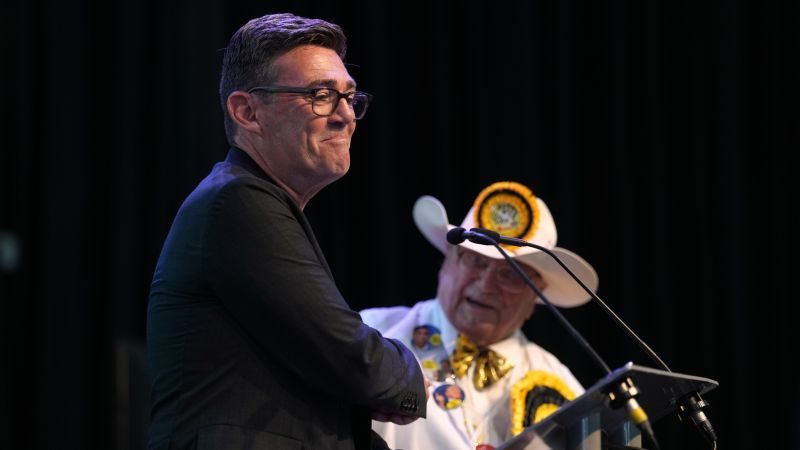
Table of Contents
The Strategic Return of Andy Burnham
In a calculated political maneuver that has sent shockwaves through Westminster, Andy Burnham has successfully returned to the UK House of Commons. The victory in the Makerfield by-election is not merely a local win for the Labour Party; it is the prerequisite for a potential leadership challenge against Prime Minister Keir Starmer. By securing a seat in Parliament, Burnham has cleared the primary constitutional hurdle that previously prevented him from vying for the leadership of the governing party.
- Strategic Entry: Andy Burnham won 55% of the vote in Makerfield, regaining his status as an MP.
- Leadership Pathway: Under Labour party rules, only sitting MPs can challenge for the leadership, making Burnham a viable rival to Keir Starmer.
- Reform UK Threat: Robert Kenyon of Reform UK secured 35%, highlighting a significant right-wing shift in traditional Labour heartlands.
- Political Volatility: The win occurs amid a precipitous decline in Starmer’s national popularity and poor local election performance.
The by-election was triggered on May 14, 2026, when Josh Simons announced his resignation to facilitate Burnham’s return. This move was an explicit attempt to provide a vehicle for Burnham—the popular Mayor of Greater Manchester—to challenge the current trajectory of the Labour government. While the official line from the party focused on local representation, the broader context was clear: the party’s National Executive Committee (NEC) had finally cleared the path for a move they had previously blocked.
The Makerfield Battle: A Microcosm of National Divide
Makerfield, a region defined by its history of coal mining and industrial labor, has voted Labour for over a century. However, the 2026 by-election revealed a fragile coalition. Burnham faced a formidable opponent in Robert Kenyon, a 41-year-old plumber representing Reform UK. Kenyon’s campaign focused heavily on the economic grievances and immigration concerns of the local population, framing the by-election as a choice between a ‘Westminster elite’ and a grassroots populist movement.
The numbers reflect a widening gap in the UK’s political center. Burnham’s 55% victory, while decisive, masks the fact that Reform UK captured 35% of the vote. In a general election environment, data from YouGov suggests that Reform UK could potentially dominate seats like Makerfield if the Labour candidate is seen as purely a tool for national ambition. Patrick English, head of elections at YouGov, noted that Burnham’s ‘outsider’ persona as a regional mayor likely insulated him from the typical anti-establishment backlash that has plagued Starmer’s MPs.
Economic Disparity and the ‘Forgotten’ Towns
The victory was won in the trenches of deindustrialized towns. The closure of coal mines in the 1980s left a legacy of systemic poverty and economic stagnation that has only been exacerbated by the current cost-of-living crisis. Burnham’s strategy involved a deliberate pivot away from the polished rhetoric of Downing Street. By spending time at traditional Saturday breakfast clubs and meeting with retired miners in Ashton-in-Makerfield, he sought to project the image of a leader who understands the visceral frustrations of the North.
The Constitutional Path to 10 Downing Street
To understand why this by-election was necessary, one must look at the rigid conventions of the UK’s parliamentary system. The Prime Minister is not elected directly by the people but is the leader of the party that commands a majority in the House of Commons. Within the Labour Party, the leadership contest is restricted to serving Members of Parliament.
For the past decade, Burnham operated as the Mayor of Greater Manchester. While he enjoyed high approval ratings and a strong power base in the North, he was legally ineligible to challenge Starmer for the leadership. By winning Makerfield, Burnham has transitioned from a regional powerhouse to a national contender. If he manages to trigger a leadership vote and win, he would automatically be invited by the monarch to form a government, bypassing the need for a general election.
“Everyone knows that politics isn’t working. Everyone can feel that the country isn’t where it should be. Tonight could just be the turning point,” Burnham stated during his victory speech, signaling that his eyes are firmly fixed on the Prime Minister’s office.
The Fragility of the Starmer Premiership
Keir Starmer’s landslide victory in 2024 promised a return to stability after years of Conservative turmoil. However, that stability has proven elusive. National polling indicates a sharp decline in public trust, fueled by a perceived failure to deliver immediate economic relief and a series of missteps in local council elections in early May 2026. These local losses served as the catalyst for the internal dissent that allowed the Makerfield maneuver to happen.
The tension within the Labour party is no longer a whisper; it is a public fracture. A growing caucus of MPs have privately called for Starmer to step down, citing a lack of clear direction and an inability to stem the rise of Reform UK. Until Burnham’s return, these MPs lacked a viable alternative who could unite both the moderate and left-wing factions of the party. Burnham’s ability to bridge the gap between the ‘Red Wall’ voters and the party’s metropolitan base makes him the most dangerous rival Starmer has faced since taking office.
What This Means for the UK Political Landscape
The immediate implication of this result is a period of intense instability within the Labour government. Starmer now faces a ‘two-front war’: he must manage the external threat of a surging Reform UK while defending his flank from an internal challenge led by Burnham.
- For the Government: Policy paralysis may set in as Starmer spends more time on internal party management than on legislative agendas.
- For the Electorate: Voters in the North may see this as an opportunity for a ‘Northern Voice’ to lead the country, potentially increasing engagement in traditionally disenfranchised areas.
- For Reform UK: The 35% share in Makerfield validates their strategy of targeting former Labour heartlands, suggesting that the ‘Red Wall’ is still fundamentally volatile.
The political risk for Burnham is that he may be viewed as an opportunist. His opponent, Robert Kenyon, repeatedly labeled the constituency as a “stepping stone.” While Burnham claimed the seat would be his “touchstone,” the perception that Makerfield was used as a tactical tool to reach 10 Downing Street could alienate local voters in the long term.
FAQ: Understanding the Burnham-Starmer Dynamic
Why did Andy Burnham need to win a by-election?
In the UK, the leader of the Labour Party (and thus the Prime Minister) must be a sitting Member of Parliament. Because Burnham was the Mayor of Greater Manchester, he held no seat in the House of Commons and therefore could not legally challenge Keir Starmer for the party leadership.
What is a by-election?
A by-election is a special election held to fill a vacancy in the House of Commons that occurs between general elections. In this case, it was triggered when Josh Simons resigned his seat to allow Burnham to run.
How does Reform UK fit into this story?
Reform UK is a right-wing populist party that has seen a surge in support among working-class voters. Their strong second-place finish in Makerfield indicates a shift away from Labour in areas that were historically the party’s strongest bases.
Can Andy Burnham actually become Prime Minister?
Yes. If he successfully challenges Starmer for the leadership of the Labour Party and wins, the monarch would invite him to become Prime Minister, as Labour holds the majority in Parliament.
What was the final vote count in Makerfield?
Andy Burnham secured 55% of the vote, while Robert Kenyon of Reform UK secured 35%.