DJI Osmo Pocket 4 Review: Does the 1-Inch Sensor Solve Vlogging’s Biggest Problems?
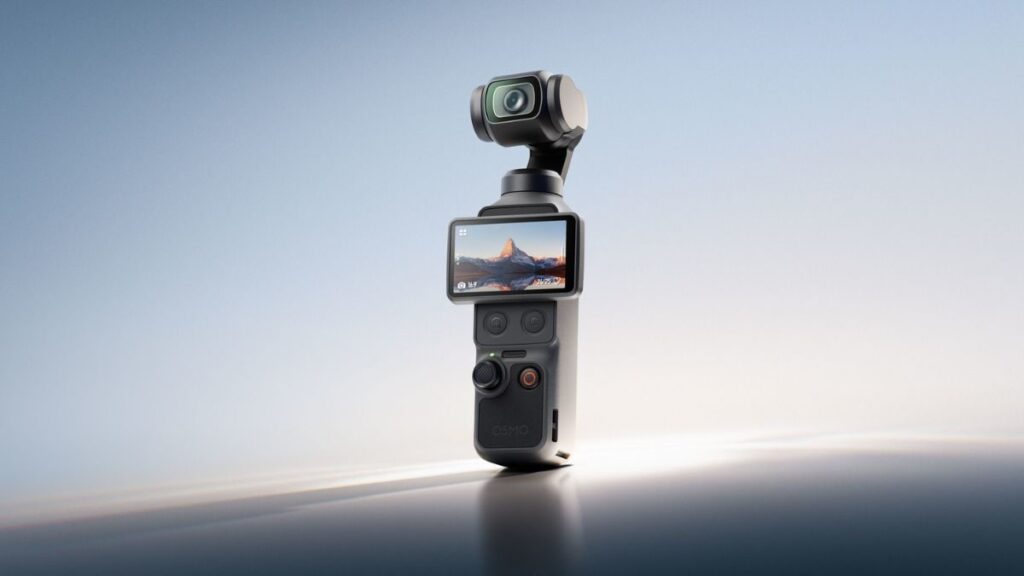
Table of Contents
The Shift to Large-Format Pocket Cinema
DJI has officially released the DJI Osmo Pocket 4, a device that attempts to bridge the gap between consumer-grade vlogging tools and professional cinematography. While the previous generation established the form factor, the Pocket 4 focuses on the one area where compact cameras traditionally fail: low-light performance and dynamic range. By integrating a 1-inch CMOS sensor into a chassis that still fits in a jacket pocket, DJI is challenging the dominance of high-end smartphones in the ‘run-and-gun’ content creation space.
For creators, the friction of switching between a primary camera and a stabilizer has always been a pain point. The Pocket 4 eliminates this by merging a mechanical 3-axis gimbal with a sensor capable of handling challenging lighting conditions. This isn’t just a spec bump; it’s a fundamental shift in how portable video is captured, moving away from the ‘over-sharpened’ look of digital stabilization toward the organic smoothness of physical hardware.
- Sensor Upgrade: The new 1-inch CMOS sensor significantly improves low-light noise and depth of field.
- AI Integration: Enhanced tracking allows for more reliable autofocus on fast-moving subjects.
- Pricing: Starts at €499 for the Standard Combo; €619 for the Creator Combo.
- Ecosystem: Seamless integration with the DJI Mic 3 transmitter for professional-grade audio.
In the current creator economy, where TikTok and YouTube Shorts demand high-frequency uploads, the ability to capture professional-looking footage without a full production crew is a competitive advantage. The Pocket 4 addresses this by focusing on three pillars: image quality, stability, and audio integration.
Breaking Down the 1-Inch CMOS Sensor
To understand why the 1-inch sensor is the headline feature, we have to look at the physics of light. Most compact cameras and smartphones use sensors that are significantly smaller, which requires the software to ‘guess’ detail in the shadows—a process that often results in digital noise or ‘grain.’ A 1-inch sensor provides a larger surface area to capture photons, allowing for a cleaner image at higher ISO settings.
In practical terms, this means the Osmo Pocket 4 can handle night scenes or dimly lit interiors without the footage looking muddy. Furthermore, the larger sensor creates a natural bokeh (background blur) that is physically real, rather than the artificial ‘Portrait Mode’ blur created by AI in smartphones. This gives vloggers a more cinematic aesthetic that separates the subject from the background more effectively.
Technical Specifications at a Glance
| Feature | DJI Osmo Pocket 4 | Impact on User |
|---|---|---|
| Sensor Size | 1-Inch CMOS | Better low light, natural depth of field |
| Stabilization | 3-Axis Mechanical Gimbal | Zero-shake footage without cropping |
| Audio | DJI Mic 3 Integration | Studio-quality voice recording |
| Tracking | AI-Powered ActiveTrack 7.0 | Better subject lock on complex backgrounds |
| Starting Price | €499 / ~$540 | Competitive entry for prosumers |
The Ecosystem: Standard vs. Creator Combo
DJI is leaning heavily into the ‘bundle’ strategy with the Pocket 4. The Standard Combo (starting at €499) is designed for the casual user who wants a stabilized camera for travel and daily clips. However, for anyone intending to monetize their content, the Creator Combo at €619 is the more logical choice. The inclusion of the DJI Mic 3 Transmitter is the standout here; audio is often the most overlooked part of vlogging, and having a direct, wireless link to a high-fidelity mic removes the need for external recorders.
The addition of a wide-angle lens and a fill light in the Creator Combo addresses the two biggest hurdles of pocket cinematography: field of view and lighting. The wide-angle lens is particularly critical for ‘talking head’ shots where the creator needs to capture both themselves and their environment without holding the camera at an awkward distance.
What This Means for Content Creators
The launch of the Osmo Pocket 4 signals a transition where ‘good enough’ smartphone video is no longer the gold standard. For a professional YouTuber or a corporate social media manager, the Pocket 4 represents a reduction in gear weight. Instead of carrying a mirrorless camera, a tripod, and a separate gimbal, the entire setup is condensed into a single handheld unit.
From a technical perspective, the 3-axis gimbal remains a superior choice over Electronic Image Stabilization (EIS). EIS works by cropping the image and shifting the frame to compensate for movement, which often results in a ‘warped’ look at the edges of the video. The Pocket 4’s mechanical gimbal moves the camera itself, preserving the full field of view and providing a more natural, cinematic motion that mimics a professional steadicam.
Comparing the AI Tracking Capabilities
One of the most significant, though less discussed, upgrades is the AI tracking. Previous versions of ActiveTrack were impressive but could lose the subject if they passed behind a pillar or another person. The Pocket 4 implements more advanced computer vision algorithms to predict subject movement and ‘re-acquire’ the target faster.
This is particularly useful for solo creators. Being able to set the camera on its Mini Tripod and have it autonomously follow you as you move through a space allows for shots that previously required a dedicated camera operator. The precision of the motor movements has also been refined, reducing the ‘jitter’ that sometimes occurred when the AI tried to make micro-adjustments to center the subject.
Practical Implementation for Different Users
- Travel Vloggers: The compact size and 1-inch sensor make it ideal for capturing diverse environments from neon-lit cities to natural landscapes without carrying a heavy bag.
- Product Reviewers: The improved autofocus and macro capabilities allow for tighter, sharper shots of gadgets and textures.
- Business Professionals: The ease of setup and high-quality audio make it a potent tool for quick LinkedIn updates or internal corporate communications.
Addressing Potential Limitations
Despite the upgrades, the Osmo Pocket 4 isn’t without its trade-offs. The mechanical gimbal, while superior for stability, is inherently more fragile than a solid-state action camera like the GoPro Hero series. A significant drop or a piece of debris in the gimbal motor can render the device useless. Users must remain mindful of the gimbal’s physical limits and avoid using the device in extreme environments (like heavy sand or saltwater) without proper protection.
Additionally, while the 1-inch sensor is a massive leap, it still cannot compete with a full-frame mirrorless setup in terms of absolute dynamic range. For those shooting high-end commercials, the Pocket 4 is a complementary tool—a ‘B-cam’ for quick shots—rather than a replacement for a primary cinema camera.
Frequently Asked Questions
Is the DJI Osmo Pocket 4 waterproof?
No, the Osmo Pocket 4 is not natively waterproof. Unlike the DJI Action series, the gimbal mechanism is exposed. For underwater shots, users will need a specialized waterproof housing sold separately.
Does it support 4K 120fps?
Yes, the Pocket 4 supports high-frame-rate recording, allowing for cinematic slow-motion footage. The 1-inch sensor helps maintain image clarity even when recording at higher frame rates, which usually degrades quality in smaller sensors.
How does the battery life compare to the Pocket 3?
While DJI has optimized the power management, the larger sensor and AI processing require more energy. Users can expect roughly the same battery life as the previous generation, but the use of the Creator Combo’s accessories can slightly impact overall endurance.
Can I use third-party microphones?
While the DJI Mic 3 is the optimized choice for seamless pairing, the Pocket 4 supports standard audio inputs, allowing for the use of various third-party microphones via the appropriate adapters.
What is the difference between the Standard and Creator Combos?
The Standard Combo includes the basic camera and charging cable. The Creator Combo adds the DJI Mic 3 Transmitter, a fill light, a wide-angle lens, and the Osmo Mini tripod, making it a complete production kit.
Final Editorial Perspective
The DJI Osmo Pocket 4 isn’t trying to disrupt the camera industry; it’s perfecting a niche that DJI essentially created. By focusing on the 1-inch sensor, they’ve addressed the biggest complaint of the vlogging community: the struggle with low light. When you combine that with the unmatched stability of a mechanical gimbal, the device becomes an almost essential tool for anyone whose brand depends on high-quality, mobile video. At €499, it’s an investment in efficiency, reducing the time between ‘idea’ and ‘upload’ without sacrificing professional standards.