Insta360 Luna Ultra Leaks: 8K Video and Leica Glass Signal a New Era for Gimbal Cameras
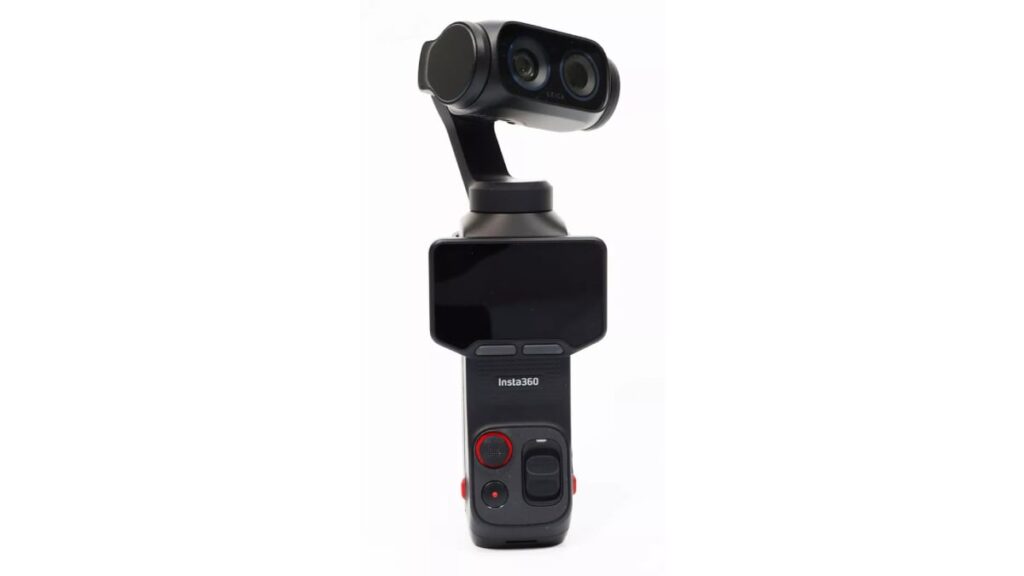
Table of Contents
The Leak That Changes the Compact Camera Game
In the world of high-end content creation, the gap between a pocket-sized gimbal camera and a professional mirrorless rig has always been defined by two things: sensor size and glass quality. For years, Insta360 has dominated the action and 360-degree space, but the sudden appearance of the Insta360 Luna Ultra on a German retailer’s site suggests the company is now aiming directly at the ‘prosumer’ vlogging market.
The leak, originating from the reputable German retailer Foto Erhardt, isn’t just a simple mention. It includes a pre-order deposit system and a detailed specification sheet that points toward a device designed for cinema-grade output in a handheld form factor. By integrating a 1-inch sensor and a Leica Summicron lens, Insta360 is positioning the Luna Ultra not as an action cam, but as a legitimate tool for filmmakers who cannot afford to carry a full gimbal rig.
- Professional Optics: Features a Leica Summicron lens paired with a 1-inch sensor for superior low-light performance and depth of field.
- High-Resolution Power: Capable of 8K video recording and 4K at 120fps for high-detail slow motion.
- Color Grading Ready: Supports 10-bit i-Log recording and specialized Leica color profiles.
- Hardware Stability: Utilizes a dedicated 3-axis mechanical gimbal for physical stabilization beyond digital cropping.
Breaking Down the Technical Specifications
To understand why the Luna Ultra is a significant shift, we have to look at the hardware architecture. Most compact creator cameras rely on Electronic Image Stabilization (EIS), which achieves smoothness by cropping into the image. The Luna Ultra utilizes a 3-axis mechanical gimbal, meaning the camera physically moves to counteract shake, preserving the full field of view of the lens.
The 1-Inch Sensor Advantage
The inclusion of a 1-inch sensor is the most critical piece of the puzzle. In imaging, larger sensors capture more light and provide a more natural ‘bokeh’ (background blur). While the DJI Pocket series has previously set the standard for gimbal cameras, the Luna Ultra’s partnership with Leica for the Summicron glass suggests a push for higher contrast and sharper edge-to-edge resolution.
8K Video and High Frame Rates
The leap to 8K is more than just a numbers game. For creators, 8K allows for significant ‘reframing’ in post-production—meaning you can crop into a shot during editing without losing 4K clarity. The 4K 120fps capability is equally vital, allowing for buttery-smooth slow motion that is essential for B-roll and cinematic transitions.
| Feature | Insta360 Luna Ultra (Leaked) | Typical Compact Gimbal Cam |
|---|---|---|
| Resolution | Up to 8K | Up to 4K |
| Sensor Size | 1-inch | 1/2.3-inch or 1-inch |
| Lens | Leica Summicron | Generic Wide-Angle |
| Color Depth | 10-bit i-Log | 8-bit Standard |
| Stabilization | 3-Axis Mechanical | Hybrid EIS/Optical |
The ‘Leica’ Factor: Why Glass Matters
Insta360 has a history of collaborating with Leica, most notably on the X3 and Ace Pro series, to optimize color science and lens clarity. However, the Summicron designation in the Luna Ultra leak is a step up. Summicron lenses are renowned in the photography world for their high contrast and minimal distortion. When paired with a 1-inch sensor, this suggests the Luna Ultra will handle challenging lighting conditions—like neon cityscapes or dim interiors—far better than previous iterations.
10-Bit i-Log: A Tool for Colorists
For the casual user, standard color profiles are fine. But for professional editors, 10-bit i-Log is a game-changer. A 10-bit signal records over a billion colors, compared to the 16.7 million in 8-bit. This prevents ‘banding’ in skies and gradients, providing a flat image profile that allows editors to push colors and contrast in software like DaVinci Resolve without the image falling apart.
What This Means for the Creator Economy
The Luna Ultra arrives at a time when ‘run-and-gun’ filmmaking is the dominant style for YouTube and TikTok. The practical implication is a drastic reduction in gear friction. Currently, a creator wanting 8K, 10-bit log, and mechanical stabilization would need a mirrorless camera (like a Sony A7S III), a dedicated DJI gimbal, and a high-end prime lens. This setup is bulky, expensive, and requires significant calibration time.
By condensing this into a single handheld unit, Insta360 is targeting the ‘solo-preneur’—the creator who needs professional-grade production value but lacks a full camera crew. The ability to switch from a wide vlog shot to a cinematic slow-motion sequence without changing gear is a massive efficiency gain.
Analyzing the Market Positioning
While we wait for an official price, the EUR 50 deposit at Foto Erhardt suggests a premium product. The Luna Ultra isn’t competing with the GoPro Hero 13 or the DJI Osmo Action 4. Instead, it’s fighting for space against the DJI Pocket 3 and high-end vlogging setups.
The risk for Insta360 is the ‘jack-of-all-trades’ trap. By pushing for 8K and 1-inch sensors, they are increasing the device’s thermal footprint. 8K recording generates immense heat in small chassis, often leading to overheating shutdowns. Whether Insta360 has solved the thermal throttling issue will determine if the Luna Ultra is a reliable tool or a spec-sheet powerhouse that crashes during long takes.
Comparing the Ecosystem
Insta360’s edge has always been software. If the Luna Ultra integrates with their AI-driven editing suite, the 8K footage could be automatically processed into social-ready clips with minimal effort. This synergy between high-end hardware and AI software is where the Luna Ultra could potentially disrupt the mirrorless market.
Common Questions About the Luna Ultra
Will the Luna Ultra replace my mirrorless camera?
For most vlogging and travel needs, yes. However, because it has a fixed lens, you lose the ability to change focal lengths (zoom) or use specialized lenses for macro or telephoto shots.
Does 8K video actually matter for social media?
Since Instagram and TikTok compress video heavily, you won’t see 8K on your phone. However, 8K recording allows you to crop and zoom in on the footage while maintaining 4K quality in the final export.
What is the difference between a 3-axis gimbal and digital stabilization?
Digital stabilization crops the image and uses software to smooth it. A 3-axis gimbal uses motors to physically move the camera, meaning you keep your entire field of view and get more organic, fluid movement.
What is 10-bit i-Log?
It is a professional recording format that captures a wider dynamic range of light and color, which is then ‘graded’ or color-corrected in post-production for a cinematic look.
When is the official release date?
Insta360 has not officially announced the date, but the appearance of pre-order deposits at European retailers typically suggests a launch within the next 30 to 60 days.
The Verdict on the Leak
Based on the data from Foto Erhardt, the Insta360 Luna Ultra is shaping up to be the most ambitious compact camera the company has ever produced. The combination of Leica optics and a 1-inch sensor addresses the primary complaint of compact cameras: poor low-light performance. While thermal management remains a question mark, the specs suggest a device that can bridge the gap between consumer gadgets and professional cinema tools.