Ukraine’s Massive Drone Offensive Hits Moscow Oil Infrastructure: A Strategic Shift in Long-Range Warfare
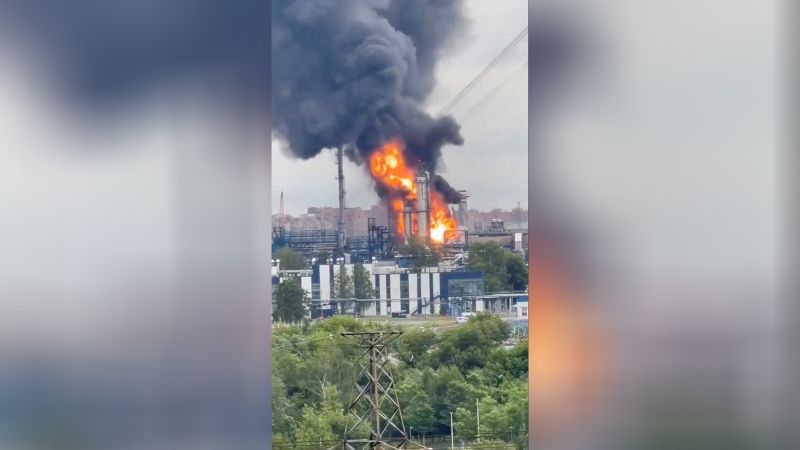
Table of Contents
The Escalation of Aerial Warfare in the Russian Heartland
In a significant escalation of its long-range capabilities, Ukraine launched its most extensive drone offensive against Moscow in two years this past Thursday. According to reports from the Russian state-run news agency TASS and statements from Moscow Mayor Sergei Sobyanin, air defense systems intercepted 194 drones over the capital within a tight eight-hour window. This surge represents a stark departure from recent months, where drone incursions into the capital typically numbered in the double digits.
The operation was not limited to the capital; the Russian Ministry of Defense claimed a total of 555 drones were intercepted across a broad swath of the country, including the Sea of Azov region. The sheer volume of these sorties suggests a coordinated effort by Kyiv to saturate Russian air defenses, testing the limits of Moscow’s domestic security umbrella while striking high-value economic targets.
- Critical Impact: The Moscow Oil Refinery in the Kapotnya district was hit twice in one week, causing significant fires and structural damage.
- Logistical Disruption: All major Moscow airports temporarily suspended flights during the peak of the barrage.
- Strategic Timing: The strikes coincided with President Volodymyr Zelensky’s meetings with NATO leaders in Brussels and G7 discussions in France.
Targeting the Economic Engine: The Kapotnya Refinery Strike
The most critical blow in this offensive was the precision strike on the Moscow Oil Refinery in the southeastern district of Kapotnya. Video geolocated by CNN confirms a violent explosion that blew the roof off a large fuel tank container, followed by thick, billowing black smoke. This facility is a cornerstone of Moscow’s fuel supply, and hitting it twice within 48 hours indicates both the accuracy of Ukrainian long-range drones and a deliberate intent to create fuel instability within the Russian capital.
The strategic logic behind targeting oil refineries is rooted in Russia’s economic dependency on hydrocarbons. Analysts note that oil earnings account for at least one-third of Russia’s federal budget. By degrading refining capacity, Ukraine is not only attempting to limit the Russian military’s fuel logistics but also attempting to create internal economic pressure. When refineries go offline, the domestic cost of gasoline and diesel rises, potentially impacting public sentiment and industrial output.
The Mechanics of Long-Range Drone Strikes
Ukraine’s ability to hit targets 500 kilometers away, as stated by President Zelensky, points to a sophisticated evolution in their UAV (Unmanned Aerial Vehicle) program. These drones are typically designed for low-cost, high-impact asymmetric warfare. By using “swarm” tactics—launching hundreds of drones simultaneously—Kyiv forces Russian air defenses to expend expensive missiles on cheap drones, creating gaps in the perimeter that allow a few lethal payloads to penetrate.
Collateral Damage and Regional Impact
While the primary targets were industrial, the scale of the attack led to significant collateral damage. In Zhukovsky, outside the Moscow city limits, a drone strike hit an apartment building, damaging balconies. Further debris caused fires at a shopping center and damaged a fitness center and an industrial facility. These incidents highlight the inherent risks of high-volume drone warfare in densely populated urban environments.
The violence extended south to the Rostov region, where Governor Yury Slyusar confirmed one civilian death and two injuries. A locomotive was damaged, and two commercial facilities caught fire. This suggests that the Moscow strike was part of a wider synchronized campaign to disrupt the logistics corridor connecting the Russian heartland to the occupied territories in Ukraine.
The Geopolitical Context: NATO and the G7
The timing of this offensive is far from accidental. President Zelensky has been in Brussels meeting with NATO Secretary General Mark Rutte and defense ministers from the UK and Germany. At the same time, G7 leaders gathered in France. The drone strikes serve as a tangible demonstration of Ukraine’s resolve and its ability to project power deep into Russian territory, providing leverage during negotiations for more advanced air defense systems and long-range weaponry.
NATO Secretary General Mark Rutte emphasized the need to keep Ukraine “strong,” noting that Russian losses are estimated at 30,000 to 35,000 personnel per month. The ongoing discussions in Brussels are focused on securing more missile interceptors and weapons systems, which Ukraine argues are necessary to neutralize the Russian aerial bombardment of its own cities.
What This Means for the Conflict
This shift toward “energy warfare” represents a change in Kyiv’s strategy. Instead of focusing solely on tactical military targets, Ukraine is now targeting the financial and logistical arteries of the Russian state. If the pattern of hitting refineries continues, Russia may face systemic fuel shortages, similar to the gasoline rationing recently reported in the illegally annexed Crimea region.
Furthermore, the ability to shut down Moscow’s airports, even temporarily, creates a psychological impact on the Russian population and elite, proving that the “safe zone” of the capital is permeable. For the West, these attacks highlight the effectiveness of the drone technology and intelligence being shared with Ukraine, potentially influencing the decision to provide even more advanced long-range capabilities.
Analysis of Russian Counter-Measures
Russia responded with a retaliatory barrage involving seven missiles and 239 drones targeting Ukrainian infrastructure. Strikes hit oil facilities in the Kyiv and Poltava regions, as well as private homes and hangars. This “tit-for-tat” strategy aims to deter Ukraine by demonstrating that any strike on Moscow will be met with immediate destruction of Ukrainian energy grids.
However, the disparity in impact is notable. While Russia has the capability to destroy large sections of the Ukrainian grid, Ukraine’s focus on specific, high-value refining nodes in Russia targets the actual funding mechanism of the war effort. The Russian Ministry of Defense’s claim of intercepting 555 drones is an attempt to project strength, but the fact that the Kapotnya refinery was hit twice proves that the air defense shield is not absolute.
Comparison of Strategic Objectives
| Ukraine’s Objective | Russia’s Objective |
|---|---|
| Economic attrition via refinery strikes | Infrastructure degradation via missile strikes |
| Psychological pressure on Moscow population | Demoralization of Ukrainian civilian population |
| Saturation of air defense systems | Containment of long-range drone sorties |
| Leverage for NATO military aid | Forcing a negotiated settlement on Russian terms |
Frequently Asked Questions
What is the significance of the Kapotnya refinery?
The Kapotnya refinery is one of the most critical fuel hubs for the Moscow metropolitan area. Disruption here leads to immediate logistics issues for transport and can drive up fuel prices across the region.
How do “swarm” drone attacks work?
Swarm attacks involve launching a large number of low-cost drones simultaneously. This overwhelms radar and air defense operators, forcing them to prioritize targets and which often leads to some drones slipping through to hit their intended targets.
Why is Ukraine targeting oil refineries specifically?
Oil and gas exports are the primary source of funding for the Russian military. By damaging refineries, Ukraine reduces Russia’s ability to export refined products and increases the cost of domestic fuel.
What is the impact of these strikes on aviation?
During the peak of the attacks, Moscow’s airports suspended flights due to the risk of drones colliding with aircraft or debris falling from intercepted drones. This disrupts international and domestic travel, creating economic and political friction.
How has NATO responded to these escalations?
NATO leaders, including Secretary General Mark Rutte, have reaffirmed their commitment to providing Ukraine with the air defense capabilities it needs to protect its cities while acknowledging the high cost of Russian personnel losses.