Honor MagicOS 11: Liquid Glass Design and the Race for Android 17 Dominance
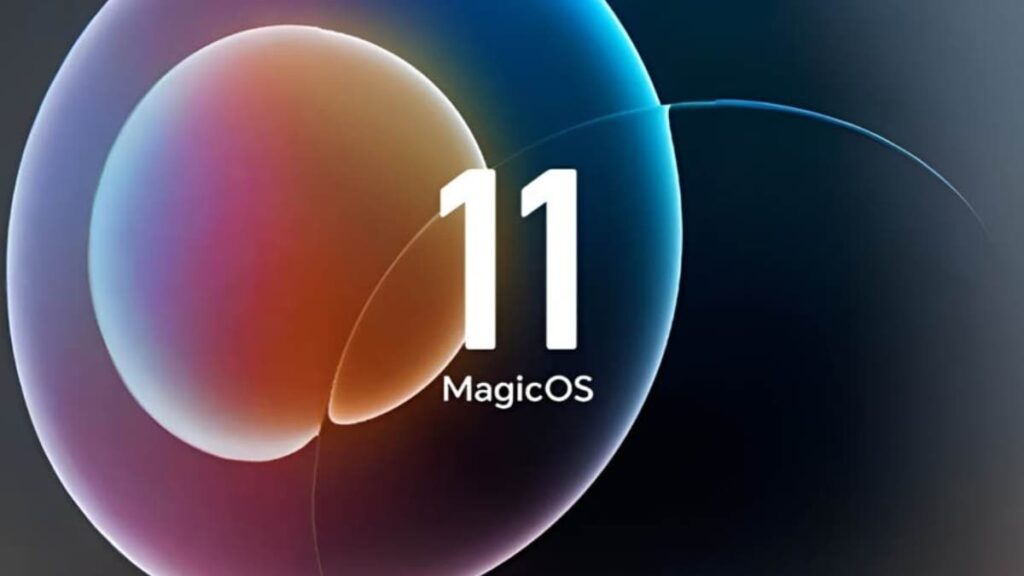
Table of Contents
The Shift Toward Visual Depth: Honor’s New Aesthetic
Honor has officially ignited the conversation around the next generation of its software ecosystem. Through a series of high-production teaser clips shared on Weibo, the company has provided a glimpse into Honor MagicOS 11, a platform that appears to be moving away from the flat, utilitarian design of recent years toward something far more tactile and refractive. The centerpiece of this evolution is a design language dubbed ‘Liquid Glass,’ which emphasizes translucency, light refraction, and layered depth.
This isn’t merely a cosmetic skin. By leveraging the underlying architecture of Android 17, Honor is attempting to bridge the gap between static software and a dynamic, physical-feeling interface. For users, this means a UI that doesn’t just sit on the screen but feels as though it exists in a three-dimensional space, reacting to movement and lighting in a way that mimics real-world materials.
- Visual Fluidity: Interface elements now feature reflective surfaces and animated highlights that shift as the user interacts with the device.
- Layered Architecture: The use of ‘glass’ layers allows for a more intuitive sense of hierarchy, where background elements are blurred and foreground tasks are sharp.
- System-Wide Integration: From the control center to the settings menu, the liquid glass effect is being applied consistently to avoid a fragmented user experience.
While the visual polish is striking, the timing of this reveal is strategic. By opening an Early Access testing programme for a limited set of flagship devices in China, Honor is gathering critical telemetry data on how these intensive visual effects impact battery life and GPU performance before a global rollout.
Deconstructing ‘Liquid Glass’ and the Apple Comparison
Industry analysts and enthusiasts have been quick to note the similarities between Honor’s new direction and the ‘Glassmorphism’ trends popularized by Apple’s visionOS and recent iterations of iOS. The floating panels, Gaussian blur backgrounds, and the way light ‘bends’ around the edges of windows are hallmarks of a design philosophy that seeks to make digital interfaces feel organic.
However, Honor is attempting to push this further by integrating these effects into the core of the Android 17 experience. Where Apple uses these elements for spatial computing, Honor is applying them to a handheld, touch-first environment. The challenge here is performance. Rendering real-time light refraction and transparency across an entire OS requires significant computational overhead. To mitigate this, Honor is likely utilizing a combination of hardware-accelerated rendering and AI-driven frame interpolation to ensure that the ‘liquid’ feel doesn’t result in dropped frames or input lag.
Technical Breakdown: How it Works
The Liquid Glass interface likely relies on Advanced Blur Shaders and Real-time Ray-tracing approximations. In traditional UI, a blurred background is often a pre-rendered asset or a simple filter. In MagicOS 11, the teasers suggest a more dynamic system where the transparency level of a window changes based on the content beneath it and the angle of the device’s gyroscope.
| Feature | Traditional UI (MagicOS 10) | Liquid Glass UI (MagicOS 11) |
|---|---|---|
| Transparency | Static Opacity | Dynamic Refraction |
| Depth | Flat Layering | Z-axis Spatial Depth |
| Animations | Linear Transitions | Physics-based Fluidity |
| Lighting | Uniform Brightness | Adaptive Specular Highlights |
For the end-user, this means a more immersive experience, but for the developer, it means a total rethink of how assets are rendered. The shift to Android 17 provides the necessary API updates to handle these complex visual layers more efficiently, potentially reducing the power draw associated with high-end transparency effects.
The Early Access Programme: A Controlled Rollout
The decision to launch an Early Access programme in China is a calculated move. Honor’s flagship series—including the Magic series—serves as the primary testbed for these features. By limiting the initial rollout, Honor can identify ‘edge-case’ bugs that typically plague major OS transitions, such as memory leaks caused by excessive transparency layers or compatibility issues with third-party apps that don’t support the new visual paradigms.
This testing phase is crucial because the move to Android 17 introduces significant changes to the kernel and power management systems. Integrating a heavy visual skin like Liquid Glass on top of a new OS version is a recipe for instability if not handled with a phased approach. Users currently in the programme are reporting a noticeably smoother animation curve, though some early feedback suggests a slight increase in thermal output during heavy UI navigation—a common trade-off when pushing GPU-intensive visual effects.
What This Means for the User
For the average Honor user, MagicOS 11 represents more than just a new look; it’s a shift in how they perceive the interaction between hardware and software. The ‘Liquid Glass’ approach is designed to reduce cognitive load by using visual cues to indicate depth and priority. When a menu ‘floats’ above a blurred background, the brain immediately recognizes the primary task without needing explicit borders or high-contrast dividers.
Furthermore, the adoption of Android 17 ensures that users are getting the latest in security patches, privacy controls, and API efficiencies. The integration of these two—modern Android stability and a futuristic UI—positions Honor as a serious competitor to Samsung’s One UI and Xiaomi’s HyperOS, both of which have leaned heavily into customization but less so into unified, high-concept design languages.
Addressing the Performance Trade-off
The elephant in the room for any high-fidelity UI is battery life. Rendering translucency and refraction is significantly more taxing on the GPU than rendering solid colors. To combat this, Honor is expected to introduce an ‘Adaptive Visual’ mode. In this mode, the system would automatically scale back the complexity of the Liquid Glass effects when the device enters Power Saving Mode or when the user is engaged in high-performance gaming.
Moreover, the efficiency of the latest Snapdragon and Dimensity chipsets makes this possible. With the move toward 3nm process nodes, the overhead for these visual effects is smaller than it would have been three years ago. The synergy between Android 17’s optimized resource allocation and Honor’s refined rendering engine is what will determine if MagicOS 11 is a triumph of design or a burden on the hardware.
Common Questions About the Update
Who is eligible for the MagicOS 11 Early Access?
Currently, the programme is limited to select flagship models within the Chinese market. Global users should expect the update to arrive after the China-specific testing phase is complete, likely coinciding with the launch of the next generation of Magic series hardware.
Will MagicOS 11 slow down older Honor devices?
While the ‘Liquid Glass’ effects are designed for flagship hardware, Honor typically provides a ‘Lite’ version of its design language for mid-range devices. It is unlikely that the full refractive effects will be available on lower-end hardware to avoid performance degradation.
How does this differ from previous MagicOS updates?
Previous updates focused on AI integration (Magic Portal, etc.) and stability. MagicOS 11 is a fundamental departure in visual identity, prioritizing a spatial, glass-like aesthetic over the traditional flat-design philosophy.
Is Android 17 already stable?
Android 17 is currently in the developer and early testing stages. Honor’s use of an Early Access programme is a way to refine the OS skin in tandem with Google’s own updates to the Android base.
Will my apps look different in MagicOS 11?
System apps will feature the new Liquid Glass design. Third-party apps will maintain their own UI unless the developers update them to utilize the new Android 17 transparency APIs provided by the OS.
The Strategic Path Forward
Honor’s move is a clear attempt to capture the ‘premium’ segment of the Android market. By mimicking and then evolving the aesthetics of the most successful high-end interfaces, they are appealing to users who find current Android skins too cluttered or clinical. The goal is to create an emotional connection with the hardware through a software experience that feels luxurious and modern.
As the Early Access programme continues, the industry will be watching for two things: stability and battery impact. If Honor can deliver the Liquid Glass aesthetic without sacrificing the endurance of the device, they will have set a new benchmark for Android UI design. For now, the Weibo teasers have successfully created anticipation, signaling that the era of flat design may finally be giving way to a more dimensional, fluid future.