Best Internet Service Providers 2026: Fiber, 5G, and Satellite Performance Analysis
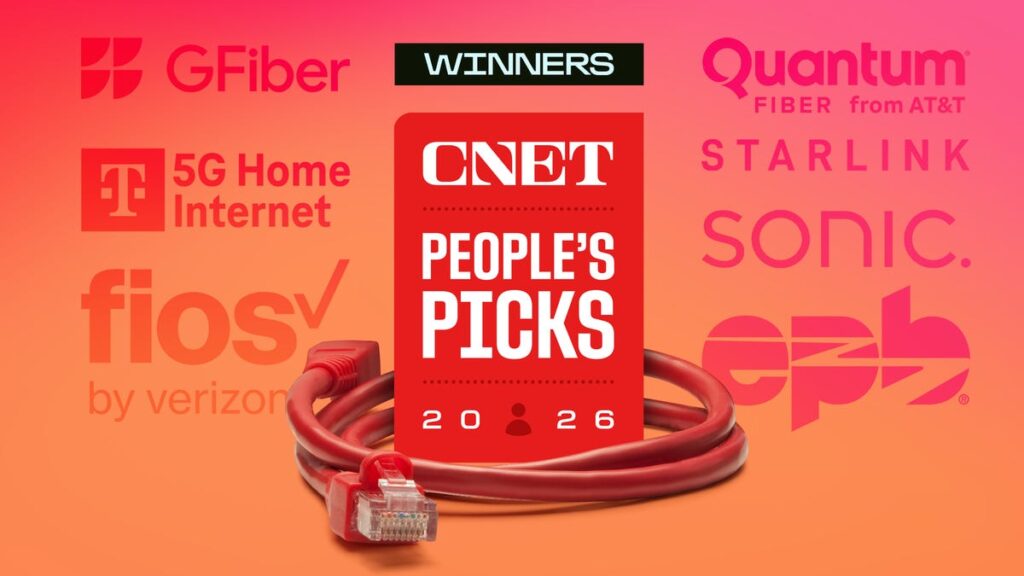
Table of Contents
The Reality of Modern Broadband: Beyond the Marketing Claims
Selecting the best internet service providers is no longer as simple as checking who has the lowest introductory rate in your zip code. In 2026, the divide between “advertised speeds” and “real-world throughput” has become a critical pain point for consumers. From the rise of symmetrical fiber upload speeds to the stabilization of low-earth orbit (LEO) satellite constellations, the infrastructure is changing faster than the pricing models.
Reliability is the new primary currency of the broadband market. For the modern remote worker or high-bandwidth gamer, a 99% uptime isn’t a luxury—it’s a requirement. When we analyze user sentiment and technical performance, a clear pattern emerges: the providers that prioritize infrastructure transparency and customer support over aggressive marketing are the ones winning the long-term trust of the consumer.
- GFiber (formerly Google Fiber) remains the gold standard for overall satisfaction, specifically leading in customer support and symmetrical speed.
- T-Mobile 5G Home Internet is the top choice for users prioritizing price and flexibility over raw gigabit speeds.
- Starlink has fundamentally disrupted rural connectivity, proving that satellite internet can be reliable enough for professional work.
- Regional ISPs like Sonic often outperform national giants in specific geographies due to localized infrastructure management.
Fiber Optic Leadership: GFiber and the Symmetrical Standard
Fiber optic internet remains the gold standard because of its ability to provide symmetrical speeds—meaning your upload speed is just as fast as your download speed. This is a critical distinction for anyone who frequently uploads large files to the cloud, participates in high-definition video conferencing, or streams content to platforms like Twitch.
Based on comprehensive user satisfaction data, GFiber leads the pack with an overall satisfaction score of 4.72 out of 5. The technical advantage here isn’t just the speed (which scores 4.82), but the consistency. While many cable providers suffer from “node congestion” during peak evening hours, fiber’s dedicated lines minimize this latency.
When comparing GFiber to rivals like Verizon Fios and AT&T Fiber, the gap isn’t found in the hardware, but in the human element. User reports consistently highlight GFiber’s customer support as “Excellent,” a rarity in an industry often defined by long hold times and scripted responses. While Verizon Fios and AT&T Fiber maintain strong reliability scores (averaging between 4.39 and 4.48), they struggle to match the seamless onboarding and billing transparency associated with GFiber.
Technical Comparison: Fiber vs. Cable
| Feature | Fiber Optic (GFiber/Fios) | Cable (Xfinity/Spectrum) |
|---|---|---|
| Speed Symmetry | Symmetrical (Equal Up/Down) | Asymmetrical (Slow Uploads) |
| Latency | Ultra-Low (Ideal for Gaming) | Moderate |
| Weather Resistance | High (Glass Fiber) | Moderate (Copper/Coax) |
| Stability | High Consistency | Variable during peak hours |
The 5G Shift: T-Mobile’s Disruption of the Fixed-Wireless Market
For many households, the jump to fiber isn’t physically possible due to zoning laws or the prohibitive cost of digging trenches. This is where Fixed Wireless Access (FWA) has stepped in. T-Mobile has managed to pivot from a mobile-first company to a serious contender for the best internet service providers title in the 5G home sector.
T-Mobile’s 5G Home Internet scores 4.20 out of 5 for customer satisfaction. The appeal here is twofold: price and simplicity. Unlike traditional cable, which often involves complex contracts and “hidden” equipment rental fees, T-Mobile’s model is generally more transparent. Users report a significant lack of unexpected price hikes, which is a primary grievance for those switching away from Comcast or Charter Spectrum.
From a performance standpoint, T-Mobile has addressed the early criticisms of 5G stability. Modern users note that connections rarely drop—often only a few times per year—and the speed degradation during peak hours is less noticeable than it was during the initial 2021-2022 rollout. While it cannot compete with the 1Gbps+ speeds of fiber, it provides a “good enough” experience for the average streaming household at a fraction of the cost.
Breaking the Rural Barrier: Starlink’s Technical Evolution
Until recently, satellite internet was synonymous with high latency and data caps—essentially a last resort for those in the deep wilderness. Starlink has changed the narrative by deploying thousands of small satellites in Low Earth Orbit (LEO), significantly reducing the distance signals must travel compared to traditional geostationary satellites.
The data reflects a massive leap in trust. Starlink currently holds a high overall satisfaction rating of 4.47 out of 5. More impressively, its reliability score of 4.59 suggests that the “unreliable” stigma of satellite internet is fading. For users in rural regions, Starlink isn’t just a choice; it’s often the only viable path to modern digital participation.
However, the “trustworthiness’ factor of Starlink is slightly hampered by its pricing strategy. For years, the $349 upfront hardware fee acted as a barrier to entry. While the shift to a $10 monthly hardware charge has lowered the threshold, the monthly subscription remains higher than urban fiber or 5G options. This creates a paradox where the users who most need the service are paying a premium for the privilege of basic connectivity.
The Power of Local: Why Regional ISPs Often Win
There is a recurring trend where smaller, regional providers outperform national giants. A prime example is Sonic, a California-based fiber provider. In regional comparisons, Sonic often surpasses GFiber and Verizon in reliability and price satisfaction (scoring 4.65 for price and 4.85 for overall satisfaction).
Why do locals win? It comes down to “Last Mile” management. Regional ISPs often have more direct control over their physical infrastructure and can respond to local outages faster than a national corporation managing millions of nodes across fifty states. In the South, providers like the Electric Power Board in Chattanooga have pioneered the concept of the “municipal network,” treating internet access as a public utility rather than a profit center, leading to near-perfect satisfaction scores.
What This Means for You
If you are choosing a provider today, the technical specs (like “Up to 1Gbps”) should be your secondary consideration. Your primary focus should be on Symmetry and Support.
- For Remote Professionals: Prioritize Fiber (GFiber, Sonic, Verizon Fios). The symmetrical upload speeds are non-negotiable for stable Zoom calls and large file transfers.
- For Budget-Conscious Households: Look at 5G Home Internet (T-Mobile). If your usage is primarily streaming and browsing, the cost-to-performance ratio is unbeatable.
- For Rural Residents: Starlink is currently the only satellite option that supports a professional remote-work lifestyle, though you must account for the higher monthly cost.
Comparing the Top Contenders: Performance Metrics
| Provider | Primary Tech | Reliability Score | Satisfaction Rank | Best For… |
|---|---|---|---|---|
| GFiber | Fiber | 4.70 / 5 | #1 Overall | Power Users & Families |
| T-Mobile | 5G Fixed | 4.10 / 5 | #1 5G | Budget & Simplicity |
| Starlink | LEO Satellite | 4.59 / 5 | #1 Rural | Off-grid/Remote Areas |
| Sonic | Fiber | 4.90 / 5 | #1 Regional | California Residents |
Evaluating ISP Trustworthiness: How to Avoid the “Introductory Rate Trap”
One of the biggest points of contention in the ISP industry is the price hike after the first 12 months. Many users report high initial satisfaction that plummets once “promotional pricing” ends. To find a truly trustworthy provider, look for companies that offer price locks or flat-rate billing.
GFiber and T-Mobile have gained significant traction by avoiding the complex “teaser rate” structures common with cable giants. When a company is transparent about the cost from day one, it reduces churn and increases the long-term reliability of the customer-provider relationship. Before signing a contract, always ask for the “Year 2” pricing in writing.
Frequently Asked Questions about Internet Service Providers
Which is faster: Fiber or 5G?
Fiber is significantly faster and more stable. While 5G can reach impressive peak speeds, Fiber provides a consistent, high-capacity connection with much lower latency (ping), making it superior for gaming and professional work.
Is Starlink actually reliable for working from home?
Yes, for most users. With an average reliability score of 4.59, Starlink is capable of handling video calls and cloud-based software, provided you have a clear view of the sky. However, it is more susceptible to extreme weather than ground-based fiber.
What are symmetrical speeds and why do they matter?
Symmetrical speeds mean your upload speed is the same as your download speed. This is crucial for anyone who uploads content to YouTube, uses cloud backups (like Google Drive or Dropbox), or spends hours on video calls, as slow upload speeds cause “freezing” and lag during calls.
How can I tell if a regional ISP is better than a national one?
Check local community forums (like Reddit or Nextdoor) for your specific city. Look for mentions of “uptime” and “response time for repairs.” Regional providers like Sonic often have better localized support than national entities.
Does 5G home internet have data caps?
Many 5G providers, including T-Mobile, offer more flexible data plans than traditional satellite or cable providers, though “deprioritization” can occur during periods of extreme network congestion.
Ultimately, the search for the best internet service providers depends on your specific geography and digital needs. While GFiber dominates the urban fiber landscape and T-Mobile disrupts the wireless space, the rise of high-performance regional ISPs and Starlink’s satellite constellation means that high-speed access is finally becoming a universal reality, regardless of where you live.