Roelof Botha Joins SpaceX Board: The Strategic Play Behind Musk’s Newest Ally
Table of Contents
A Strategic Pivot in the Post-IPO Era
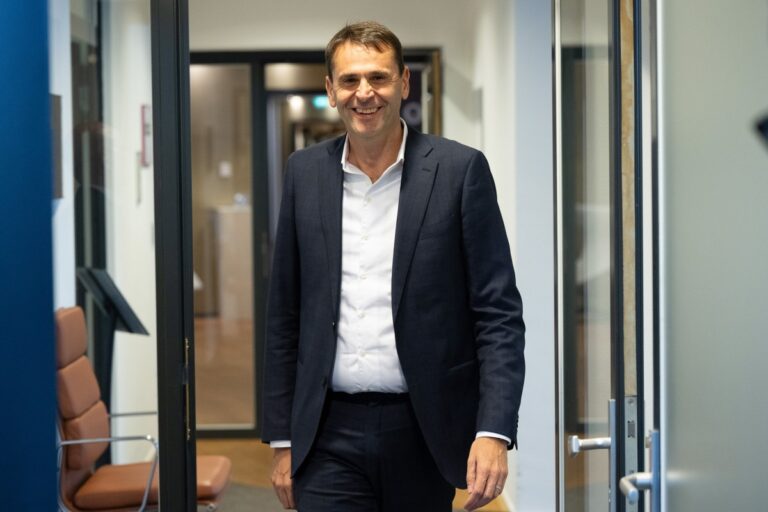
Less than a week after completing the largest initial public offering in history, SpaceX has signaled a shift toward more rigorous financial oversight. In a regulatory filing with the Securities and Exchange Commission (SEC), the aerospace giant announced the appointment of Roelof Botha to its board of directors. Botha, the former managing partner of Sequoia Capital, enters the fold at a critical juncture as the company transitions from a privately held disruptor to a public entity under intense regulatory scrutiny.
- Financial Fortification: Botha joins specifically to fill a vacancy and will immediately serve on the audit committee, signaling a need for institutional financial discipline post-IPO.
- Deep-Rooted Loyalty: The appointment is not merely professional; Botha and Elon Musk share a relationship spanning 25 years, dating back to their early days at PayPal.
- Governance Paradox: Despite adding experienced board members, Musk maintains over 80% of the voting power, ensuring centralized control over the company’s trajectory.
- Sequoia Synergy: Sequoia Capital’s 2019 investment in SpaceX has grown into a position valued at over $20 billion, aligning the interests of one of the world’s most successful VC firms with SpaceX’s long-term goals.
Botha’s entry into the board is more than a routine filling of a vacancy. It represents a fusion of deep institutional venture capital experience and a personal bond with Elon Musk that predates the Starlink and Starship eras. For a company now answerable to public shareholders, bringing in a figure with Botha’s audit background is a calculated move to appease markets while maintaining the internal culture of speed and aggression that characterizes Musk’s ventures.
The PayPal Connection: A Quarter-Century of Trust
To understand why Roelof Botha is the chosen architect for this board vacancy, one must look back to the year 2000. While the world remembers PayPal as the catalyst for the digital payments revolution, it was also the forge where the relationship between Musk and Botha was hammered out. Musk recruited Botha, then a Stanford student, to lead the finance division of PayPal in March 2000.
This early partnership established a level of trust that is rare in the volatile world of high-growth tech. Botha has spoken candidly about this bond, noting in a previous interview with Fortune that Musk was the first person to offer him a job in the United States. This personal loyalty is a recurring theme in Musk’s corporate structure; he tends to surround himself with a core group of “true believers” who understand his appetite for risk and his tendency to disrupt traditional management hierarchies.
The Audit Mandate and Public Market Pressures
The SEC filing specifically highlights Botha’s “extensive public company experience along with a deep audit committee background.” This is a telltale sign of SpaceX’s current priorities. Transitioning to a public company brings a deluge of reporting requirements, Sarbanes-Oxley compliance, and the constant threat of shareholder litigation.
By placing Botha on the audit committee, SpaceX is attempting to professionalize its financial reporting. This is particularly important given the company’s massive capital expenditure on the Starship program and the scaling of the Starlink constellation. The market requires transparency, but Musk’s leadership style has historically favored opacity. Botha’s role will likely be to act as a bridge—providing the necessary rigor to satisfy auditors and regulators without stifling the operational agility Musk demands.
Comparing SpaceX Governance to Industry Peers
| Feature | SpaceX (Post-IPO) | Typical Public Tech Co. | Implication |
|---|---|---|---|
| Voting Control | Musk (>80%) | Distributed | High centralized authority; low shareholder influence. |
| Board Influence | Confidants & Insiders | Independent Directors | Lower likelihood of board-led CEO removal. |
| Financial Oversight | Direct Audit Committee | Standard Audit Committee | Shift toward institutional compliance. |
The Sequoia Factor: $20 Billion in Alignment
Botha’s tenure at Sequoia Capital further complicates and strengthens his position. Sequoia invested in SpaceX in 2019, and by the time of the IPO, the firm’s stake was estimated at 1.5%. In the context of SpaceX’s astronomical valuation, that small percentage translated to a position worth more than $20 billion.
When a board member is also closely tied to a primary investor, the boundary between “oversight” and “partnership” blurs. Botha does not just represent a professional skill set; he represents the interests of the venture capital ecosystem that fueled SpaceX’s ascent. His appointment ensures that Sequoia’s massive bet remains protected and aligned with Musk’s vision for Mars and global internet connectivity.
Analyzing the Governance Paradox
Despite the addition of a seasoned professional like Botha, the fundamental power structure at SpaceX remains unchanged. The SEC filings confirm that Elon Musk retains overwhelming voting power and absolute control over the composition of the board. This creates a unique corporate dynamic: SpaceX is public in name and capital, but remains a “founder-controlled” entity in practice.
For the average investor, this means that the board of directors—including Botha—functions more as an advisory council than a governing body with the power to check the CEO’s impulses. This structure is similar to what has been seen at Tesla, where Musk’s influence often outweighs traditional corporate governance norms. The risk here is a lack of independent checks and balances; the reward is the ability to make long-term, high-risk bets without the fear of quarterly shareholder revolts.
What This Means for the Industry
The appointment of Roelof Botha is a signal to the broader tech ecosystem that the “Musk Model” of governance is evolving, but not disappearing. By incorporating high-level audit and financial expertise, SpaceX is acknowledging that the scale of its operations now requires a level of sophistication that exceeds the capabilities of a small circle of confidants.
For other unicorns eyeing an IPO, the SpaceX approach offers a blueprint: go public to raise massive capital, but engineer the voting structure to ensure the founder retains total control. Adding an industry titan like Botha provides the “veneer of stability” that institutional investors crave, while the voting blocks ensure that the vision remains singular and undisturbed.
Addressing Potential Conflicts and Transparency
The SEC filing also brought to light a potential conflict of interest: a family member of Botha has been employed by SpaceX since January 2025 within the enterprise operations team. While the company notes that this individual’s compensation (exceeding $120,000) is commensurate with their peers, it adds another layer of interconnection between Botha and the company’s internal operations.
In a traditional corporate environment, this might be viewed as a red flag for nepotism or a breach of independence. However, in the tightly knit world of Silicon Valley elite, these overlapping circles of family, investment, and friendship are common. The transparency provided in the SEC filing is a legal necessity, but it also highlights how SpaceX operates more like a private dynasty than a standard public corporation.
Frequently Asked Questions
Who is Roelof Botha?
Roelof Botha is a prominent venture capitalist and the former managing partner of Sequoia Capital. He has a long-standing professional and personal relationship with Elon Musk, having led the finance division at PayPal in 2000.
Why is Roelof Botha joining the SpaceX board now?
Botha was appointed to fill an existing vacancy and specifically to bring his expertise in audit committees and public company governance to SpaceX following its historic initial public offering (IPO).
Does Botha’s appointment change Elon Musk’s control over SpaceX?
No. SEC filings indicate that Elon Musk still maintains over 80% of the voting power and controls the makeup of the board, meaning he remains the ultimate decision-maker regardless of board additions.
What is the significance of Sequoia Capital’s investment in SpaceX?
Sequoia invested in SpaceX in 2019. By the IPO, their 1.5% stake was worth over $20 billion, making them one of the most successful institutional backers of the company.
What is the role of an audit committee on a corporate board?
The audit committee is responsible for overseeing the company’s financial reporting, internal controls, and the relationship with external auditors, ensuring that the company’s financial statements are accurate and compliant with laws.