SteamOS on Intel Handhelds: Can Valve Break the AMD Monopoly?
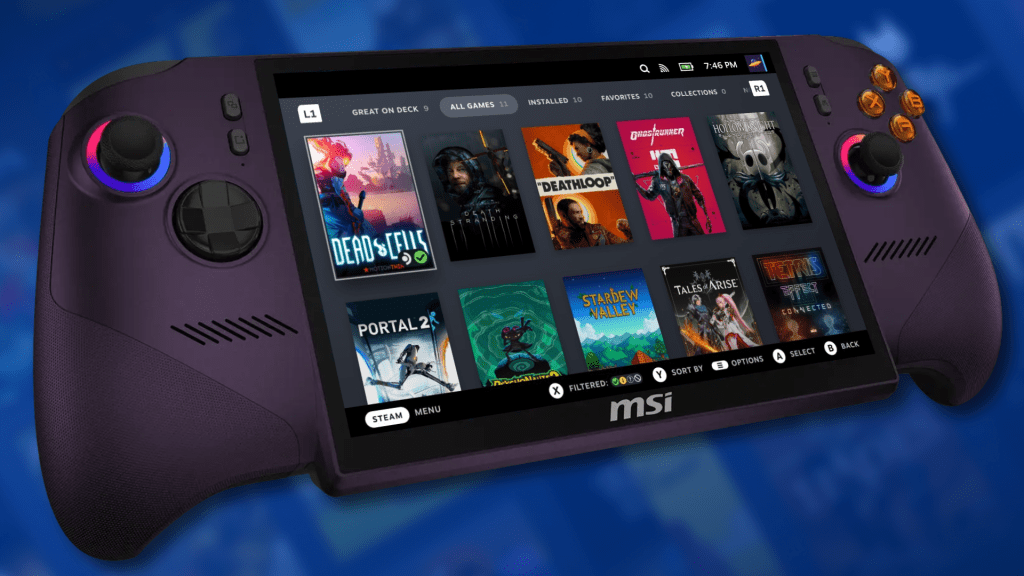
Table of Contents
The Shift Toward a Universal Gaming OS
For years, the handheld PC market has operated under a silent agreement: AMD provides the silicon, and Windows provides the interface. The Steam Deck disrupted this by pairing AMD’s custom APUs with SteamOS, a Linux-based environment that optimizes every cycle of CPU and GPU power specifically for gaming. While competitors like the Asus ROG Ally and Lenovo Legion Go attempted to clone the hardware success, they remained tethered to the overhead of Windows 11.
That dynamic is beginning to shift. Reports from industry sources and early beta tests indicate that Valve is actively working to bring SteamOS on Intel handhelds into the mainstream. This isn’t just a software update; it is a strategic move to decouple the “Steam experience” from AMD hardware, potentially opening the floodgates for Intel’s newest silicon, specifically the Arc G3 and Lunar Lake architectures.
- Software Agnosticism: Valve is moving toward making SteamOS a viable option for any x86 handheld.
- Intel’s Push: The Arc G3 platform aims to challenge the Ryzen Z1/Z2 dominance in power efficiency and graphics.
- User Friction: Most gamers find Windows 11 cumbersome on a 7-inch screen, creating a massive demand for a “console-like” experience on Intel hardware.
The catalyst for this shift is the MSI Claw. While initially criticized for its performance and battery life compared to AMD counterparts, the Claw serves as the primary testing ground for Intel-based SteamOS builds. If Valve can stabilize the experience on Intel’s architecture, the barrier to entry for other manufacturers—like Acer and OneXPlayer—will vanish.
The technical reality of running SteamOS on Intel hardware is more complex than simply installing a new OS. SteamOS relies heavily on Proton, a compatibility layer that allows Windows games to run on Linux. While Proton is highly optimized for AMD’s RDNA architecture, Intel’s Arc graphics require specific driver maturity to avoid crashes and stuttering. Early beta builds for the MSI Claw have shown promise but remain “shaky,” with reports from VideoCardz and ETAPrime highlighting inconsistencies in controller mapping and fine-grained power management.
The Performance Gap: SteamOS vs. Windows 11
On AMD devices, SteamOS typically offers a performance uplift because it strips away the telemetry and background processes of Windows. However, the initial data from the MSI Claw 8 AI+ (powered by Lunar Lake) shows a different trend. Currently, benchmarks on the SteamOS beta are lagging slightly behind Windows 11 for the same hardware. This is expected; we are seeing the gap between a polished, commercial OS and a beta Linux build.
For those unfamiliar with the hardware, Lunar Lake is Intel’s latest effort to compete with ARM-based efficiency (like Apple’s M-series) while maintaining x86 compatibility. By integrating memory directly into the package, Intel is targeting the exact thermal and power bottlenecks that plague handhelds. The goal for Valve is to ensure that when the Arc G3-powered handhelds hit the market later this year, the software doesn’t hold back the hardware.
Intel Arc G3: The Challenger to the Ryzen Z Series
To understand why this matters, we have to look at the silicon. For the last three years, AMD’s Ryzen Z1 Extreme has been the gold standard for handhelds. Intel’s response is the Arc G3 processor—a variant of the Core Ultra series 3 (Panther Lake). During Computex, early demonstrations of Arc G3 handhelds from MSI, Acer, and OneXPlayer showed significant gains in ray-tracing capabilities and AI-upscaling.
“The transition of SteamOS to Intel hardware represents the moment handheld gaming stops being about a specific device and starts being about a standardized ecosystem,” says an industry analyst specializing in x86 architecture.
If Valve successfully deploys a stable SteamOS build for Arc G3, it creates a dangerous scenario for Microsoft. While Microsoft is attempting to spruce up Windows 11 with a more “Xbox-like” interface for handhelds, it is still an OS designed for a mouse and keyboard. SteamOS is designed for a thumbstick. The moment a user can get a seamless, sleep-and-resume, controller-native experience on an Intel chip, the incentive to stick with Windows evaporates.
The Anti-Cheat Hurdle and the Linux Limitation
Despite the excitement, SteamOS isn’t a silver bullet. The primary obstacle remains kernel-level anti-cheat. Games like Valorant or Call of Duty utilize software that monitors the system at a deep level to prevent cheating. Because SteamOS is Linux-based, these anti-cheat systems often flag the OS as a security risk or simply refuse to launch. This is why some users still cling to Windows 11—not because they like the interface, but because they want to play Apex Legends or Fortnite.
However, for the vast majority of the Steam library, Proton has bridged the gap. As more developers optimize for the Steam Deck, the “Verified” list grows. For the Intel handheld market, this means the target audience isn’t necessarily the competitive esports pro, but the general gamer who wants a curated, low-friction experience.
What This Means for the Consumer
For the average buyer, this development signals a transition from hardware loyalty to ecosystem loyalty. Previously, if you wanted the SteamOS experience, you bought a Steam Deck. If you wanted power, you bought a Windows handheld and dealt with the clunky UI. Soon, you will likely be able to choose the hardware that fits your budget—whether it’s an Intel-powered Acer or an AMD-powered Asus—while keeping the software experience consistent.
| Feature | Windows 11 (Current) | SteamOS (Ideal/Target) |
|---|---|---|
| Boot Time | Moderate (Slow on some SSDs) | Near-Instant |
| UI Design | Desktop-first (Clunky on handheld) | Controller-first (Native) |
| Game Compatibility | Universal (Full Anti-Cheat) | High (Proton-dependent) |
| Power Management | General purpose | Game-specific tuning |
| Updates | Forced/Intrusive | Seamless/Background |
The Arm Expansion and the Nvidia RTX Spark
While the Intel push is the immediate story, Valve is playing a longer game. The emergence of the Nvidia RTX Spark—an Arm-based processor—introduces a new variable. Valve has historically avoided Arm, but the Steam Frame VR headset (powered by Qualcomm) proves that Valve is finally comfortable with non-x86 architectures.
The potential for SteamOS to move to Arm would be a seismic shift. Imagine a thin-and-light laptop powered by Nvidia’s Arm silicon running a lightweight, gaming-optimized version of SteamOS. It would combine the battery life of a MacBook with the gaming library of a PC. While this remains speculative, the move toward Intel hardware is the necessary stepping stone to prove that SteamOS can live outside the Steam Deck’s chassis.
Frequently Asked Questions
Can I install SteamOS on my current Intel handheld?
Currently, official SteamOS is only available for the Steam Deck. However, community-led projects like Bazzite and HoloISO provide Linux-based experiences similar to SteamOS for Intel and AMD devices. Official Valve builds for the MSI Claw are in beta and not yet available for general public installation.
Will SteamOS make Intel handhelds faster?
In most cases, yes. By reducing the background overhead associated with Windows 11, a Linux-based OS can free up CPU cycles and RAM, often resulting in smoother frame times and slightly higher average FPS in supported titles.
Do I lose access to my games if I switch from Windows to SteamOS?
Your Steam library remains tied to your account, not the OS. However, games purchased through the Epic Games Store or Xbox Game Pass require additional tools (like Heroic Games Launcher or Bottles) to run on SteamOS, as they do not have native Linux support.
What is the Arc G3 and why does it matter?
The Arc G3 is Intel’s latest integrated graphics architecture designed for efficiency and performance in handhelds. It aims to close the gap with AMD’s Z-series chips, providing better power-per-watt and improved AI-driven upscaling (XeSS).
Will all games work on Intel-based SteamOS?
No. Games with aggressive kernel-level anti-cheat (like Valorant) typically will not work on any version of SteamOS, regardless of whether the chip is Intel or AMD.