The Best Internet Service Providers of 2026: Real-World Performance and User Satisfaction Data
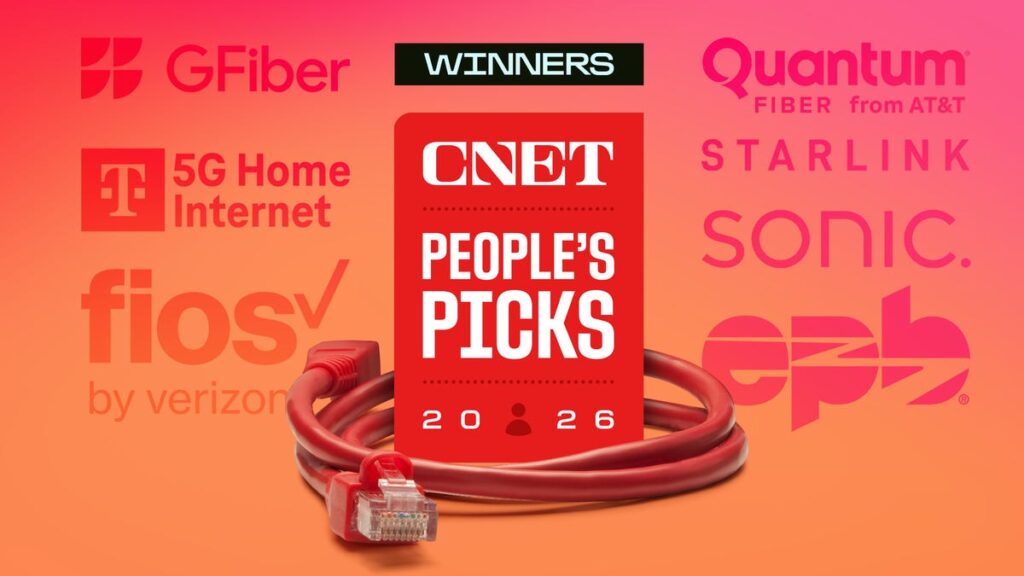
Table of Contents
The Shift Toward User-Centric Connectivity
Choosing an internet service provider (ISP) has evolved from a simple utility decision into a critical infrastructure choice for the modern home. With the rise of remote work, 4K streaming, and latency-sensitive cloud gaming, the gap between a “functional” connection and a “high-performance” connection has widened. While national marketing campaigns focus on theoretical “up to” speeds, the actual user experience—characterized by stability, price transparency, and support quality—often tells a different story.
- GFiber maintains the top spot for overall satisfaction, particularly in customer support and symmetrical upload/download speeds.
- T-Mobile 5G Home Internet has emerged as the most viable cable alternative, offering competitive pricing and surprising stability for non-power users.
- Starlink has fundamentally shifted the rural landscape, moving from a niche experiment to a reliable primary connection for remote areas.
- Regional ISPs (such as Sonic in California) often outperform national giants in reliability and localized customer service.
The Fiber Gold Standard: Why GFiber Leads the Pack
Fiber-to-the-home (FTTH) remains the undisputed champion of connectivity due to its ability to transmit data via light pulses, eliminating the electrical interference and distance-based degradation common in copper-based cable systems. Among the major players, GFiber (formerly Google Fiber) has established a significant lead in user sentiment.
Data from extensive user surveys indicates a satisfaction score of 4.72 out of 5. The technical edge here isn’t just the raw speed—which often reaches 1Gbps to 8Gbps—but the symmetrical nature of the connection. Unlike cable internet, where upload speeds are a fraction of download speeds, GFiber provides equal throughput in both directions. This is a critical requirement for anyone frequently uploading large files to the cloud or hosting high-definition video conferences.
Comparing the Fiber Titans: GFiber, Verizon Fios, and AT&T Fiber
While GFiber leads, Verizon Fios and AT&T Fiber remain formidable competitors with high reliability scores (4.39 and 4.48 respectively). However, the differentiator is the support ecosystem. A recurring theme in user feedback is the friction associated with AT&T’s installation and billing processes compared to the streamlined, digital-first approach of GFiber. For the average consumer, the technical difference between 1Gbps and 2Gbps is negligible, but the difference between a 10-minute support call and a two-hour hold is substantial.
| Provider | Reliability Score | Speed Satisfaction | Primary Strength |
|---|---|---|---|
| GFiber | 4.70 / 5 | 4.82 / 5 | Customer Service & Symmetrical Speed |
| Verizon Fios | 4.39 / 5 | 4.41 / 5 | Widespread Availability |
| AT&T Fiber | 4.48 / 5 | 4.49 / 5 | Strong Infrastructure Build-out |
The Rise of Fixed Wireless: T-Mobile and the 5G Disruption
For years, “wireless home internet” was a punchline—slow, unstable, and prone to massive lag. That narrative changed with the rollout of mid-band 5G. T-Mobile has successfully positioned its 5G Home Internet as a direct challenger to the cable monopoly (Comcast/Cox) in suburban and urban areas.
User data shows a satisfaction score of 4.20 out of 5, the highest in the 5G category. The primary appeal here is price stability. While cable providers are notorious for “introductory rates” that spike after 12 months, T-Mobile users report fewer unexpected price hikes. From a technical standpoint, the lack of noticeable speed degradation during peak hours suggests that T-Mobile’s network slicing and capacity management are maturing.
However, it is important to distinguish between 5G and Fiber. 5G internet is subject to signal interference and weather conditions. While it is excellent for a household of 2-4 people streaming Netflix and browsing, it lacks the ultra-low latency required for professional competitive gaming or high-frequency trading.
Breaking the Rural Divide: The Starlink Phenomenon
Until recently, rural internet meant choosing between slow DSL or high-latency geostationary satellite services like Viasat or HughesNet. The arrival of Starlink, SpaceX’s Low Earth Orbit (LEO) constellation, has fundamentally changed the math of rural connectivity.
By placing satellites significantly closer to Earth (approximately 550km compared to 35,000km for traditional satellites), Starlink has reduced latency from 600ms+ to under 40ms in many regions. This makes real-time applications—Zoom calls, gaming, and VoIP—actually usable for the first time in remote areas.
Starlink’s overall satisfaction rating of 4.47 reflects this utility. The primary point of friction remains the cost. Historically, the $349 hardware fee was a barrier to entry. The recent shift toward a monthly rental model for the dish reflects an effort to lower the barrier for lower-income rural households. As Broadband Principal Writer Joe Supan notes, Starlink’s value isn’t necessarily in being the “fastest”—it’s in providing modern connectivity where no other viable options exist.
The Regional Advantage: Why Local ISPs Often Win
One of the most surprising insights from recent user data is the dominance of smaller, regional providers over national brands. A prime example is Sonic, a California-based fiber provider. Sonic doesn’t just compete with national brands; in many user metrics, it beats them.
Sonic boasts an overall satisfaction score of 4.85, outperforming even GFiber in some reliability categories. This phenomenon is driven by two factors: localized infrastructure management and dedicated customer care. When a local ISP manages its own lines and employs local technicians, the mean time to repair (MTTR) typically drops, and the quality of service (QoS) increases.
Similarly, the Electric Power Board in Chattanooga, Tennessee, has demonstrated how municipal-owned fiber can drive economic growth by providing high-speed access as a public utility rather than a profit-driven corporate service. These regional winners prove that the “biggest” brand is not always the “best” brand for the end user.
What This Means for the Consumer
The current ISP landscape means that the “best” provider is no longer a universal answer, but a situational one based on your specific needs and location.
- For Power Users & Remote Professionals: Fiber is non-negotiable. If GFiber or a local fiber provider like Sonic is available, the symmetrical speeds and low latency will significantly improve productivity and software performance.
- For Budget-Conscious Households: 5G Home Internet from T-Mobile offers a compelling balance of speed and price, eliminating the need for expensive cable contracts and professional installation fees.
- For Rural Residents: Starlink is currently the gold standard. While more expensive than urban options, the leap in reliability over legacy satellite providers is transformative.
Evaluating Your ISP: Beyond the Speed Test
When comparing providers, consumers should look past the “Gigabit” marketing. The three most critical metrics for actual experience are:
- Latency (Ping): Crucial for gaming and video calls. Fiber is best, 5G is good, Satellite is variable.
- Upload Speed: Often ignored, but essential for cloud backups, social media uploads, and working from home. Fiber is the only service offering true symmetry.
- Price Transparency: Check for hidden equipment rentals, “teaser” rates that expire, and data caps. Providers like GFiber and T-Mobile generally score higher on transparency.
Frequently Asked Questions
Is fiber internet actually faster than 5G?
Yes. While 5G can reach high peak download speeds, fiber offers higher sustained throughput, significantly lower latency, and vastly superior upload speeds. Fiber is a physical wire; 5G is a radio wave subject to interference.
Why is Starlink so expensive compared to cable?
Starlink requires the maintenance of a massive constellation of thousands of satellites and a custom user terminal (dish) for every customer. The cost reflects the infrastructure required to provide coverage to areas where laying cable is geographically or economically impossible.
What is the difference between a regional ISP and a national ISP?
National ISPs (like Spectrum or AT&T) operate across many states, which can lead to standardized but sometimes impersonal customer service. Regional ISPs (like Sonic) operate in specific geographies, often allowing for more tailored service, faster local repairs, and better community-focused pricing.
Do I really need a Gigabit connection?
For most households, 300Mbps to 500Mbps is more than enough for 4K streaming and general browsing. Gigabit (1,000Mbps) is primarily beneficial for households with 10+ connected devices, heavy gamers, or professionals who move massive files (video editors, developers).
How do I check if GFiber or other fiber options are available at my address?
The most accurate method is to use the provider’s official availability checker on their website. Third-party “ISP finders” can be outdated. Since fiber requires a physical line to the home, availability is strictly tied to your specific street address.