Sony BRAVIA 7 Launches in India: Mini LED Precision Meets XR Processing
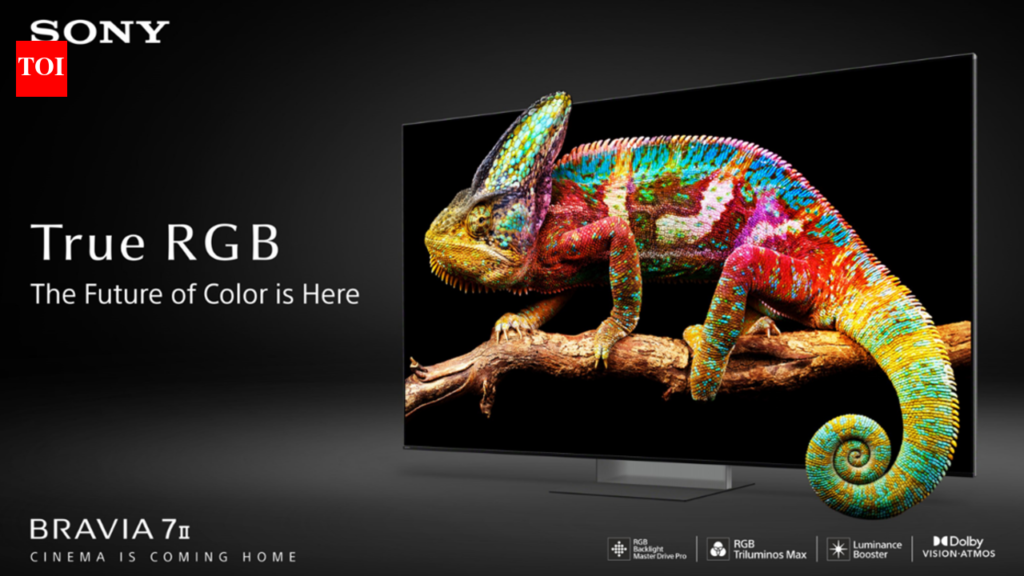
Table of Contents
The Shift to Mini LED: Sony’s Strategic Play in India
Sony has officially expanded its premium display lineup in India with the launch of the Sony BRAVIA 7. While the industry has long been split between the deep blacks of OLED and the blinding brightness of traditional LEDs, the BRAVIA 7 attempts to bridge that gap using advanced Mini LED technology. For the Indian consumer, this arrives at a critical time when demand for high-brightness living room displays—capable of fighting glare in sun-drenched apartments—is at an all-time high.
- Mini LED Precision: Uses thousands of tiny LEDs to provide more granular dimming and higher peak brightness than standard LED TVs.
- XR Processing: Powered by Sony’s Cognitive Processor XR, which analyzes images in real-time to mimic human focal points.
- True RGB Accuracy: Implementation of precise red, green, and bluephosphors to eliminate the ‘color bleed’ often seen in cheaper LED arrays.
- Google TV Integration: Full smart ecosystem support with a focus on low-latency gaming and streaming.
The BRAVIA 7 isn’t just a spec bump; it represents Sony’s effort to democratize the high-end performance of the BRAVIA 9 while keeping the price point accessible for the upper-midrange market. By utilizing Mini LED, Sony is targeting users who want the cinematic contrast of an OLED but need the longevity and luminance that only LED backlighting can provide.
Technical Breakdown: How ‘True RGB’ Mini LED Works
To understand the BRAVIA 7, one must understand the limitation of most Mini LED panels. Many manufacturers use white LEDs with a phosphor coating, which can lead to skewed color temperatures. Sony’s True RGB technology focuses on utilizing dedicated red, green, and blue LEDs. This allows for a wider color gamut and a more natural transition between shades, particularly in high-brightness highlights where colors usually ‘wash out’.
The Role of the XR Processor
The heart of the unit is the XR Processor. Unlike standard AI upscaling, which often adds a ‘soapy’ or artificial look to low-resolution content, the XR Processor uses a database of human perception to determine where the eye naturally focuses. In a football match, for instance, it prioritizes the clarity of the players and the ball over the distant crowd, ensuring that the most critical parts of the image remain sharp and contrast-heavy.
Luminance and Contrast Management
One of the primary struggles with LED TVs is ‘blooming’—the halo effect seen around bright objects on a dark background. The BRAVIA 7 mitigates this through an increased number of local dimming zones. While Sony rarely releases the exact zone count for its mid-tier sets, industry benchmarks suggest a significant jump over the previous generation, allowing for tighter control over the backlight and deeper blacks that rival early-generation OLEDs.
What This Means for the Indian Consumer
For the average user in India, the BRAVIA 7 solves a specific problem: the living room environment. Many Indian homes feature large windows and bright lighting, where OLED screens often struggle due to reflectivity and lower peak brightness. The BRAVIA 7’s Mini LED array can push significantly more nits (brightness units), making HDR content like Dune: Part Two look impactful even in a bright room.
From a value perspective, the BRAVIA 7 sits in a ‘sweet spot’. It offers the processing power of Sony’s flagship series without the eye-watering price tag of the BRAVIA 9. It is specifically designed for those who have upgraded from 1080p or basic 4K LED TVs and want a visible leap in image quality without committing to the potential burn-in risks associated with OLED.
Gaming Capabilities and Connectivity
Sony has leaned heavily into the PlayStation 5 ecosystem with this release. The BRAVIA 7 includes Auto HDR Tone Mapping, which automatically optimizes the HDR settings when a PS5 is detected. This eliminates the need for tedious manual calibration in the console settings.
- HDMI 2.1: Supports 4K at 120Hz, essential for smooth motion in competitive shooters and racing games.
- VRR (Variable Refresh Rate): Reduces screen tearing by syncing the TV’s refresh rate with the console’s output.
- ALLM (Auto Low Latency Mode): Switches the TV into a high-performance mode to minimize input lag.
The inclusion of Google TV ensures that the interface remains snappy, though the real value lies in the integration with Home IoT devices, allowing the TV to act as a hub for smart lighting and security cameras.
Comparison: Mini LED vs. OLED in 2025
| Feature | BRAVIA 7 (Mini LED) | Typical OLED | Winner |
|---|---|---|---|
| Peak Brightness | Very High | Moderate to High | Mini LED |
| Black Levels | Near-Perfect | Perfect | OLED |
| Longevity/Burn-in | High Resistance | Risk of Burn-in | Mini LED |
| Color Accuracy | Excellent (RGB Tech) | Industry Leading | OLED |
| Energy Efficiency | Moderate | High (for dark content) | Tie |
While OLED remains the gold standard for dark-room cinema, the BRAVIA 7’s Mini LED approach is more practical for a multi-purpose family room. The ‘True RGB’ implementation narrows the color gap, making the choice more about the environment than the technology itself.
Market Positioning and Pricing
Sony has priced the BRAVIA 7 to compete directly with the likes of Samsung’s Neo QLED and LG’s QNED series. In the Indian market, Sony carries a ‘premium tax’ due to its perceived reliability and superior after-sales service. However, the BRAVIA 7 aims to lower the barrier to entry for those who want ‘The Sony Look’—characterized by natural skin tones and realistic motion handling—without spending upwards of 3-4 lakh rupees.
The Value Proposition
When analyzing the cost-to-performance ratio, the BRAVIA 7 is less about the lowest price and more about the longest lifecycle. Mini LEDs do not degrade like organic compounds in OLEDs, meaning this TV is likely to maintain its peak brightness and color accuracy for a decade, whereas an OLED might see dimming over the same period.
Frequently Asked Questions
Is the BRAVIA 7 better than an OLED for gaming?
It depends on your room. For a dark basement, OLED wins on contrast. For a bright living room, the BRAVIA 7 is superior because it doesn’t suffer from the same reflectivity and offers higher brightness for HDR highlights.
What is ‘True RGB’ and why does it matter?
True RGB refers to the use of dedicated red, green, and blue LEDs in the backlight. Most LEDs use a white light filtered through colors; dedicated RGB LEDs produce purer colors and better saturation, reducing the ‘washed out’ look in very bright scenes.
Does the BRAVIA 7 support Dolby Vision?
Yes, the BRAVIA 7 supports Dolby Vision and HDR10, ensuring compatibility with the majority of Netflix, Disney+, and Prime Video 4K content.
How does the XR Processor improve image quality?
The XR Processor uses ‘Cognitive Intelligence’ to identify the focal point of a scene. It then enhances the contrast and sharpness of that specific area, mimicking how the human eye perceives reality rather than applying a blanket filter to the whole screen.
Is the BRAVIA 7 compatible with the PS5?
Absolutely. It features HDMI 2.1, 4K/120Hz support, and Auto HDR Tone Mapping specifically designed for the PlayStation 5.
Verdict on the BRAVIA 7
The launch of the Sony BRAVIA 7 in India is a calculated move to capture the ‘high-end mainstream’ market. By doubling down on Mini LED and True RGB technology, Sony is offering a product that is durable, blindingly bright, and color-accurate. While it may not displace OLED in a dedicated home theater, it is arguably the most versatile choice for the modern Indian home. The integration of the XR Processor ensures that even lower-quality cable TV or streaming content is upscaled to a professional standard, making it a safe, premium investment for the long term.