Assassin’s Creed Shadows: A Deep Dive into Ubisoft’s Dual-Protagonist gamble in Feudal Japan
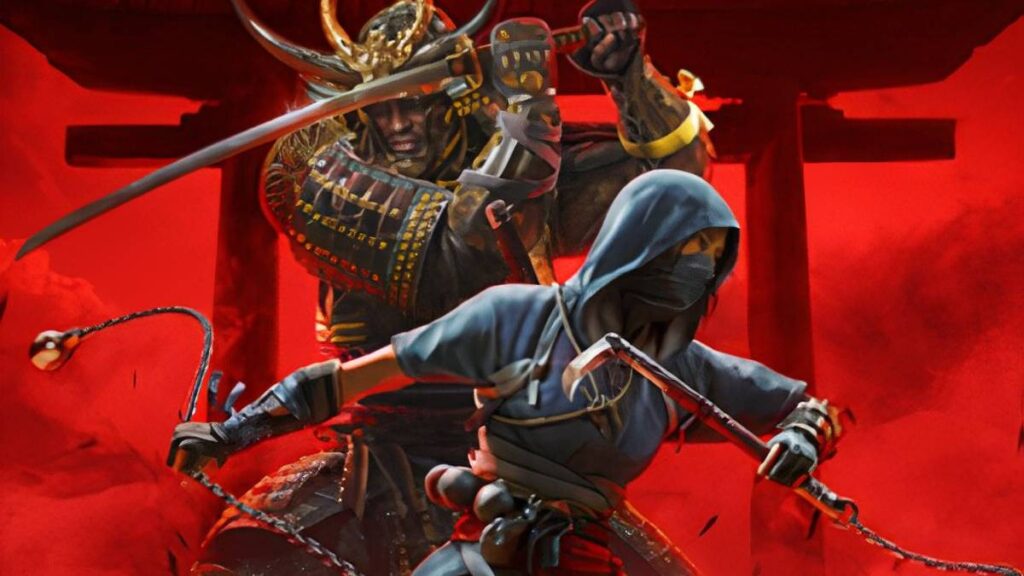
Table of Contents
The Shift Toward a Dual-Perspective Narrative
Ubisoft’s latest foray into the historical sandbox, Assassin’s Creed Shadows, isn’t just another entry in the long-running franchise; it represents a fundamental shift in how the series handles player agency and character progression. After years of leaning heavily into the massive, sprawling RPG frameworks seen in Odyssey and Valhalla, Shadows attempts a tighter, more focused approach by splitting the gameplay experience between two vastly different protagonists: Naoe, a shinobi, and Yasuke, a legendary samurai.
- Dual-Protagonist System: Players switch between Naoe (stealth/agility) and Yasuke (power/combat), each with independent skill trees.
- Reactive World: Feudal Japan features dynamic weather and seasonal changes that actively affect stealth and traversal.
- Shinobi Network: A new layer of gameplay involving spy networks and hideout customization to facilitate missions.
- Platform Availability: Optimized for current-gen hardware including PlayStation 5, Xbox Series X/S, and PC.
For years, the community has clamored for a setting in Japan. However, the challenge for Ubisoft was avoiding the “generic samurai” trope. By introducing a dual-character system, the game avoids the limitation of having to make one character a “jack-of-all-trades.” Instead, it forces the player to consider the method of entry. Do you infiltrate the castle under the cover of a storm as Naoe, or do you breach the gates with the sheer force of Yasuke? This binary approach adds a layer of strategic planning that has been missing from the series since the earlier, more clandestine titles.
The Mechanical Contrast: Naoe vs. Yasuke
The core of Assassin’s Creed Shadows lies in the complementary nature of its leads. This isn’t a simple character swap; it’s a change in game genre depending on who you control.
Naoe: The Art of Invisibility
Naoe embodies the traditional Assassin fantasy. Her gameplay focuses on verticality, agility, and evasion. Unlike previous protagonists who could simply “hide in a crowd,” Naoe’s toolkit is designed for the shadows. Her ability to scale structures and utilize the environment for concealment is critical. The game introduces reactive lighting, meaning that the time of day and weather conditions directly impact her visibility. During a rainstorm, guards are less likely to spot her, but her footing on certain surfaces may change.
Yasuke: The Weight of Steel
Yasuke provides the antithesis to Naoe’s stealth. As a samurai, his presence is an announcement. His combat style is characterized by precision and power, favoring direct confrontations and heavy strikes. Where Naoe avoids a fight, Yasuke orchestrates it. The tactical depth here comes from his ability to manipulate enemy formations and utilize heavy weaponry to breach defenses that would be impassable for a stealthier character. This creates a compelling loop: Naoe gathers intelligence and weakens defenses, while Yasuke executes the high-impact objective.
A Living World: The Impact of Feudal Japan’s Ecosystem
One of the most technically impressive aspects of Shadows is the implementation of a dynamic world state. This is not merely aesthetic; it is a core gameplay mechanic. The transition between seasons—Spring, Summer, Autumn, and Winter—changes the physical layout of the world.
For example, in the autumn, falling leaves can provide temporary cover or create noise that alerts enemies. In winter, snow accumulates, potentially blocking paths or leaving footprints that guards can track. This level of environmental reactivity elevates the game from a static map to a living ecosystem, rewarding players who pay attention to the atmospheric cues before planning their approach.
| Feature | Naoe (Shinobi) | Yasuke (Samurai) |
|---|---|---|
| Primary Approach | Stealth & Infiltration | Combat & Direct Assault |
| Movement | High Agility/Climbing | Measured/Heavy |
| Progression | Independent Skill Tree | Independent Skill Tree |
| Environmental Interaction | Uses Shadows/Weather | Forces Engagement |
Building the Shinobi League and the Hideout System
Beyond the missions, Ubisoft has introduced a base-building element that adds a layer of management to the experience. The customizable hideout serves as the hub for the shinobi league. This is where the game shifts from an action-adventure to a light simulation. Players can train their crew, craft specialized gear, and organize their base layout.
The spy network is perhaps the most interesting addition. Information is presented as a weapon; by building a network of informants, players can uncover target locations and guard rotations before ever setting foot in a mission zone. This loop—Intel $ ightarrow$ Planning $ ightarrow$ Execution—brings the series closer to the spirit of the original 2007 title while maintaining the scale of a modern AAA production.
What This Means for the Future of the Franchise
The move to a dual-protagonist system in Assassin’s Creed Shadows is a calculated risk. By separating the “Assassin” and the “Warrior” into two distinct characters, Ubisoft is admitting that the “do-it-all” protagonist of the RPG era had become bloated and lacked identity. This shift allows for more specialized gameplay and a narrative that can explore feudal Japan from both the margins (Naoe) and the center of power (Yasuke).
For the player, this means more variety. You are no longer just playing one character with different outfits; you are switching between two different gameplay philosophies. If the execution holds up, this could become the new blueprint for future titles, allowing Ubisoft to explore historical conflicts through contrasting social classes or political ideologies.
Frequently Asked Questions
Can I play as only one character?
While you can spend the majority of your time with one character, the game is designed around complementary playstyles. Many objectives are significantly easier—or only possible—by switching between Naoe and Yasuke to handle different aspects of a mission.
Is Assassin’s Creed Shadows an RPG?
It retains RPG elements such as skill trees, gear customization, and loot, but it is more focused on action-adventure and stealth than the massive, open-world RPGs like Valhalla. The scope is more contained and the missions more targeted.
How does the seasonal weather affect gameplay?
Weather impacts visibility, sound, and traversal. For instance, rain can mask your footsteps, while snow can leave tracks. Certain paths may be blocked by snow in winter or revealed during a drought in summer.
Which platforms is the game available on?
The game is available on PlayStation 5, Xbox Series X, Xbox Series S, and PC, leveraging current-gen hardware for its dynamic weather and lighting systems.
What is the rating of the game?
The game is rated Mature 17+ due to blood and gore, intense violence, and strong language, fitting the brutal reality of the Sengoku period.
Final Verdict on the Return to Form
While some critics have pointed to the historical complexities surrounding the inclusion of Yasuke, from a mechanical standpoint, Assassin’s Creed Shadows is a breath of fresh air. It successfully bridges the gap between the franchise’s stealthy roots and its modern, high-fidelity ambitions. By anchoring the experience in the tension between the shinobi and the samurai, Ubisoft has created a world that feels both expansive and meticulously detailed. For those who felt the series had lost its way in the sheer size of previous maps, Shadows offers a more focused, intentional, and ultimately more rewarding experience.