US-Iran Port Agreement: The Geopolitical Shift and Its Impact on Global Tech Supply Chains
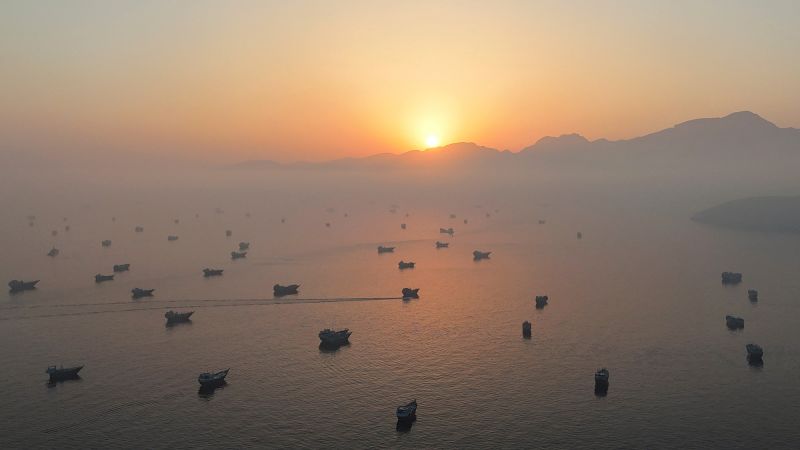
Table of Contents
A Digital Handshake in a High-Tension Zone
In a move that has sent shockwaves through both diplomatic circles and global energy markets, the United States and Iran have announced a breakthrough agreement to end the U.S.-led blockade of Iranian ports and reopen the critical maritime artery known as the Strait of Hormuz. The agreement, which Vice President JD Vance confirmed was signed electronically over the weekend, represents a pivot in U.S. foreign policy toward a more transactional diplomatic approach, though the lack of a public text has left analysts and markets in a state of cautious optimism.
- Maritime Access: The deal effectively ends the U.S. blockade, reopening the Strait of Hormuz to commercial traffic.
- Diplomatic Friction: Despite the agreement, Israel maintains its military presence in southern Lebanon, contradicting Iranian claims of a total ceasefire.
- Economic Ripple: Oil prices have hit a three-month low, though long-term recovery for impacted industries remains uncertain.
- G7 Focus: The deal will be a central point of discussion at the upcoming G7 summit in France.
The timing of this agreement is critical. For the tech and logistics sectors, the Strait of Hormuz is not merely a political flashpoint but a logistical bottleneck. Roughly one-fifth of the world’s total oil consumption passes through this narrow waterway. Any instability here triggers a cascade effect: energy costs spike, shipping insurance premiums skyrocket, and the cost of transporting raw materials for high-tech manufacturing increases.
The Logistics of a Digital Agreement
The detail that the agreement was signed electronically is more than a clerical curiosity; it reflects the current state of rapid-fire diplomacy under the Trump administration. By bypassing traditional, slow-moving treaty protocols in favor of a digital signature, the administration has prioritized speed and market reaction over diplomatic formality. However, this has created a transparency vacuum. Without a released text, the international community is relying on conflicting accounts from Tehran and Washington regarding the specific terms of the port reopening.
From a technical standpoint, the reopening of these ports requires a synchronized effort in maritime signaling and security protocols. The U.S. Navy must transition from an enforcement posture to a monitoring posture, while Iranian port authorities must prove they can manage increased traffic without violating the terms of the agreement. This transition period is where the highest risk of accidental escalation remains.
The Friction Point: Israel and Southern Lebanon
While the US-Iran deal suggests a thawing of relations, the ground reality in the Levant remains frozen. The Israeli Defense Minister has explicitly stated that the Israel Defense Forces (IDF) are not withdrawing from southern Lebanon. This creates a stark contradiction: Iran claims the agreement encompasses an end to the conflict in Lebanon, while Israel maintains its operational autonomy.
Reports suggest a significant rift has emerged between President Donald Trump and Prime Minister Benjamin Netanyahu. Sources indicate the President was enraged by an Israeli strike on Beirut that occurred just hours before the announcement of the agreement. This friction underscores the fragility of the deal; if the U.S. cannot align its allies with its diplomatic breakthroughs, the stability of the port reopening may be short-lived.
What This Means for Global Tech and Supply Chains
For the technology sector, this agreement is a hedge against volatility. While the U.S. does not import significant amounts of electronics directly from Iran, the interconnectivity of global trade means that stability in the Middle East is a prerequisite for predictable pricing in hardware.
Energy Costs and Hardware Manufacturing
The primary link between the Strait of Hormuz and your smartphone or laptop is energy. The manufacturing of semiconductors is an energy-intensive process. When oil prices spike due to blockade fears, the cost of electricity and chemical precursors for chip fabrication rises. The current drop in oil prices to a three-month low provides a much-needed reprieve for manufacturers facing squeezed margins in 2025.
Shipping Lane Reliability
The Strait of Hormuz is a critical transit point for goods moving between Asia and Europe. A blockade forces ships to take longer, more expensive routes around the Cape of Good Hope or through the Suez Canal (which has its own set of instabilities). The reopening of the Strait restores the most efficient path for global trade, reducing lead times for critical components moving toward European assembly plants.
Historically, geopolitical stability in the Persian Gulf correlates with a decrease in the Volatility Index (VIX) for energy-dependent stocks. Tech companies with heavy logistics footprints (like Apple, Samsung, and Tesla) benefit from lowered insurance premiums for maritime freight, which can drop by as much as 15-20% when a high-risk zone is downgraded to “stable” by insurers like Lloyd’s of London.
The G7 Summit: The Next Phase of Validation
President Trump is currently en route to France for the G7 summit, where this agreement will be the primary topic of discussion. The global community is looking for three things: verification, sustainability, and reciprocity. European leaders, in particular, are keen to ensure that the reopening of the Strait is not a temporary tactical pause but a structural shift toward stability.
The G7’s role will be to provide a multilateral framework that supports the deal. If France, Germany, and Japan endorse the agreement, it provides a layer of international legitimacy that makes it harder for either the US or Iran to unilaterally backtrack without facing global diplomatic isolation.
Technical Breakdown: How Port Blockades Impact Trade
To understand why this agreement is so vital, one must understand the mechanism of a maritime blockade. A blockade is not just about stopping ships; it is about risk pricing. When the US blockades a port, insurance companies apply a “War Risk Premium” to every vessel entering the region. This premium often exceeds the actual cost of fuel for the journey.
By ending the blockade, the US is essentially removing a financial tax on every single vessel traversing the region. This leads to an immediate drop in the cost of goods—not because the items themselves are cheaper, but because the cost of moving them is lower. For the just-in-time (JIT) manufacturing models used by the tech industry, these savings are critical for maintaining quarterly profit margins.
Comparison of Trade Routes
| Route | Transit Time | Risk Level | Cost Impact |
|---|---|---|---|
| Strait of Hormuz (Open) | Baseline | Moderate | Standard |
| Suez Diversion | +5-10 Days | Low-Moderate | High Fuel Cost |
| Cape of Good Hope | +14-21 Days | Low | Extreme Fuel Cost |
Analysis of Current Stability
It is important to distinguish between a diplomatic agreement and regional stability. The agreement is a factual event—the signing happened. However, the stability is a matter of analysis and opinion. Many analysts argue that the deal is a fragile truce rather than a peace treaty. The divergence between the US and Israel regarding Lebanon proves that the “deal” is fragmented. While the ports may open, the political atmosphere remains volatile.
Furthermore, the economic recovery will not be instantaneous. While oil prices have dropped, the infrastructure and shipping schedules disrupted by the blockade take weeks, if not months, to recalibrate. Companies cannot simply flip a switch and return to pre-blockade logistics.
Frequently Asked Questions
What is the Strait of Hormuz and why is it important?
The Strait of Hormuz is a narrow waterway between Oman and Iran. It is the world’s most important oil chokepoint, as it connects the Persian Gulf with the open ocean, allowing oil and gas from major producers to reach global markets.
Does this agreement end the conflict in Lebanon?
While Iran claims the agreement includes an end to the conflict in southern Lebanon, Israel’s defense ministry has explicitly denied that its forces are withdrawing, indicating that the ceasefire is not currently in effect or recognized by all parties.
How will this affect gasoline and energy prices?
The removal of a blockade generally reduces market uncertainty. This often leads to a drop in oil prices, as seen in the recent three-month low, which can eventually lead to lower prices at the pump and lower energy costs for industries.
Why was the agreement signed electronically?
Electronic signing suggests a desire for immediate implementation and a shift toward a more modern, transactional style of diplomacy, though critics argue it lacks the formal transparency of a traditional treaty.
What is the role of the G7 in this deal?
The G7 summit in France will serve as a venue for the U.S. to gain international support and validation for the deal, ensuring that other global powers recognize the agreement to maintain long-term stability in the region.
As the world awaits the release of the official text of the agreement, the immediate relief in the energy markets provides a temporary window of economic stability. However, the discord between the U.S. and its closest ally, Israel, suggests that the path to a truly peaceful Middle East remains fraught with obstacles. For now, the reopening of the ports is a victory for global logistics, but a question mark for regional geopolitics.