Apple’s Touchscreen MacBook Leak: A Strategic Pivot for macOS or a New Hardware Tier?
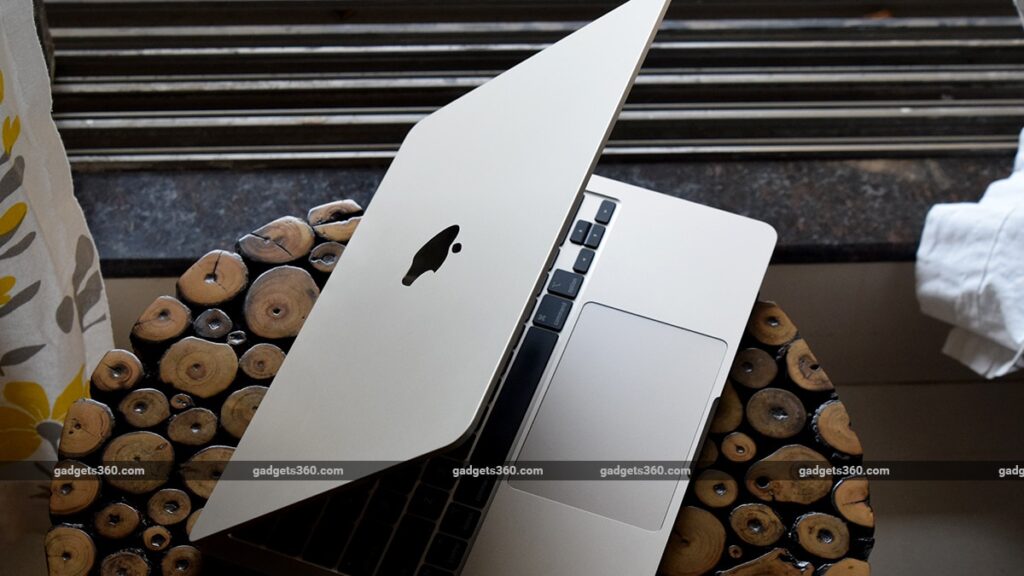
Table of Contents
The End of the ‘No-Touch’ Era?
For over a decade, Apple has maintained a rigid philosophical divide between its tablet and laptop lines. Steve Jobs famously dismissed touchscreens on laptops as impractical, a sentiment that echoed through the tenure of Tim Cook, who frequently argued that the ergonomics of a clamshell laptop are fundamentally incompatible with touch. However, a recent surge of reports from Chinese social media platform Weibo, specifically from tipster Instant Digital, suggests that the internal directive has shifted. The claim is blunt: a touchscreen MacBook is “100 percent confirmed” to be in development.
This isn’t the first time we’ve heard whispers of a touch-enabled Mac, but the specificity of current leaks—linking the technology to a potential high-end “Ultra” model—suggests Apple is moving past the prototyping phase. The challenge for Apple isn’t just the hardware; it’s the software. macOS is designed for precision clicking and hovering, while iPadOS is built for tactile gestures. Bridging this gap without creating a fragmented user experience is the primary hurdle facing the Cupertino giant.
- Confirmed Leak: Weibo tipster Instant Digital claims a touchscreen MacBook is officially in development.
- Hardware Tiering: Rumors point toward a high-end “MacBook Ultra” model, potentially positioning it above the MacBook Pro 16-inch.
- The Software Gap: The success of this hardware depends on whether Apple introduces a “hybrid mode” for macOS or sticks to basic touch inputs.
- Strategic Shift: This move marks a reversal of Apple’s long-standing design philosophy regarding the distinction between iPad and Mac.
Decoding the Leak: Who is Instant Digital?
In the world of Apple leaks, source credibility varies wildly. Instant Digital operates within the dense ecosystem of Chinese supply chain leaks, often surfacing information from manufacturers in Shenzhen and Zhengzhou. While not as globally recognized as Ming-Chi Kuo, the level of confidence expressed in this specific leak—using the phrase “100 percent confirmed”—usually indicates a level of certainty derived from production schedules rather than mere speculation.
It is important to note that Apple rarely confirms hardware specs until the keynote. However, historical precedent shows that when Apple develops a new input method, it usually spends years refining the digitizer layer—the glass component that translates touch into electrical signals. For a MacBook, this means ensuring that the screen doesn’t smudge or flex under pressure, a technical detail that has plagued Windows-based 2-in-1s for years.
The Technical Challenge: Why Apple Waited
To understand why a touchscreen MacBook is a big deal, we have to look at the physics of the device. A standard MacBook Pro screen is tilted at a fixed angle. Touching a vertical or near-vertical screen causes “gorilla arm”—a medical term for the fatigue felt when holding your arm out for extended periods. This is why the iPad is flat and the MacBook is a clamshell.
To solve this, Apple may be looking at two possible paths: indirect touch (where the touch surface is separate from the display, similar to the Touch Bar but larger) or a hybrid hinge that allows the screen to tilt further back. If the leak regarding a “MacBook Ultra” is true, we could be seeing a device that leverages a more robust chassis to support a digitizer that doesn’t compromise the liquid retina XDR’s contrast ratios.
The Impact on macOS Architecture
The most critical question is: How do you touch macOS? Currently, macOS uses a cursor. If you simply add touch to the current interface, the buttons are too small for fingers. Apple has two choices here:
- The Hybrid Approach: Introducing a system where the UI dynamically scales its buttons when a finger touches the screen, similar to how some Windows 11 builds operate.
- The iPadOS Bridge: Allowing users to toggle a “Touch Mode” that simplifies the interface, bringing the versatility of the iPad Pro into the power of the Mac.
What This Means for the Professional Market
The introduction of a touchscreen wouldn’t just be a gimmick; it would fundamentally change the workflow for three specific groups: Digital Artists, Software Developers, and Video Editors.
Currently, a professional artist must choose between the raw power of a MacBook Pro and the tactile precision of an iPad Pro with an Apple Pencil. A touchscreen MacBook Ultra would collapse these two workflows. Imagine scrubbing a 4K timeline in Final Cut Pro with your left hand while using a stylus or finger to make precise cuts on the display with your right. This “bimodal’ productivity is where the real value lies.
Practical Implications by User Segment
| User Group | Current Pain Point | Touch MacBook Benefit |
|---|---|---|
| Creative Pros | Switching between Mac and iPad | Single-device high-power workflow |
| Corporate/Admin | Cumbersome PDF signing/markup | Direct on-screen annotation |
| Power Users | Cursor-heavy navigation | Faster gesture-based app switching |
The “MacBook Ultra” Theory
The mention of an “Ultra” model is telling. Apple typically reserves the “Ultra” branding for its most powerful chips (like the M2 Ultra). Applying it to a chassis suggests a product designed to be the definitive workstation. If Apple introduces touch only to the Ultra model, they can justify a significantly higher price point, potentially pushing the entry cost above $3,000.
This strategy allows Apple to A/B test the market. If the Ultra sells well, touch could trickle down to the standard MacBook Pro line. If it fails, the “Ultra” remains a niche professional tool without tarnishing the core MacBook brand. This mirrors how Apple handled the transition from the 12-inch MacBook to the MacBook Air.
Comparison: Touchscreen Mac vs. Windows 2-in-1s
Microsoft has pushed touch via the Surface line for years. However, the Surface often struggles with a “split personality”—it’s either a tablet that tries to be a PC or a PC that’s too heavy to be a tablet. Apple’s approach will likely be different. Instead of a 360-degree hinge, Apple will likely focus on precision touch. By integrating the Apple Pencil’s low-latency technology into the MacBook’s glass, they can offer a level of accuracy that Windows devices often lack.
Addressing the Skeptics: The Case Against Touch
It is worth acknowledging that some users—and many within Apple’s own engineering teams—believe touchscreens on laptops are a mistake. The primary arguments include:
- Fingerprints: A glossy, touch-enabled screen on a MacBook would be a smudge magnet, detracting from the visual purity of the display.
- Battery Drain: Adding a digitizer layer and the processing power to track touch inputs can lead to a marginal decrease in battery efficiency.
- Weight: Extra layers of glass and sensors add grams to the device, which conflicts with Apple’s obsession with portability.
However, the market is shifting. With the M4 chip’s increased efficiency and the push toward “AI PCs,” the ability to interact with AI agents via touch (think sketching a prompt or circling an element on screen) may be the catalyst Apple needs to finally cave.
FAQ: Understanding the Touchscreen MacBook Rumors
Will all MacBooks get touchscreens?
Current leaks suggest that touch support will be limited to a high-end model, possibly the “MacBook Ultra.” It is unlikely that the MacBook Air will receive this feature immediately due to cost and weight constraints.
Will the MacBook touch screen support the Apple Pencil?
While not explicitly confirmed, it would be a logical step. If Apple is targeting a professional “Ultra” tier, the ability to use an Apple Pencil for precision work is the primary reason users would choose a touchscreen over a traditional one.
When will the touchscreen MacBook be released?
The leak from Instant Digital does not provide a specific date. However, given Apple’s hardware cycles, a 2025 or 2026 window is most probable, aligning with the rollout of new M-series chip architectures.
Does this mean the iPad Pro is dead?
No. The iPad remains a tablet-first device. The touchscreen MacBook would be a laptop-first device with touch capabilities. Apple will likely maintain both to capture different segments of the market.
How will touch affect the MacBook’s price?
Adding a high-quality digitizer and potentially a new chassis for the “Ultra” model will almost certainly increase the price. Expect a premium of $300 to $700 over the standard MacBook Pro 16-inch.
Final Context: The Hardware-Software Synergy
Apple’s greatest strength is not making a great screen or a great OS, but making them work together. If a touchscreen MacBook arrives, it won’t be because “users wanted it”—it will be because Apple found a way to make touch fundamentally change how we use a computer. Whether through a redesigned macOS or a new set of gestures, the shift toward a touchscreen MacBook would represent the most significant change to the Mac’s physical identity since the transition to Apple Silicon.