Onimusha: Way of the Sword Hands-On: Capcom’s Brutal, Absurdist Reimagining of Musashi
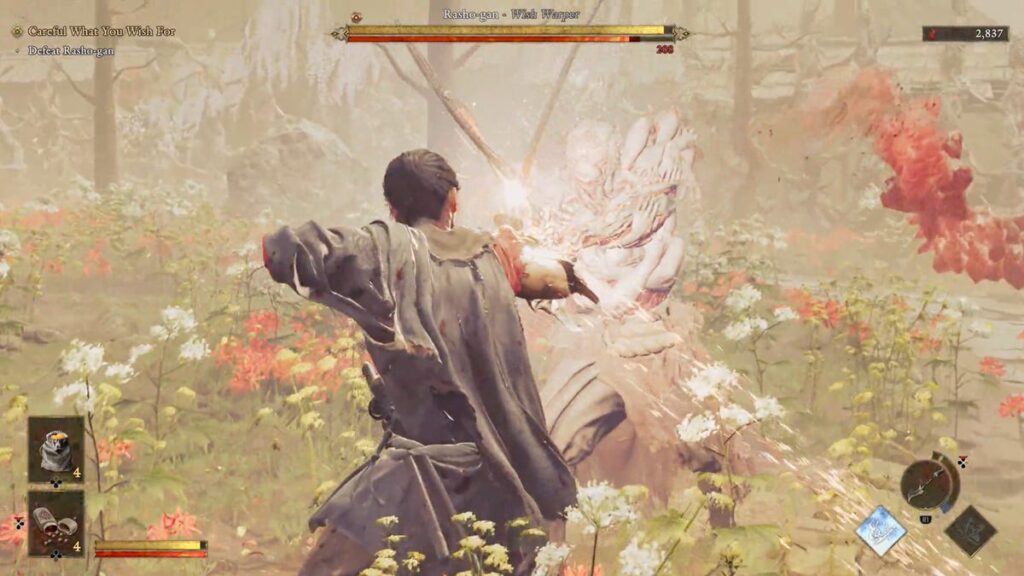
Table of Contents
The Return of a Dormant Giant
For nearly two decades, the Onimusha franchise has been a ghost of gaming’s past, remembered mostly by those who spent their early 2000s mastering the art of demon-slaying on the PlayStation 2. That dormancy ends on September 25, when Capcom releases Onimusha: Way of the Sword. Having spent an hour with the title during a hands-on preview at Summer Game Fest, it is clear that Capcom isn’t just reviving a series; they are pivoting the tone of the entire samurai sub-genre.
- Subverting Tropes: Unlike the stoic protagonists of Ghost of Tsushima or Sekiro, the version of Miyamoto Musashi here is an oafish, rude, and comically detached warrior.
- Technical Combat: The game introduces a high-skill ceiling with the ‘Issen’ technique, requiring frame-perfect timing to execute shadow-form counters.
- Absurdist Horror: The world blends brutal blood-slick combat with a dark, surreal humor involving maimed villagers and spirit-infused environments.
- Accessibility: Combat allows for ‘clumsy’ hacking against basic mobs, but bosses demand mastery of parrying and stamina management.
Walking into the demo, the immediate impression is one of cognitive dissonance. You are playing as Miyamoto Musashi—arguably the most famous swordsman in Japanese history—but he is presented as something of an idiot. While the industry has become saturated with the ‘noble ronin’ archetype, Way of the Sword chooses a path of absurdist characterization that fits its chaotic, demon-infested setting.
A Departure from the Stoic Samurai
The current landscape of samurai gaming is dominated by reverence. From the honor-bound narratives of Ghost of Tsushima and the upcoming Ghost of Yotei to the stealth-centric Assassin’s Creed Shadows, the trend is toward historical gravity. Capcom has decided to lean into the opposite. The Musashi we encounter in Way of the Sword is unmoored from the rigid constraints of Bushido.
This shift is evident in the environmental storytelling. During the preview, I navigated a village partially overrun by Genma (demon soldiers). Rather than a somber wasteland, I encountered a rift leading to a sun-dappled area where the local spirits recounted their bizarre deaths with a disturbing level of cheer. One spirit had happily accepted the amputation of half a leg to cure a simple aching knee; another couple had been turned into dolls to ensure they would never be apart. This blend of gore and whimsy creates an atmosphere of action-horror that feels distinctly ‘Capcom,’ echoing the tonal swings found in Resident Evil or Devil May Cry.
The character dynamics further this theme. In one sequence, Musashi attempts to cross a river using a boat borrowed from the dancer Okuni (a nod to the historical founder of kabuki). Musashi’s reaction to the boat is not one of tactical assessment, but of genuine confusion: “When would a swordsman need to paddle a boat?” The subsequent interaction, where Okuni calls him an idiot for not understanding how oars function, provides a necessary emotional levity that contrasts with the visceral violence of the combat.
Deconstructing the Combat: The Art of the Blade
While the humor is a highlight, the core of Onimusha: Way of the Sword is its combat system. The game implements a tiered defensive strategy that forces players to make split-second decisions based on enemy attack patterns.
Defensive Layers and Stamina Management
Combat revolves around four primary defensive reactions:
- Basic Block: A safe option that prevents damage but consumes stamina. Over-reliance on blocking leaves the player vulnerable to guard-breaks.
- Standard Parry: A timing-based mechanic essential for countering specific heavy attacks.
- Dodge: Used for linear or sweeping attacks that cannot be parried.
- Ranged Reflection: A specific parry window that allows Musashi to send projectiles back at the Genma.
The Issen Technique: A Frame-Perfect Gamble
The most discussed mechanic in the community is the Issen technique. For the uninitiated, Issen is a high-risk, high-reward counter that creates a visual ‘shadow form’ of Musashi. When timed perfectly—within a matter of frames—the enemy cuts through the shadow, and Musashi delivers a devastating counter-strike.
In my hour of gameplay, I struggled to trigger the Issen consciously. It is not a button you simply press; it is a rhythmic synchronization with the enemy’s animation. This creates a steep learning curve, though Capcom has released a free demo to allow players to practice these mechanics before the full launch. This design philosophy mirrors the ‘hard-but-fair’ approach seen in FromSoftware titles, though with a different rhythmic cadence.
Boss Dynamics and the ‘Humble’ Effect
One of the most critical insights came from a behind-closed-doors briefing with Producer Koichi Shibata. When asked about the difficulty curve, Shibata noted that while basic enemies can be defeated with simple sword slashes—effectively allowing the player to ‘hack and slash’ through the fodder—bosses are designed to ‘humble’ the player. This ensures that the game doesn’t become a mindless power trip.
This was proven during the demo’s final encounter with an Oni boss. The boss, a grotesque creature that had hypnotized villagers into letting him amputate their limbs with giant shears, was a lesson in timing. Early in the fight, I attempted to brute-force the encounter, only to be repeatedly smacked back. However, as I stopped panic-attacking and began to read the telegraphs, the rhythm became clear. The boss’s attacks are more telegraphed than the erratic movements found in Elden Ring, making the victory feel earned rather than accidental.
The Arsenal Beyond the Katana
While the sword is the primary tool of destruction, Way of the Sword offers a secondary equipment system that many players—myself included—tend to overlook in the heat of battle. My loadout included two daggers capable of slicing golden orbs for health restoration and a bow used primarily to interrupt the boss’s wind-up animations. There are also defense talismans and other consumables that provide tactical advantages.
The tension between the ‘pure’ swordplay and the utility of the gadgets is an interesting design choice. When a player enters the ‘flow state’ of parrying, the secondary weapons feel redundant, but in high-difficulty encounters, they become the difference between a sliver of health and a game-over screen.
What This Means for the Genre
The return of Onimusha signals a shift in how developers approach historical Japanese settings. For years, the industry has focused on authenticity (the historical clothes, the rigid social hierarchies, the stoic philosophy). Way of the Sword focuses on interpretation. By making Musashi a flawed, rude, and occasionally dim-witted protagonist, Capcom removes the restrictive weight of the ‘noble warrior’ trope, allowing for a more experimental narrative and a more chaotic world.
From a technical standpoint, the inclusion of a free demo for a mechanic as complex as the Issen technique shows that Capcom is aware of the modern audience’s desire for mastery. They aren’t just selling a game; they are selling a skill set.
Comparative Analysis: Modern Samurai Combat
| Feature | Onimusha: Way of the Sword | Sekiro: Shadows Die Twice | Ghost of Tsushima |
|---|---|---|---|
| Combat Philosophy | Action-Horror / Rhythm | Precision Parrying / Posture | Open World / Tactical Stances |
| Difficulty Curve | Dynamic (Easy Mobs, Hard Bosses) | Consistent High Difficulty | Adjustable / Accessible |
| Protagonist Tone | Absurdist / Flawed | Stoic / Bound by Duty | Honor-driven / Tragic |
| Key Mechanic | Issen (Shadow Counter) | Deflection / Posture Break | Stances / Stealth |
Frequently Asked Questions
When is Onimusha: Way of the Sword releasing?
The game is officially scheduled for release on September 25, 2026.
What is the Issen technique?
The Issen technique is a frame-perfect counter-attack where Musashi leaves a shadow image of himself for the enemy to strike, allowing him to land a critical hit during the window of the enemy’s animation.
Is the game similar to Sekiro or Elden Ring?
While it shares a focus on parrying and timing, the rhythm is different. Producer Koichi Shibata has indicated that the telegraphs are clearer than those in Soulsborne games, making the combat more about rhythm than raw reflex.
Who is the protagonist of the game?
The player controls a reimagined version of the legendary Japanese swordsman Miyamoto Musashi, portrayed here with a more humorous and oafish personality.
Is there a demo available?
Yes, Capcom has released a free demo of Onimusha: Way of the Sword specifically so players can practice the complex combat mechanics, such as the Issen counter.
Closing Observations
Onimusha: Way of the Sword succeeds by not trying to be the ‘definitive’ samurai simulator. Instead, it embraces the weirdness of its roots and the brutality of its combat. By pairing a blood-soaked battlefield with a protagonist who doesn’t know how to use a boat, Capcom has created a tension that is both refreshing and engaging. The success of the final product will depend on whether the narrative depth matches the mechanical precision of the swordplay, but based on the Summer Game Fest preview, the blade is sharp, and the tone is perfectly pitched.