Canon EOS R6 Mark V Debuts in India: A New High-End Hybrid Tool for Content Creators
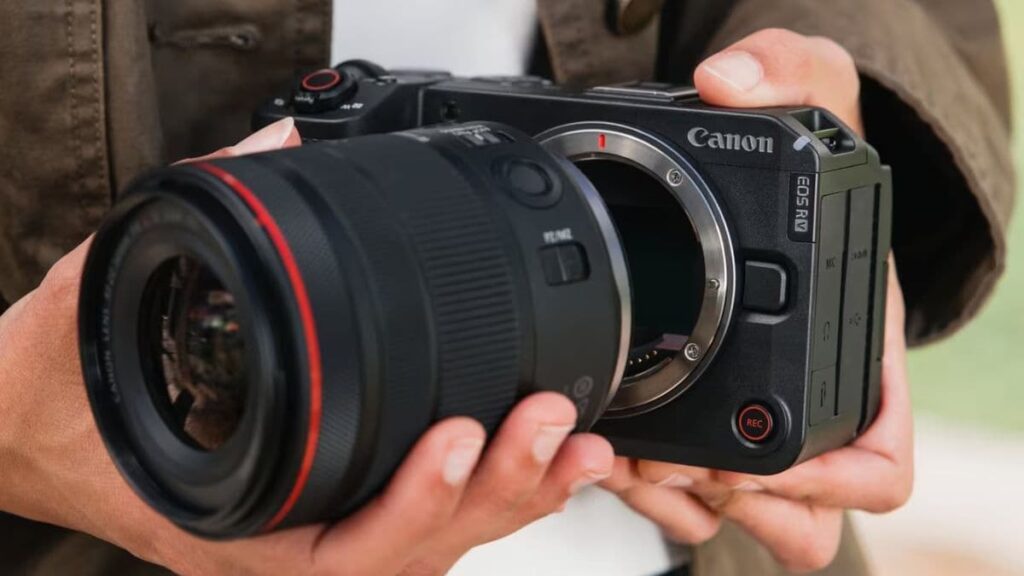
Table of Contents
A Strategic Pivot Toward the ‘Prosumer’ Videographer
Canon has officially expanded its mirrorless ecosystem in the Indian market with the introduction of the Canon EOS R6 V. While the R6 line has traditionally been the ‘sweet spot’ for enthusiasts seeking a balance between stills and video, the Mark V iteration signals a more aggressive push into the professional cinematography space. This is not just a marginal spec bump; it is a targeted response to the growing demand for high-bitrate, high-dynamic-range video tools that don’t require a full-scale cinema rig.
The launch is paired with a piece of glass that is arguably as important as the body itself: the RF 20-50mm f/4L IS USM PZ. This lens marks a significant milestone for Canon, introducing the first professional-grade L-series full-frame lens with a built-in power zoom (PZ) system, designed specifically to eliminate the ‘jerky’ manual zooms often seen in hybrid setups.
- Market Positioning: High-end hybrid camera targeting independent filmmakers and high-volume content creators.
- Pricing: Body only at Rs. 2,35,995; Lens at Rs. 1,42,995; Kit price Rs. 3,55,995.
- Core Tech: Powered by the DIGIC X processor and Dual Pixel CMOS AF II for precise, real-time tracking.
- Lens Innovation: The RF 20-50mm PZ offers cinema-style smooth zooming in a compact L-series form factor.
For the working professional, the EOS R6 V represents a shift toward ‘run-and-gun’ production. In a market where Sony’s FX line and Panasonic’s Lumix S-series have carved out niches for dedicated video tools, Canon is attempting to bridge the gap by offering a camera that feels like a DSLR but performs like a cinema camera.
Technical Breakdown: DIGIC X and the AF Edge
At the heart of the EOS R6 V is the DIGIC X image processor. While this processor has appeared in other R-series bodies, the optimization in the Mark V is tuned for thermal management and high-bitrate video throughput. Overheating has historically been the Achilles’ heel of full-frame mirrorless cameras recording 4K; Canon has addressed this through a refined internal heat dissipation architecture, allowing for longer continuous recording times without the dreaded thermal shutdown.
The Dual Pixel CMOS AF II system is where the camera truly differentiates itself. In practical terms, this means the camera can track eyes, animals, and vehicles with a level of stickiness that reduces the need for manual focus pulling. For solo creators—those who act as their own director and camera operator—this reliability is non-negotiable.
The RF 20-50mm f/4L IS USM PZ: Why Power Zoom Matters
The inclusion of the RF 20-50mm f/4L IS USM PZ is a strategic move. Traditional zoom lenses are operated by rotating the ring, which often creates a variable speed of zoom. A Power Zoom (PZ) system uses a motor to drive the focal length, allowing for perfectly linear, smooth zooms that can be controlled via a switch on the lens or remotely through the camera body.
The f/4 aperture is a compromise for the sake of size and constant light transmission, but it is offset by the L-series glass quality and the integrated Image Stabilization (IS) that works in tandem with the body’s In-Body Image Stabilization (IBIS). This ‘dual-layer’ stabilization is critical for handheld B-roll and walking shots.
What This Means for the Indian Market
The pricing strategy—Rs. 2,35,995 for the body—places the EOS R6 V firmly in the premium segment. However, it is important to look at the value-to-utility ratio. For a production house in Mumbai or a freelance creator in Bangalore, this setup replaces the need for multiple bodies. It provides a professional codec suite and a lens that handles both wide-angle establishing shots (20mm) and tighter medium shots (50mm) without the need for constant lens swaps.
The launch through the Canon e-Shop and authorized partners ensures a level of after-sales support and warranty protection that is crucial for expensive professional gear. When you spend over 3.5 Lakhs on a kit, the reliability of the service network becomes as important as the megapixels.
Comparative Analysis: How it Stands Against the Competition
When comparing the EOS R6 V to the Sony Alpha series or the Panasonic Lumix S5II, the conversation usually boils down to Color Science vs. Connectivity. Canon’s color science—particularly skin tones—remains a gold standard in the industry, often requiring less grading in post-production than Sony’s cooler palettes.
| Feature | Canon EOS R6 V | Typical Competitor (Hybrid) | |
|---|---|---|---|
| Autofocus | Dual Pixel CMOS AF II | Phase Detection/Contrast Hybrid | |
| Zoom System | RF Power Zoom (PZ) Available | Mostly Manual/Electronic | |
| Processor | DIGIC X | BIONZ XR / Venus Engine | |
| Target Use | Cinema/Content Creation | General Purpose Hybrid |
Common Questions Regarding the EOS R6 V
Is the Canon EOS R6 V better for video than for photos?
While it remains a capable stills camera, the Mark V is heavily optimized for video. The inclusion of the Power Zoom lens and enhanced thermal management indicates that while it can do both, its primary design goal is to serve as a professional video tool.
What is the advantage of the RF 20-50mm f/4L lens over a standard zoom?
The primary advantage is the Power Zoom. It allows for smooth, cinematic zooms that are impossible with manual rings. Additionally, the ‘L’ designation signifies Canon’s highest quality glass, ensuring minimal distortion and chromatic aberration.
Does the EOS R6 V overheat during 4K recording?
Canon has implemented improved heat dissipation in the R6 V. While no full-frame sensor is completely immune to heat, the Mark V is designed to handle professional workloads longer than its predecessors.
Can I use older EF lenses on the EOS R6 V?
Yes, by using the Canon EF-EOS R mount adapter, users can utilize their existing library of EF lenses, though they will lose the benefits of the native RF power zoom and some autofocus optimizations.
Who should buy the combined kit instead of the body only?
If you are starting a production from scratch or need a versatile ‘walk-around’ lens for video, the kit is the better value. If you already own an array of RF prime lenses, the body-only option is more sensible.
Final Editorial Perspective
The Canon EOS R6 V isn’t trying to be everything to everyone. It isn’t a budget entry point, nor is it a replacement for the RED or Arri cinema systems. Instead, it occupies the critical ‘middle ground’ where the most growth in the creative economy is happening. By pairing a high-intelligence body with a dedicated power-zoom lens, Canon is acknowledging that the modern filmmaker is often a one-person crew.
The success of this launch in India will likely depend on how the community adopts the RF 20-50mm lens. If the PZ system becomes the new standard for hybrid shooters, the R6 V will be remembered as the catalyst for that shift.