TechCrunch Disrupt 2026: How to Navigate the Startup Battlefield 200 Application Process
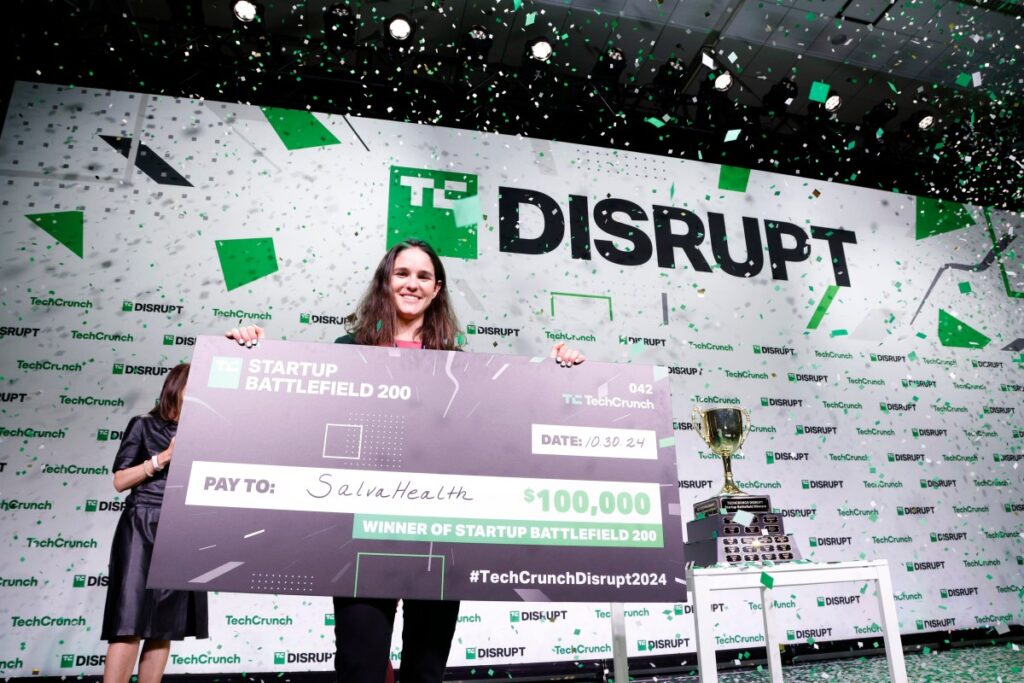
Table of Contents
For founders operating in the high-pressure environment of early-stage venture, visibility is the primary currency. The window to secure a spot in the Startup Battlefield 200 is closing, with applications officially shutting on June 8 at 11:59 p.m. PT. This isn’t merely another pitch competition; it is a strategic gateway to the Disrupt Stage at TechCrunch Disrupt 2026, held at San Francisco’s Moscone West this October.
- Hard Deadline: All applications must be submitted by June 8, 11:59 p.m. PT.
- Eligibility: Primarily targeting bootstrapped, pre-seed, and seed-stage companies with a working MVP.
- The Prize: A $100,000 equity-free grant for the winner, though the primary value lies in investor exposure.
- Track Record: Alumni have collectively raised over $32 billion, including giants like Dropbox and Discord.
The Mechanics of the Startup Battlefield 200
The Startup Battlefield 200 serves as a rigorous vetting process designed to distill thousands of global applicants into a curated cohort of the most promising early-stage companies. Unlike traditional accelerators that take equity, the Battlefield focuses on the amplifier effect—putting a founder in a room with the exact people who can provide the next $2 million in seed funding or the first ten enterprise customers.
To qualify, TechCrunch explicitly seeks “bold early-stage startups” that possess a working Minimum Viable Product (MVP). The requirement for a working product is a critical filter; it separates visionary ideation from execution. While most applicants fall into the pre-seed or seed categories, there is a specific carve-out for Series A companies operating in capital-intensive sectors—such as biotech or hardware—where the burn rate necessitates a larger initial round before a public demo is possible.
The Financial Incentive vs. The Strategic Value
While the $100,000 equity-free funding is a headline-grabbing prize, seasoned founders view the prize money as a secondary benefit. In the context of a $5 million seed round, $100k is helpful for runway but not transformative. The true value is the trust signal. Being selected for the Battlefield 200 acts as a third-party validation that reduces the perceived risk for venture capitalists (VCs) and angel investors.
“The goal is to move from unknown to impossible to ignore.” — TechCrunch Editorial Team
Analyzing the Alumni Trajectory: $32 Billion in Proof
The credibility of the Startup Battlefield is anchored in its historical data. According to TechCrunch’s internal tracking, alumni have raised more than $32 billion in subsequent funding. More tellingly, the competition has served as a launchpad for companies that redefined their respective categories: Dropbox (cloud storage), Discord (community communication), Mint (personal finance), and Trello (project management).
These successes aren’t coincidental. The environment at Moscone West creates a density of “smart money” and strategic media. When a company like Discord pitches successfully, it isn’t just about the applause; it’s about the immediate influx of inbound inquiries from Tier 1 VC firms and a surge in user acquisition driven by the press coverage attending the event.
| Startup Stage | Key Requirement | Primary Goal |
|---|---|---|
| Pre-Seed / Bootstrapped | Working MVP | Validation & Angel Interest |
| Seed Stage | Traction Metrics | Institutional VC Funding |
| Select Series A | Industry Disruption Potential | Market Expansion & Scale |
What This Means for the 2026 Cohort
The current fundraising climate is significantly more disciplined than the “growth at all costs” era of 2021. Investors are now prioritizing efficiency, sustainable unit economics, and genuine technical moats over vanity metrics. For the 2026 Battlefield applicants, this means the bar for the “working MVP” is higher. A landing page and a waitlist are likely insufficient; judges will be looking for evidence of product-market fit or a technical breakthrough that provides a competitive edge.
For founders, this competition is a high-leverage move. Instead of spending six months cold-emailing partners at Sequoia or Andreessen Horowitz, a successful Battlefield run places the founder in a position where the investors are actively seeking them out. It transforms the fundraising dynamic from a plea for capital to a competitive auction for equity.
Strategic Tips for the Final 72 Hours
With only three days remaining, founders should avoid the temptation to over-engineer their application. Based on industry patterns, the review team is looking for clarity and conviction. Focus on these three pillars:
- The Problem: Clearly define the inefficiency you are solving. Avoid jargon like “leveraging AI to optimize paradigms.” Instead, say “we reduce the cost of X by 40% using Y.”
- The Evidence: Highlight your MVP’s current capabilities. What can it actually do today?
- The Vision: Why is this a category-defining company rather than a feature that a larger company (like Google or Microsoft) could ship in a Tuesday update?
The Role of Nominations
Interestingly, the application process allows for nominations. This is a powerful tool for ecosystem builders, mentors, and VCs to push their portfolio companies into the spotlight. If you are a founder who has an existing relationship with an industry leader, now is the time to ask for a nomination to increase your visibility during the review process.
Frequently Asked Questions
Who is eligible for the Startup Battlefield 200?
The competition is primarily open to early-stage startups, including bootstrapped, pre-seed, and seed-stage companies. Selected Series A companies may also qualify, particularly those in capital-intensive industries. A working MVP is a mandatory requirement.
When is the final deadline to apply?
The deadline is June 8, at 11:59 p.m. PT. Applications submitted after this time will not be considered for the Disrupt 2026 cohort.
What is the actual prize for winning the competition?
The winning startup receives $100,000 in equity-free funding. However, the primary benefit for all 200 selected companies is the massive exposure to investors and media at TechCrunch Disrupt.
Do I need to be based in San Francisco to apply?
No. While the event takes place at Moscone West in San Francisco, the application is open to global startups. However, selected founders must be able to attend the live pitches in October.
How does the selection process work?
Every application is reviewed by the TechCrunch team. They evaluate companies based on their potential to disrupt an industry, the quality of their MVP, and the strength of the founding team’s vision.
As the June 8 deadline approaches, the Startup Battlefield 200 remains one of the most efficient ways for a founder to bridge the gap between a stealth project and a market-leading company. Whether the goal is the $100k prize or the $32 billion trajectory of previous alumni, the first step is submitting a cohesive, evidence-backed application before the clock runs out.