Lenovo’s MWC 2026 Strategy: Foldable Gaming Handhelds, Modular AI PCs, and the Push for Repairability
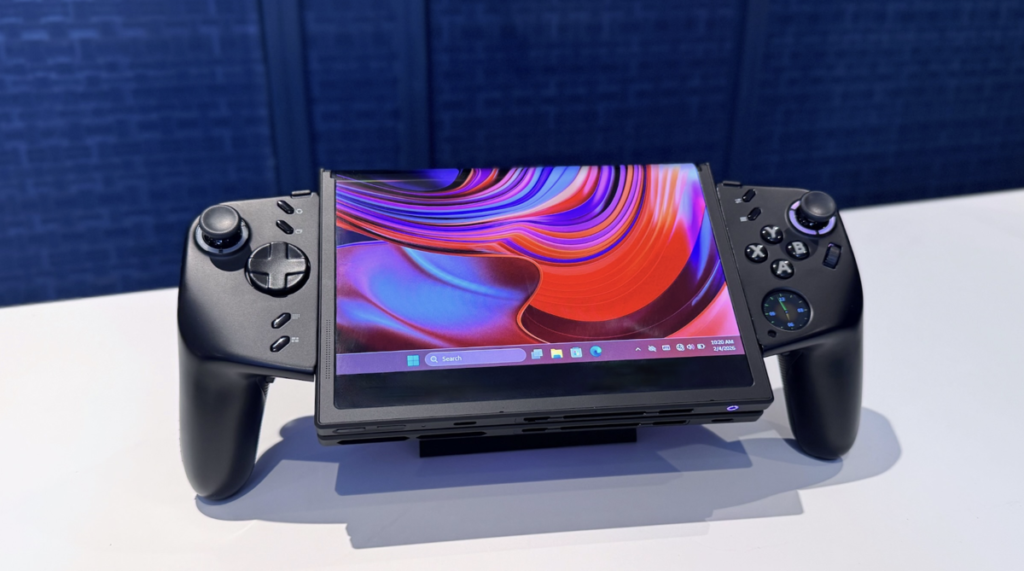
Table of Contents
The Convergence of AI and Hardware Adaptability
Lenovo has arrived at Mobile World Congress (MWC) 2026 not just with a product catalog, but with a manifesto on the future of computing. Following a dominant showing at CES earlier this year—where the company secured three ‘Best of CES’ awards and introduced the Qira AI agent—the hardware giant is now pivoting toward a more aggressive exploration of form factors. The central theme of their Barcelona showcase is clear: the traditional laptop chassis is no longer sufficient for the demands of the AI era.
- Form Factor Innovation: The Legion Go Fold Concept blends a gaming handheld with a foldable 11.6-inch tablet and laptop functionality.
- Sustainability Shift: A new emphasis on modularity and repairability is appearing across both the ThinkBook and ThinkPad T-Series lines.
- Creative Tech: The Yoga Book Pro 3D Concept targets professionals with glasses-free 3D rendering and eye-tracking technology.
- AI Integration: The Qira AI agent is expanding to 20+ devices, supported by new tabletop AI companion hardware.
For those tracking the industry, Lenovo’s move toward modularity is a strategic response to the growing ‘Right to Repair’ movement and the rapid obsolescence of AI-specific hardware. By decoupling components, Lenovo is attempting to solve the tension between high-performance AI processing and long-term device viability.
The Legion Go Fold: A New Class of Gaming Device
The most talked-about reveal is undoubtedly the Legion Go Fold Concept. While leaks had previously hinted at its existence, the official unveiling confirms a device that attempts to bridge the gap between a Steam Deck-style handheld and a full-fledged Windows workstation.
The device features a 7.7-inch POLED display that unfolds to 11.6 inches. Unlike previous foldable experiments, this is designed for high-performance gaming, powered by an Intel Lunar Lake chip and 32GB of RAM. The versatility is bolstered by a detachable wireless keyboard and a controller that can double as a vertical mouse, effectively turning the handheld into a clamshell laptop.
From a technical perspective, the use of POLED (Plastic OLED) is critical here. The flexibility required for a frequent fold-cycle necessitates a substrate that can withstand mechanical stress without the fragility of traditional glass. However, the real challenge for Lenovo will be thermal management; cramming a Lunar Lake processor into a foldable chassis creates significant heat dissipation hurdles that the company has yet to fully detail.
Modularity as a Competitive Edge: The ThinkBook Concept
While the Legion Go captures the headlines, the ThinkBook Modular AI PC Concept represents a deeper architectural shift. This device is a direct nod to the philosophy championed by Framework, allowing users to swap ports and modules based on their immediate needs.
The system utilizes integrated pogo-pin connectors to maintain data and power integrity between modules. This isn’t just about port selection; the concept includes a detachable secondary display and keyboard. By allowing users to replace individual components rather than the entire motherboard, Lenovo is positioning itself to appeal to enterprise fleets looking to lower their Total Cost of Ownership (TCO) and reduce e-waste.
This modularity complements the ThinkPad X1 Carbon Gen 14 Aura Edition, which debuted at CES with its ‘Space Frame’ design. Together, these products signal that Lenovo is moving away from the trend of soldered-down components and toward a future where the PC is a living platform rather than a disposable commodity.
Pushing the Visual Frontier: The Yoga Book Pro 3D
The Yoga Book Pro 3D Concept is a specialized tool for the 3D creator market. It employs a glasses-free 3D display system that relies on sophisticated eye-tracking to render depth. This removes the friction of wearing headsets, which has historically been the primary barrier to 3D workflow adoption.
The hardware specs are formidable: an Intel Core Ultra 7 processor paired with Nvidia GeForce RTX 5070 graphics. The inclusion of a 50-series GPU suggests that Lenovo is optimizing for the heavy computational load of real-time 3D rendering. Additionally, the laptop features snap-on pads for the lower touchscreen, allowing creators to trigger specific menus without obscuring the primary visual field.
Expanding the Aura Edition and Consumer Lineup
Moving from concepts to consumer-ready hardware, the Yoga 9i 2-in-1 Aura Edition serves as the flagship for the 2026 consumer push. Priced at $1,949 and launching in May, the device focuses on refinement over revolution. Key updates include the Intel Core Ultra Series 3 chip, a reduced weight, and the return of the 3.5mm headphone jack—a detail that demonstrates Lenovo is listening to power-user feedback.
The new ‘Canvas mode,’ activated via a magnetically attached Yoga Pen Gen 2, indicates a push to make the 2-in-1 experience more seamless for digital artists. This is part of a broader consumer rollout that includes five additional laptops and two tablets, signaling a desire to saturate every price point of the AI PC market.
What This Means for the User
For the average consumer, these announcements mean that the ‘AI PC’ is moving beyond simple software shortcuts. We are seeing a shift where hardware is physically changing to support AI workflows. For the professional, the move toward modularity means laptops may last 5-7 years instead of 3, as you can upgrade the AI processing module without replacing the screen or keyboard. For gamers, the Legion Go Fold suggests that ‘handheld’ is becoming a broad category that includes tablets and laptops in a single device.
The Ambient AI: Tabletop Companions
Perhaps the most experimental aspect of Lenovo’s MWC presence is the introduction of standalone AI hardware. The AI Work Companion and AI Workmate are attempts to move the AI agent out of the browser and into the physical environment.
- AI Work Companion: A consumer-focused device designed as a desk clock. It manages schedules via a ‘Thought Bubble’ interface and monitors screen time to suggest breaks, addressing the growing concern of digital burnout.
- AI Workmate: A business-oriented device with a robotic aesthetic. It handles local AI processing for document summarization and can project content onto nearby surfaces, acting as a spatial computing hub for the office.
These devices are designed to work in tandem with Qira, Lenovo’s personal AI agent. By offloading certain tasks to a dedicated tabletop device, Lenovo hopes to reduce the ‘distraction factor’ of constantly switching tabs on a primary laptop.
Enterprise Stability: The New ThinkPad T-Series
For the enterprise sector, Lenovo is focusing on reliability and sustainability. The 2026 ThinkPad T-Series has been overhauled with a focus on repairability. This includes more accessible internal components and improved speaker systems. The addition of an optional 5MP camera across the T-Series reflects the permanent shift toward hybrid work, where high-quality video conferencing is a non-negotiable requirement.
2026 Enterprise Hardware Overview
| Product Line | Key Update | Target Audience |
|---|---|---|
| ThinkPad T-Series | Repairable chassis, 5MP Camera | Corporate / Enterprise |
| ThinkBook Modular | Swappable I/O Ports | Developers / Power Users |
| ThinkTab Rugged | Enhanced durability specs | Field Engineering / Industrial |
| ThinkVision | AI-optimized display settings | Office Professionals |
The Strategic Pivot: Analysis and Critique
Lenovo’s MWC 2026 strategy is a high-stakes bet on diversification. By launching six concepts alongside a massive fleet of production units, they are attempting to ‘bracket’ the market. However, there are inherent risks. Foldable screens, as seen in the Legion Go Fold, still face significant longevity questions regarding the crease and hinge wear.
Furthermore, the ‘Modular AI PC’ concept is only as successful as its ecosystem. For modularity to work, Lenovo must commit to a standardized port and module system for years, rather than changing the specs every 12 months. If the modularity is purely a marketing gimmick for one generation, it will fail to gain the trust of the enthusiast community.
Nonetheless, the move to integrate AI agents like Qira across 20+ devices shows a sophisticated understanding of the ecosystem. Lenovo isn’t just selling a laptop; they are selling a synchronized environment where your desk clock, your handheld, and your workstation all share a single, coherent AI intelligence.
Frequently Asked Questions
When will the Legion Go Fold be available for purchase?
The Legion Go Fold is currently a concept prototype. Lenovo has not provided an official release date or pricing, though the disclosure of specific specs (Intel Lunar Lake, 32GB RAM) suggests it is further along in development than most concepts.
What is the ‘Aura Edition’ in the new Yoga laptops?
The Aura Edition represents a premium tier of Lenovo devices focused on enhanced AI integration, refined aesthetics, and specific user-centric features like the ‘Canvas mode’ and optimized power management via the Intel Core Ultra Series 3.
Is the ThinkBook Modular AI PC actually repairable?
The concept is designed specifically for repairability, featuring swappable ports and detachable displays. However, as it is a prototype, these features have not yet been vetted by independent third-party repair organizations like iFixit.
Does the Yoga Book Pro 3D require special glasses?
No. The device uses eye-tracking and a specialized display panel to create a 3D effect that is visible to the naked eye, specifically designed for 3D designers and architects.
How does Qira differ from other AI assistants?
Qira is designed as a personal AI agent integrated deeply into the hardware level of Lenovo devices. It focuses on cross-device synchronization, such as managing tasks between a tablet and a laptop, rather than just acting as a chatbot.