US-Iran Naval Blockade Lifted: The Tech and Economic Implications of the Friday Agreement
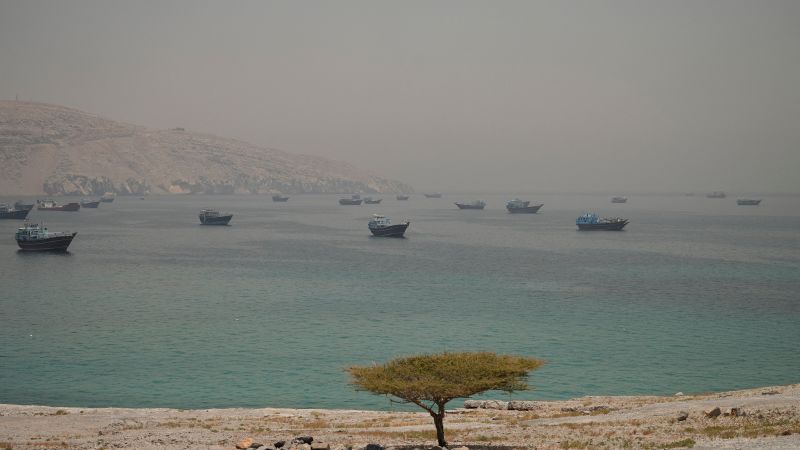
Table of Contents
A High-Stakes De-escalation in the Persian Gulf
In a sudden shift of diplomatic momentum, the United States and Iran have announced a breakthrough agreement that will officially take effect this Friday. The center-piece of the deal is the lifting of the US naval blockade on Iranian ports, a move that promises to reopen the Strait of Hormuz to unrestricted commercial traffic. President Donald Trump confirmed the agreement, noting that the blockade—which has strained global energy markets and maritime logistics—will cease once the formal documents are signed.
- Naval Access: The US is lifting the blockade on Iranian ports, restoring flow to the Strait of Hormuz.
- G7 Context: The deal precedes Trump’s attendance at the G7 summit in France, shifting the narrative on Middle East stability.
- Financial Friction: A significant dispute remains over the release of billions in frozen Iranian assets.
- Regional Tension: The agreement follows a volatile period of airstrikes in Beirut, complicating the US-Israel diplomatic relationship.
The Strait of Hormuz is perhaps the most critical choke point in the global energy infrastructure. Roughly one-fifth of the world’s total oil consumption passes through this narrow waterway. For technology sectors reliant on stable energy pricing and hardware supply chains, the reopening of these waters is more than a diplomatic victory; it is a systemic risk mitigation. When the blockade was in place, shipping insurance premiums spiked, and the ‘tanker war’ mentality forced global logistics firms to seek costlier, less efficient alternatives.
The Geneva Ceremony and the Battle Over Frozen Funds
While the naval agreement provides immediate relief, the transition to a stable diplomatic relationship is fraught with contradictions. The official signing ceremony is scheduled for Friday in Geneva, following the conclusion of the G7 summit. However, the two nations are already presenting fundamentally different versions of the roadmap.
The Iranian Position
Iran’s deputy foreign minister has asserted that the agreement is conditional. From Tehran’s perspective, the lifting of the blockade is a preliminary step. The government has stated that full-scale negotiations on broader security and trade frameworks will only commence once the United States releases billions of dollars in frozen assets. These funds, held in various international accounts due to US sanctions, are viewed by Iran as sovereign wealth essential for economic recovery and infrastructure investment.
The US Position
Conversely, US officials have flatly rejected the notion that the release of funds is a prerequisite for further talks. The American position emphasizes the lifting of the blockade as a gesture of good faith and a strategic move to stabilize global oil prices before the G7 summit. By decoupling the maritime agreement from the financial dispute, Washington maintains a leverage point, insisting that asset release must be tied to verifiable benchmarks of Iranian compliance with other international standards.
The G7 Summit: France as the Diplomatic Backdrop
President Trump’s arrival in France for the G7 summit places this agreement in a broader geopolitical spotlight. The G7—comprising the world’s most advanced economies—is expected to treat the Middle East conflict as a primary agenda item. The timing suggests a strategic attempt by the US to enter the summit as a peacemaker rather than a combatant.
Industry analysts suggest that by resolving the blockade issue, the US removes a significant volatility factor from the global economy. Energy-dependent tech hubs in Asia and Europe have seen their operational costs fluctuate based on the perceived stability of the Strait of Hormuz. A formalized deal in Geneva provides the predictability that markets crave, potentially lowering the ‘geopolitical risk premium’ currently baked into oil and gas futures.
The Lebanon Variable and the Netanyahu Friction
The path to this agreement was not linear. Immediately preceding the announcement, Israeli forces launched a series of airstrikes in Beirut. This escalation occurred at a moment when US diplomats were finalizing the deal with Iran, creating an awkward and tense environment for the White House.
Reports indicate that President Trump expressed significant fury toward Prime Minister Benjamin Netanyahu over the timing of these strikes. This friction underscores a growing divergence in strategy: while Israel remains focused on the immediate neutralization of threats in Lebanon and Syria, the Trump administration is attempting a wider ‘regional reset’ to secure economic stability and exit a cycle of endless military engagement.
What This Means for Global Tech and Energy
The reopening of the Strait of Hormuz has direct implications for the global technology sector, particularly in the realms of data center operations and hardware manufacturing.
1. Energy Cost Stabilization
Data centers are among the most energy-intensive infrastructures on earth. While many are moving toward renewables, the underlying cost of electricity in many regions is still tied to the global price of oil and natural gas. A blockade in the Strait of Hormuz creates artificial scarcity, driving up prices. The lifting of the blockade should, in theory, stabilize these costs, preventing sudden spikes in operational overhead for cloud providers.
3. Maritime Logistics and Hardware
Global supply chains for semiconductors and consumer electronics rely on the fluid movement of goods. While the Strait of Hormuz is primarily an oil route, the instability of the region often leads to diverted shipping lanes and increased insurance costs for all vessels in the vicinity. The restoration of normalcy in these waters reduces the ‘friction cost’ of global trade.
3. Geopolitical Risk for Tech Investment
For venture capital and startups operating in the ‘frontier tech’ space—particularly those dealing with energy tech and AI-driven logistics—regional stability in the Middle East encourages investment. The region has recently attempted to pivot toward becoming a global hub for AI and sustainable tech (as seen in initiatives across the UAE and Saudi Arabia). A US-Iran thaw could potentially expand the footprint of these technological ambitions.
Analysis: A Fragile Peace
It is important to distinguish between a tactical ceasefire and a strategic peace. The agreement to lift the naval blockade is a tactical victory. It solves a specific, immediate problem: the flow of oil. However, the fundamental disagreement over frozen funds indicates that the deeper systemic issues—sanctions, nuclear proliferation, and regional hegemony—remain unresolved.
Historians of the region will note that agreements in Geneva are often the start of a long process of ‘tit-for-tat’ concessions. If the US refuses to release the frozen billions, Iran may find the naval agreement insufficient, leading to a potential return to brinkmanship. The stability of the coming months depends entirely on whether the Geneva ceremony results in a broader framework or merely a temporary reprieve.
Comparative Analysis: Blockade vs. Open Transit
| Metric | Under Blockade | Post-Agreement (Expected) |
|---|---|---|
| Shipping Insurance | High Risk / Premium Spikes | Standard Market Rates |
| Oil Price Volatility | High / Speculative | Moderate / Stabilized |
| Transit Time | Increased (via Diversions) | Optimized (Direct Route) |
| Diplomatic Status | Hostile / Brinkmanship | Cautious Engagement |
Frequently Asked Questions
What is the Strait of Hormuz and why is it important?
The Strait of Hormuz is a narrow waterway between Oman and Iran, connecting the Persian Gulf with the Gulf of Oman. It is the world’s most important oil transit chokepoint; if it is closed, a significant portion of the world’s energy supply is cut off, leading to global price surges.
Why are there frozen Iranian funds?
The US and its allies have frozen billions of dollars of Iranian assets in foreign banks as part of a sanctions regime designed to pressure Iran into limiting its nuclear program and stopping support for regional proxies.
Will the blockade be lifted immediately?
The agreement takes effect on Friday, following the official signing ceremony in Geneva. The US has indicated that the naval blockade will be lifted as the agreement is signed.
How does the Lebanon conflict affect this deal?
The Israeli airstrikes in Beirut created tension between the US and Israel. While the US-Iran deal focuses on maritime access, the regional volatility caused by the Lebanon conflict threatens to undermine the stability the US is trying to achieve.
What happens if the US doesn’t release the frozen funds?
Iran has stated that further negotiations will only begin once the funds are released. If the US refuses, the diplomatic process may stall, and the ‘goodwill’ generated by lifting the blockade could evaporate.
Final Report Summary
The decision to lift the US naval blockade on Iranian ports marks a critical pivot in Middle Eastern diplomacy. By reopening the Strait of Hormuz, the US is prioritizing global economic stability and energy security ahead of the G7 summit. However, the divergent views on the release of frozen funds suggest that this agreement is a fragile first step. While the immediate maritime risk is reduced, the long-term trajectory of US-Iran relations remains dependent on the outcomes of the Geneva signing ceremony and the administration’s ability to manage its alliance with Israel amidst regional conflict.