SpaceX Surpasses Tesla in Market Valuation as Musk Eyes Potential Merger
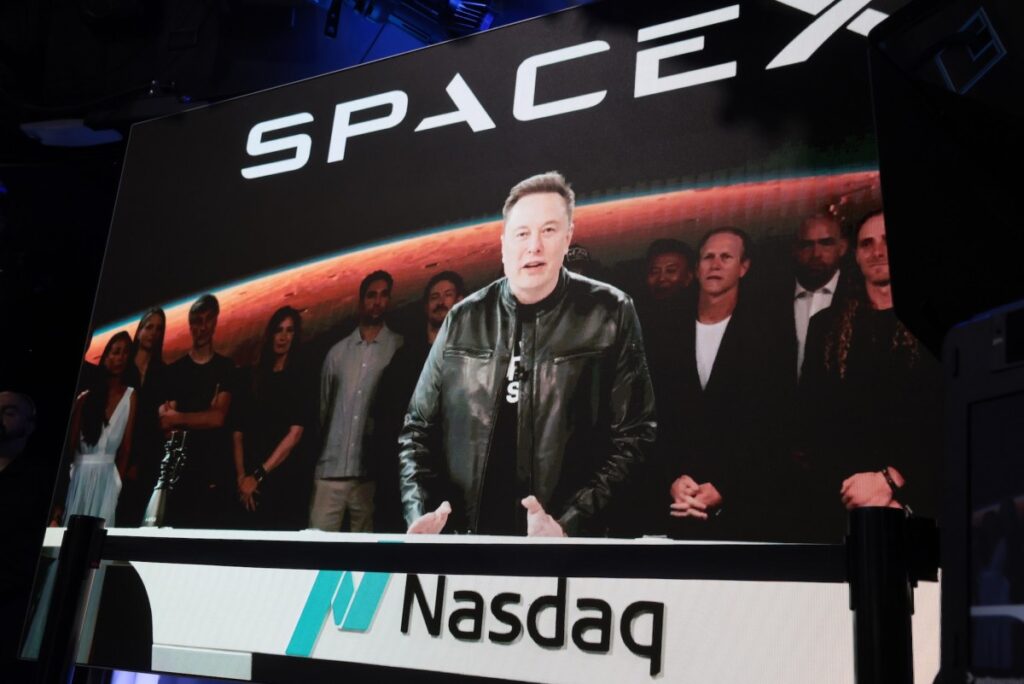
Table of Contents
A New Hierarchy in the Musk Empire
The financial landscape of Elon Musk’s ventures has undergone a seismic shift. Following its long-awaited public debut, SpaceX has reached a market capitalization of $2.1 trillion, effectively leaping over Tesla, which closed at a valuation of $1.52 trillion. This isn’t just a victory for aerospace enthusiasts; it represents a fundamental change in how investors perceive the ‘future of transportation.’ While Tesla once stood as the undisputed champion of disruptive mobility, the scale of SpaceX’s dominance in satellite internet (Starlink) and reusable rocket technology has now pushed it into the top six most valuable U.S.-listed companies, trailing only the AI-driven giants like Nvidia, Apple, and Microsoft.
- Valuation Flip: SpaceX now commands a $2.1 trillion market cap, surpassing Tesla’s $1.52 trillion.
- Merger Speculation: New language in SpaceX’s S-1 filings suggests potential equity issuance for “future transactions,” fueling rumors of a Tesla merger.
- Apple’s Exit: Waymo has acquired a 5,500-acre proving ground formerly linked to Apple’s abandoned autonomous car project for $220 million.
- GM Energy Pivot: General Motors is shifting focus toward sodium-ion battery chemistry for AI data center grid storage.
The S-1 Clues: Will Tesla and SpaceX Merge?
For years, analysts have speculated about the eventual convergence of Musk’s interests. The theoretical synergy is obvious: Tesla provides the AI and robotics foundation, while SpaceX provides the extreme engineering and global connectivity. Now, the evidence is moving from speculation to documentation. A critical discovery in SpaceX’s S-1 filing—the document required for public offerings—contains a new, carefully worded warning regarding future dilution. The text explicitly states: “We may issue a significant amount of equity in connection with future transactions.”
In the world of high-finance, “significant amount of equity” usually doesn’t refer to a modest acquisition of a small startup. When viewed alongside SpaceX’s current valuation, this phrasing strongly implies a transaction on the scale of Tesla. The prospect of a “Musk Holding Company” would allow for the cross-pollination of engineering talent and the pooling of capital to fund the massive infrastructure required for both Starship and the Optimus robot program.
Gwynne Shotwell, SpaceX’s President and COO, touched upon this possibility during a recent CNBC interview. While she stopped short of confirming a timeline, Shotwell noted that a merger “might make Elon’s life a little easier.” While Shotwell is known for her operational pragmatism, her openness to the idea suggests that the internal appetite for such a consolidation is growing.
Waymo’s Land Grab and the Ghost of Apple Car
While SpaceX captures the headlines in orbit, a different kind of territorial expansion is happening on the ground in Arizona. Waymo, the autonomous driving unit of Alphabet, has officially acquired a massive 5,500-acre proving ground from Route 14 Investment Partners LLC. Route 14 is a Delaware-based shell company widely associated with Apple’s secretive ‘Project Titan’—the autonomous car initiative that Apple formally shuttered in 2024.
The $220 million acquisition is a clear signal that Waymo is moving from the ‘testing’ phase to the ‘scaling’ phase. A facility of this size allows for the simulation of diverse urban and highway environments without the constraints of public road permits. It effectively marks the final nail in the coffin for Apple’s automotive ambitions, as the very land intended to birth an Apple Car is now being used to accelerate a competitor’s robotaxi fleet.
The Robotaxi Showdown: London Calling
The battle for autonomous ride-hailing is no longer confined to Phoenix or San Francisco. Uber, Waymo, and the UK-based AI startup Wayve are currently positioning themselves for a strategic showdown in London. London presents a unique challenge for AI drivers—narrow streets, unpredictable weather, and complex roundabouts—making it the ultimate proving ground for those seeking global dominance in the robotaxi sector.
GM’s Strategic Pivot: Sodium-Ion and the AI Power Crisis
General Motors is currently fighting a two-front war: transitioning its consumer fleet to EVs while simultaneously solving the energy crisis created by AI data centers. Recent reports indicate that GM is leaning heavily into sodium-ion battery chemistry for its grid-scale deployments. Unlike the lithium-ion batteries found in the Chevrolet Bolt, sodium-ion is cheaper to produce, more abundant, and significantly safer for stationary storage.
GM is partnering with Peak Energy to develop these systems, specifically targeting the massive power requirements of AI data centers. This shift is strategic. As AI models grow in complexity, the energy demand for the data centers hosting them has spiked. By providing the storage infrastructure (the “battery”) for the grid, GM is diversifying its revenue streams away from the volatile consumer EV market and into the critical infrastructure of the AI era.
The LFP Dilemma and the 2027 Bolt
On the consumer side, GM’s relationship with battery chemistry remains complicated. Reports from industry insiders suggest that the 2027 Chevrolet Bolt will rely on lithium-iron-phosphate (LFP) cells provided by a foreign supplier—specifically the Chinese giant CATL. While GM is scaling up LFP production at its Ultium plants, those cells are currently earmarked for energy storage systems managed by LG Energy Solution, rather than passenger cars. This highlights a recurring tension in the U.S. auto industry: the desire for domestic supply chains versus the immediate cost-efficiency of Chinese LFP technology.
The State of the EV Startups: Lucid and Rivian
The “EV honeymoon” period has ended, replaced by a brutal era of executive churn and delivery pressures. Lucid Motors is currently experiencing a leadership shake-up. Emad Dlala, a high-ranking executive, has exited the company only months after a major promotion. This departure follows the appointment of Silvio Napoli as CEO in April and suggests a period of internal restructuring as Lucid struggles to find a sustainable path to profitability.
Conversely, Rivian is hitting a critical milestone with the delivery of its R2 SUV. The R2 is widely viewed as the “make or break” vehicle for Rivian, designed to bring the brand’s luxury off-road appeal to a more accessible price point. If the R2 can achieve the volume targets Rivian has promised, it could stabilize the company’s balance sheet and prove that there is still room for a new entrant in the American SUV market.
AI-Powered Logistics and the Next Wave of Funding
Beyond the giants, several mid-cap startups are leveraging AI to solve niche transportation problems. CameraMatics, based in Ireland, recently secured €49 million to expand its AI-powered video telematics, which helps fleet managers reduce accidents through real-time driver behavior analysis. Similarly, India’s Clear Robotics is venturing into the deep blue, raising $1.75 million for autonomous ships, a sector that remains largely untapped by the current AI boom.
In the realm of simulation, the startup Decart has unveiled Oasis 3, an interactive world model capable of generating photorealistic driving environments in real time. This is a critical piece of technology for autonomous vehicle (AV) companies. Instead of driving millions of real-world miles to encounter a “rare event” (like a sinkhole opening in the middle of a highway), AV companies can use Oasis 3 to simulate these edge cases at scale, accelerating the safety certification process.
What This Means for the Industry
The shift in market cap from Tesla to SpaceX signals a broader investment trend: the market is beginning to value infrastructure and connectivity over consumer hardware. While Tesla sells cars, SpaceX provides the platform for global communication and interplanetary transport. Furthermore, the pivot by GM toward sodium-ion batteries for AI data centers shows that the “EV revolution” is merging with the “AI revolution.” The companies that win won’t just be those that make a great car, but those that control the energy and data pipelines that power the intelligence driving those cars.
Comparison: LFP vs. Sodium-Ion Batteries
| Feature | LFP (Lithium Iron Phosphate) | Sodium-Ion |
|---|---|---|
| Primary Use | EVs (e.g., Chevy Bolt) | Grid Storage / AI Data Centers |
| Cost | Moderate | Low (Abundant material) |
| Energy Density | High | Medium-Low |
| Safety | Very Stable | Extremely Stable |
| Supply Chain | Heavily reliant on China/CATL | Potentially fully domestic |
Frequently Asked Questions
Why is SpaceX’s market cap higher than Tesla’s?
SpaceX’s valuation is driven by the massive growth of Starlink and its monopoly on heavy-lift orbital launches. Investors view SpaceX as a critical piece of global infrastructure, whereas Tesla is viewed as a consumer electronics and automotive company facing increased competition from BYD and other EV makers.
Is a Tesla-SpaceX merger actually likely?
While not confirmed, the S-1 language regarding “significant equity issuance” and comments from Gwynne Shotwell suggest it is a strategic possibility. Such a move would consolidate Elon Musk’s voting power and resources across both entities.
What happened to the Apple Car project?
Apple officially cancelled its autonomous vehicle project in 2024. The acquisition of its former testing grounds by Waymo serves as physical evidence that Apple has pivoted its AI focus away from cars and toward generative AI and other devices.
Why is GM using sodium-ion batteries for data centers?
Sodium-ion batteries are more cost-effective and safer for stationary use than lithium-ion. Because they don’t require the high energy density needed for a moving car, they are ideal for the massive, static power banks required to keep AI data centers online.
Who is leading the robotaxi race in the UK?
The competition is currently a three-way battle between Waymo (Alphabet), Uber, and Wayve. Each brings a different approach, with Wayve focusing on “end-to-end” AI learning and Waymo relying on its extensive sensor suite.
The intersection of aerospace, automotive, and AI is creating a new class of “mega-corporations” where the boundaries between transportation and energy are blurring. As SpaceX continues its ascent and GM pivots to the grid, the definition of a “tech company” is being rewritten in real-time.