The AI IPO Fever: How SpaceX’s Market Debut is Redefining the ‘MANGOS’ Era
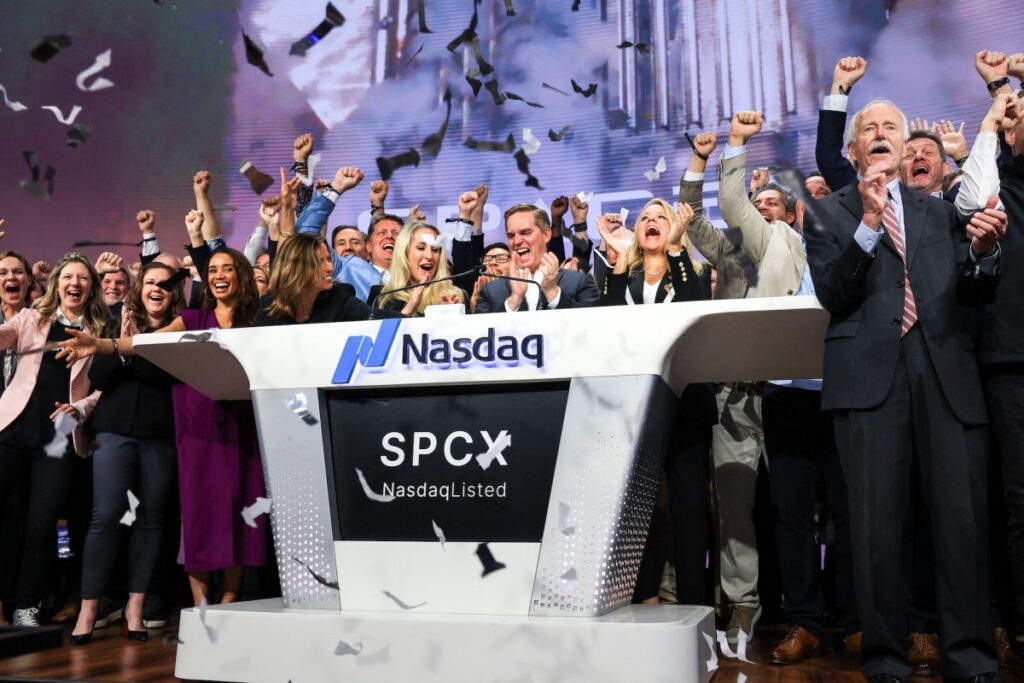
Table of Contents
The financial architecture of the technology sector is undergoing a fundamental realignment. For a decade, the ‘FAANG’ acronym (Facebook, Apple, Amazon, Netflix, and Google) served as the gold standard for market dominance, representing a concentration of power in consumer software and digital advertising. However, the recent public debut of SpaceX—the largest IPO in history—has signaled the arrival of a new era. It is no longer just about social networks and streaming; it is about the raw computational power of AI labs and the ambitious scale of deeptech.
This transition is best captured by the emerging ‘MANGOS’ framework: Meta, Anthropic, NVIDIA, Google, OpenAI, and SpaceX. This shift represents a migration of institutional capital away from consumer-facing applications and toward the foundational infrastructure of the next century. When AI companies go public on this scale, they aren’t just seeking liquidity for early investors; they are stress-testing the very limits of how the public market values long-term, high-risk research and development over immediate quarterly earnings.
- The MANGOS Shift: Market leadership is moving from FAANG’s consumer-centric models to an AI-driven core featuring labs like OpenAI and Anthropic alongside hardware giants like NVIDIA.
- The SpaceX Blueprint: SpaceX’s IPO serves as a case study in “founder-controlled” public companies, potentially paving the way for Sam Altman and others to maintain tight grip over their organizations.
- DeepTech Ripple Effect: The success of SpaceX is catalyzing a secondary wave of investment in orbital infrastructure, specifically space-based data centers.
- Capital Competition: A finite pool of public investor appetite is creating a timing race between OpenAI and Anthropic to secure the most favorable valuations.
The SpaceX Anomaly: More Than Just a Rocket Company
While the world views SpaceX through the lens of Starship and Falcon 9, the company’s entry into the public market is strategically framed around its AI capabilities. The synergy between satellite internet (Starlink), autonomous navigation, and the massive data processing required for interplanetary logistics has effectively rebranded SpaceX as a deeptech AI powerhouse. This pivot is crucial because it allows the company to command a valuation multiple associated with AI growth rather than the slower, more capital-intensive aerospace industry.
The scale of this IPO has catapulted Elon Musk into the position of the world’s first trillionaire, but the financial implications extend beyond individual wealth. By going public, SpaceX is essentially creating a new asset class: the “Hyper-Scale Frontier Company.” These are firms that operate at a level of capital expenditure that would have been unthinkable for a traditional public company twenty years ago. They operate on a “loss-leader” philosophy similar to Amazon’s early years, prioritizing market capture and infrastructure build-out over immediate profitability.
The Race for the IPO Calendar: OpenAI vs. Anthropic
The SpaceX debut has acted as a starting gun for other AI laboratories. Reports indicate that both OpenAI and Anthropic have moved toward confidential filings to go public. This is not merely a quest for funding—both companies have access to billions in private venture capital—but a quest for legitimacy and liquidity. Public markets provide a level of transparency and a massive pool of capital that private rounds cannot match.
However, a critical tension exists: the Capital Ceiling. There is only so much “AI enthusiasm” that the public market can absorb before valuations are subjected to rigorous scrutiny. If OpenAI goes first and achieves a stratospheric valuation, it sets a high bar for Anthropic. Conversely, if one fails to meet the lofty expectations of the public, it could trigger a sector-wide correction. This has created a strategic game of chicken, where timing the debut to coincide with a major product release (such as a new GPT iteration) is essential to maintaining momentum.
Comparing the AI Lab Models
Unlike the traditional software companies of the 2010s, AI labs like OpenAI and Anthropic are fundamentally research institutions that have scaled into products. This creates a unique challenge for public investors who are used to predictable SaaS (Software as a Service) metrics.
| Feature | Traditional Tech (FAANG) | AI Labs (MANGOS) |
|---|---|---|
| Primary Driver | User Growth / Ad Revenue | Compute Power / Model Intelligence |
| Capital Use | Marketing & Acquisition | GPU Clusters & Energy Infrastructure |
| Valuation Metric | ARPU (Avg Revenue Per User) | Inference Efficiency & Token Throughput |
| Risk Profile | Market Saturation | Regulatory Intervention / AGI Safety |
The DeepTech Ripple Effect and Orbital Data Centers
One of the most overlooked consequences of the SpaceX IPO is the “Halo Effect” it creates for adjacent technologies. When a titan like SpaceX successfully argues that the future of computing involves the vacuum of space, it validates an entire ecosystem of startups. We are seeing a surge in funding for orbital data centers—facilities that process data in space to reduce latency for satellite constellations and take advantage of the natural cooling of the cosmos.
Companies like Quantum Space are already utilizing Special Purpose Acquisition Companies (SPACs) to ride this wave. The logic is clear: if the market accepts SpaceX’s valuation based on future orbital infrastructure, then the companies building the components of that infrastructure become viable bets. This is a classic market ripple where the success of a primary entity creates a “wealth effect” for its niche suppliers and collaborators.
What This Means for the Average Investor
For the individual investor, the shift from FAANG to MANGOS represents a move toward higher volatility and higher technical complexity. Investing in a social media company is intuitive; investing in a company whose primary asset is a proprietary neural network and a cluster of 100,000 H100 GPUs requires a different level of technical literacy.
Furthermore, the SpaceX model suggests a trend toward extreme founder control. By utilizing dual-class share structures, these companies can go public to raise billions while ensuring that the CEO retains absolute voting power. This effectively means the public market is providing the capital, but the founder is still making all the decisions—a dynamic that provides stability for long-term vision but offers little recourse for shareholders if the leadership pivots unexpectedly.
Practical Implications:
- Portfolio Diversification: Investors may need to shift from purely “software” buckets to “compute infrastructure” buckets.
- Valuation Reset: Be prepared for “valuation gravity.” The gap between private market hype and public market reality often leads to a sharp correction post-IPO.
- Regulatory Risk: AI companies are now the primary targets for antitrust and safety regulators, making their stocks sensitive to political news.
Frequently Asked Questions
What is the MANGOS acronym?
MANGOS is a modern update to the FAANG acronym, representing the companies currently dominating the AI and deeptech landscape: Meta, Anthropic, NVIDIA, Google, OpenAI, and SpaceX. It reflects a shift toward AI labs and infrastructure over consumer internet services.
Why is SpaceX calling itself an AI company?
While primarily known for rockets, SpaceX relies heavily on AI for autonomous landing, Starlink network optimization, and satellite data analysis. By emphasizing AI, they align themselves with the highest-growing sector of the stock market, which typically commands higher valuation multiples than traditional aerospace.
Will OpenAI and Anthropic go public soon?
Both companies have reportedly explored confidential filings for IPOs. While they have immense private funding, the scale of compute costs required for next-generation models (like GPT-5 or Claude 4) makes the public markets an attractive source of the massive capital needed.
What are orbital data centers?
Orbital data centers are computing facilities located in space. They are designed to process data generated by satellites locally rather than beaming raw data back to Earth, which reduces latency and leverages the cold environment of space to manage the heat generated by AI processors.
How does a “founder-controlled” public company work?
Through dual-class shares, founders are given shares with significantly more voting power (e.g., 10 votes per share) than the shares sold to the public (1 vote per share). This allows the company to raise public money without the founder losing control of the board or the company’s direction.
The New Market Equilibrium
The convergence of SpaceX’s public debut and the impending AI lab IPOs marks the end of the “app era” and the beginning of the “infrastructure era.” We are no longer betting on who can build the best interface, but who can build the most powerful engine. As capital continues to flow into these MANGOS entities, the benchmark for success is shifting from daily active users to total floating-point operations per second (FLOPS) and orbital reach.
The danger lies in the potential for a speculative bubble. When the primary value proposition of a company is based on the promise of AGI (Artificial General Intelligence) or Martian colonies, the distance between current revenue and future valuation can become a chasm. However, the sheer physical reality of SpaceX’s rockets and NVIDIA’s chips provides a grounding that the dot-com bubble lacked. These are not just websites; they are the physical and digital scaffolding of the future economy.