Oura Ring 5 vs. Oura Ring 4: Is the Slimmer Profile and Better Battery Worth the Upgrade?
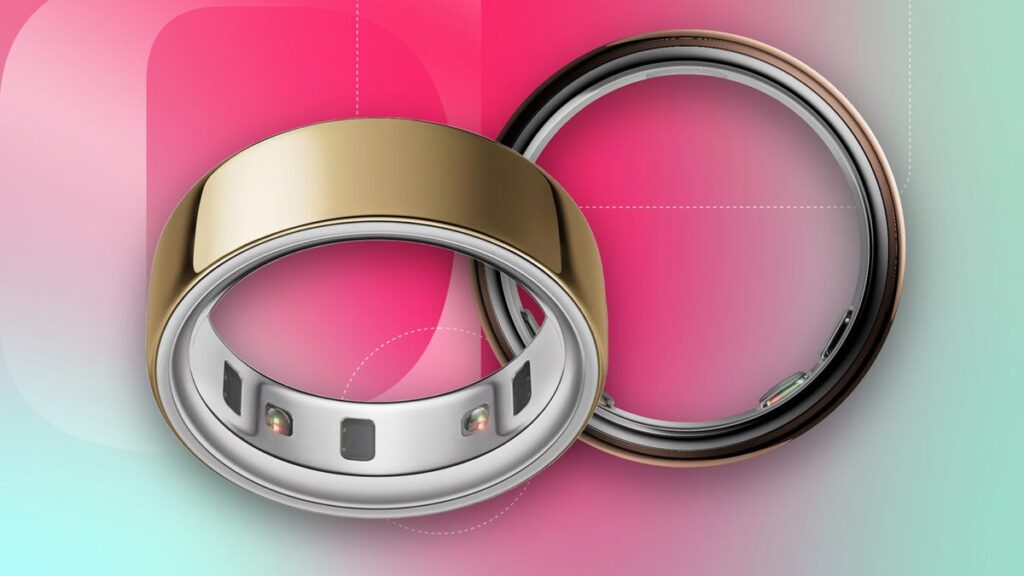
Table of Contents
The Shift Toward Invisibly Small Wearables
For years, the primary friction point with smart rings has been the “chunkiness” factor. While the Oura Ring 4 made strides in refining the form factor, the Oura Ring 5 represents a fundamental pivot in industrial design. After spending a week and a half with the Gen 5 on my index finger—having previously benchmarked the Gen 4 since late 2024—it is clear that Oura is no longer just chasing biometric accuracy, but is now obsessing over the ergonomics of wearability.
The most immediate sensation upon switching to the Oura Ring 5 is the lack of presence. When you move from a 6.09 mm width to a 2.28 mm profile, you aren’t just getting a slightly thinner ring; you are eliminating the physical gap that typically exists between the index and middle fingers. For those who find smart rings intrusive during typing or daily activities, this reduction is the most significant upgrade of the device.
- Weight Reduction: The Gen 5 ranges from 2.0 to 2.68 g, compared to the Gen 4’s 3.3 to 5.2 g.
- Material Innovation: Introduction of Physical Vapor Deposition (PVD) coating for enhanced scratch resistance.
- Battery Efficiency: A move from a practical 4-day cycle to a full 7-day stretch.
Comparing the Hardware: Aesthetics and Durability
Both generations utilize non-allergenic titanium, which has become the gold standard for biocompatibility in wearables. However, the Oura Ring 5 introduces a PVD coating. In practical terms, PVD is a vacuum coating process that deposits a thin layer of material onto the surface, creating a harder finish than traditional plating. While long-term wear tests are still pending, this should theoretically reduce the micro-abrasions and “scuffing” commonly seen on the silver and stealth finishes of the Gen 4.
The color palette has also seen a shift in tone. The new “Deep Rose” is a departure from the traditional rose gold, leaning closer to a copper hue. Similarly, the Gold finish on the Gen 5 is more muted and realistic, avoiding the overly saturated orange tint present in the Gen 4. For users who view their health tracker as a piece of jewelry, these subtle aesthetic calibrations make the device blend more naturally with traditional accessories.
Sensor Evolution: Fewer Pathways, More Precision
On paper, the Oura Ring 5 appears to be a step backward in one specific area: it uses 12 light pathways, down from the 18 found in the Gen 4. However, Oura claims this is a strategic optimization. By utilizing brighter LEDs and more efficient pathway architecture, they aim to improve the signal-to-noise ratio of the pulse signal.
Oura asserts that the Gen 5 signal is 100 times stronger than wrist-based wearables and offers superior accuracy across a diverse range of skin tones. As a certified sleep science coach, I prioritize Heart Rate Variability (HRV) and sleep staging, as these are the primary indicators of systemic recovery. Oura reports a 99% heart rate accuracy compared to medical-grade ECGs and 95% accuracy in sleep staging relative to clinical polysomnography (PSG) data.
It is critical to note that these statistics are provided by Oura’s internal validation studies. Independent, peer-reviewed comparisons between the Gen 4 and Gen 5 sensors are not yet widely available in clinical literature. However, the shift toward more efficient, brighter LEDs typically results in better penetration through the dermis, which is essential for accurate PPG (photoplethysmography) readings.
The Battery Life Gap: Real-World Testing
Battery life is where the Oura Ring 5 provides the most tangible utility gain. The manufacturer suggests a range of 6 to 9 days. In my testing, the Gen 5 averaged a loss of approximately 15% battery per day, meaning I hit the one-week mark before needing a charge.
Contrast this with my experience with the Oura Ring 4. Despite the marketed 5-to-8 day window, the Gen 4 consistently required charging every four days. This 75% increase in practical longevity transforms the ring from a device that requires frequent maintenance into a truly “set it and forget it” wearable.
The New Charging Ecosystem
Oura has introduced a dedicated charging case for the Gen 5, priced at $99. This recycled aluminum, matchbox-sized case can hold up to a month’s worth of charges. For frequent travelers or those who dislike managing multiple cables, the case removes the anxiety of the 15% daily drain, though it remains an optional high-cost add-on.
Sizing and Fit: The Necessity of the Sizing Kit
Because the Oura Ring 5 is 40% smaller in width, the internal diameter and the way it sits against the skin have changed. Oura strongly recommends a new sizing kit for all users, regardless of their Gen 4 size. My experience confirmed that while I remained the same size numerically, the Gen 5 felt slightly tighter.
The biological reality is that fingers fluctuate based on hydration, temperature, and circadian rhythms. A ring that fits perfectly at 8:00 AM may be too tight by 4:00 PM. Testing the sizing ring for a full 24-hour cycle is not just a recommendation; it is a necessity to avoid the hassle of returns, especially given the premium pricing of the newer models.
The Financial Equation: Pricing and Membership
The Oura Ring 5 is a more expensive proposition than its predecessor. The entry-level Silver and Black options start at $399—a $50 increase over the Gen 4. Premium finishes (Gold, Stealth, Deep Rose, Brushed Silver) climb to $499.
| Feature | Oura Ring 4 | Oura Ring 5 |
|---|---|---|
| Starting Price | $349 | $399 |
| Premium Price | $399 | $499 |
| Width | 6.09 mm | 2.28 mm |
| Weight (Avg) | ~4.2 g | ~2.3 g |
| Practical Battery | ~4 Days | ~7 Days |
| Coating | Standard Titanium | PVD Coating |
The Oura membership remains a fixed cost: $5.99 per month or $69.99 per year. This subscription is required to access the full suite of health insights, a point of ongoing contention among users who prefer the subscription-free models adopted by competitors like RingConn or Ultrahuman.
What This Means for the User
The transition from Gen 4 to Gen 5 isn’t about new biometric capabilities—it’s about the refinement of the user experience. If you are currently using a Gen 3 or Gen 4, the software updates are largely parity-based; Oura is rolling out most new software features across all three generations. You aren’t losing data insights by staying on an older model.
However, the physicality of the device has changed. The Oura Ring 5 is effectively a “ghost” on the finger. If you find the Gen 4 too chunky or are frustrated by the 4-day charging cycle, the Gen 5 is a meaningful upgrade. If your current ring is comfortable and you don’t mind charging it twice a week, the biometric differences may not justify a $400 investment.
Frequently Asked Questions
Will my Oura Ring 4 size fit the Oura Ring 5?
Not necessarily. While some users may remain the same size, the Gen 5 has a different internal feel and tends to fit slightly tighter. You should use the official sizing kit for 24 hours to ensure a correct fit.
Does the Oura Ring 5 have new health tracking features?
Most software features are being rolled out to Gen 3 and 4 as well. The primary “new” benefit is the potentially higher accuracy due to redesigned LEDs and the significantly improved battery life.
Is the $99 charging case worth it?
If you travel frequently or forget to charge your ring regularly, the case is highly convenient. However, for those who charge their ring during a weekly routine, the standard charger is sufficient.
How does the PVD coating help?
Physical Vapor Deposition creates a harder surface layer, which makes the ring more resistant to the daily scratches and scuffs that occur when gripping handles or working with tools.
Is the Oura membership mandatory for the Gen 5?
Yes, to access the comprehensive sleep, readiness, and activity scores, the monthly or annual subscription is required.