Gigabyte Bets on Localized AI and RTX 50-Series Cooling at Computex 2026
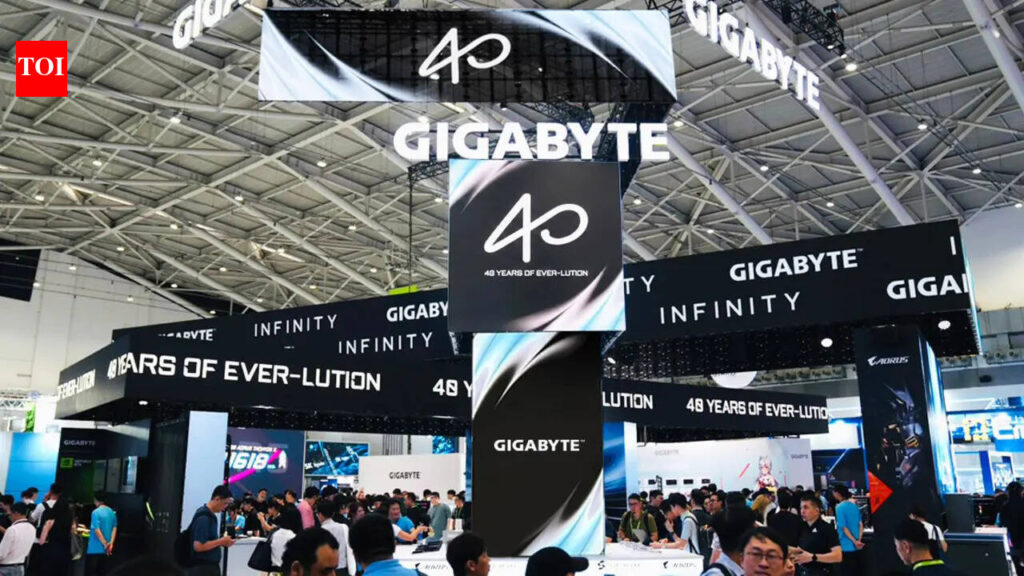
Table of Contents
Moving AI from the Cloud to the Chassis
While the broader industry has spent the last few years leaning heavily into cloud-based API calls, Gigabyte is spending Computex 2026 arguing that the future of artificial intelligence is local. The center of this strategy is the “AI TOP” ecosystem, a modular hardware framework designed specifically for developers and enterprises that want to run Large Language Models (LLMs) and generative AI workloads without relying on external servers.
The AI TOP approach isn’t just about adding a faster chip; it is a fundamental rethink of the workstation. By focusing on massive VRAM expansion and specialized thermal management, Gigabyte is targeting the gap between high-end consumer PCs and industrial-grade server racks. This shift comes as more developers seek to avoid the latency and privacy concerns associated with cloud processing, moving toward a “private AI” model where data never leaves the local network.
RTX 50-Series: The Thermal Challenge
The hardware excitement at the booth, however, was driven by the upcoming NVIDIA GeForce RTX 50 series. While NVIDIA remains tight-lipped on official specs, Gigabyte’s showcase of new AORUS cooling solutions provides a tell: the next generation of GPUs is expected to generate significant heat. The new AORUS cooling blocks and expanded heatsink arrays are designed to handle the increased TDP (Thermal Design Power) of the 50-series, utilizing a more aggressive vapor chamber design and redesigned fan curves to prevent thermal throttling during peak AI rendering or 4K gaming.
Complementing the GPUs is a new fleet of AORUS monitors that push the boundaries of current display standards. Gigabyte demonstrated panels boasting 5K resolution, a move that positions them above the standard 4K plateau. These displays are geared toward a niche intersection of creators and hardcore gamers who require extreme pixel density for both productivity and immersive play, though the demand on the hardware—specifically the aforementioned RTX 50 cards—will be substantial.
The AORUS MASTER 16 and the Hybrid Laptop
On the mobile front, the award-winning AORUS MASTER 16 took center stage. The laptop serves as the bridge between the company’s AI ambitions and its gaming heritage. Rather than just marketing “AI-ready” software, the MASTER 16 integrates hardware-level optimizations that allow users to run local AI tools for real-time game asset generation and voice processing without compromising frame rates.
Industry analysts note that Gigabyte’s current trajectory reflects a broader trend among Taiwanese OEMs: the realization that the “AI PC” label is meaningless without a tangible use case. By providing the tools for local development via AI TOP and the raw power via the 50-series cooling systems, Gigabyte is attempting to move beyond the spec-sheet war and into the actual workflow of the AI developer.
The company also showcased several custom PC builds, emphasizing a more modular approach to system assembly that allows users to swap AI accelerators as the technology evolves, avoiding the planned obsolescence that often plagues high-end workstations.