The Orbital Gamble: Can SpaceX’s ‘Space Data Centers’ Justify Its Trillion-Dollar Valuation?
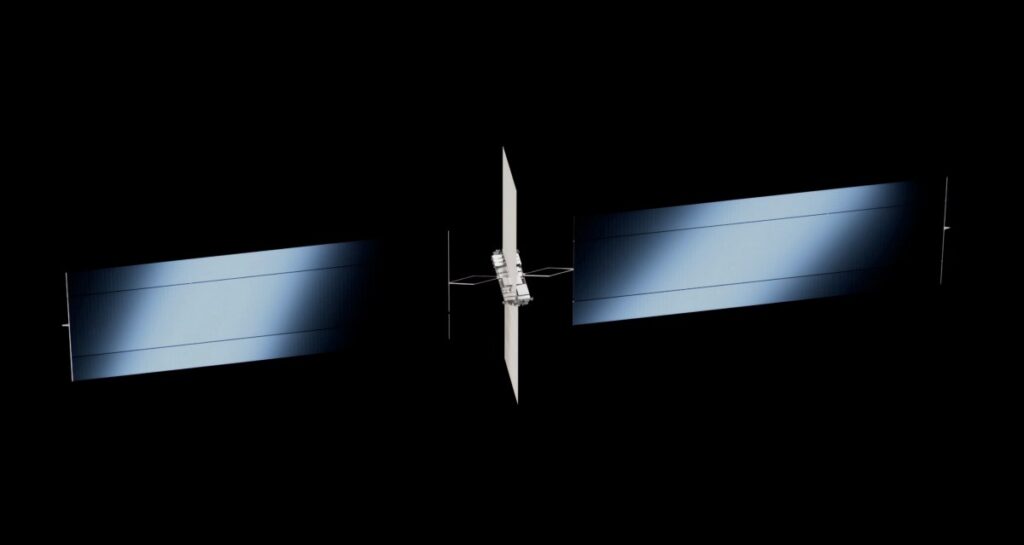
Table of Contents
The Trillion-Dollar Tension
Institutional investors are currently circling the $75 billion SpaceX stock offering with a level of fervor that defies traditional financial gravity. Despite the company’s history of burning cash and the unpredictable public persona of CEO Elon Musk, the offering is reportedly deeply oversubscribed, with some funds seeking blocks as large as $10 billion. However, a critical gap has emerged between the valuation suggested by SpaceX’s bankers—nearly $1.8 trillion—and the sober assessments of independent analysts.
Morningstar has pegged the fair value closer to $825 billion, while NYU finance professor Aswath Damodaran suggests a figure around $1.2 trillion. The delta between these numbers represents more than just a disagreement on multiples; it is a bet on whether SpaceX is merely a launch company or the precursor to an orbital AI empire.
The Pivot to Orbital Compute
For years, SpaceX was defined by its monopoly on low-cost orbital delivery and the rollout of Starlink. But the company’s recent S-1 filings reveal a pivot toward a far more ambitious target: enterprise AI. SpaceX is framing its future around the concept of orbital data centers—essentially moving the heavy lifting of AI training and inference from terrestrial warehouses to space.
In the company’s market analysis, SpaceX identifies the total addressable market for this enterprise AI play at a staggering $22.7 trillion. This dwarfs the $2.4 trillion market for traditional AI infrastructure and the $2 trillion assigned to its core space efforts. To capture this, SpaceX is leaning on a combination of its recent acquisition of the Cursor team and its internal ‘Macrohard’ project, designed to create digital agents capable of executing complex white-collar labor.
There is, however, a strategic contradiction in this approach. While SpaceX claims it will dominate the AI model space, it continues to sell massive amounts of compute to Anthropic and Google—direct competitors in the model-building race. This suggests that while SpaceX wants to be the ‘intelligence’ layer, it is currently acting as a ‘neocloud’ provider, selling the shovels to the miners while claiming it will eventually own the mine.
The Engineering Bottleneck
The logic for space-based AI is theoretically sound: vacuum environments offer better heat dissipation for high-performance chips, and solar energy is more abundant than on Earth. But the execution requires three nearly impossible industrial feats to happen simultaneously.
First, SpaceX must scale its satellite production to an unprecedented degree. Elon Musk recently stated a goal of reaching an annualized rate of one gigawatt of space AI compute by the end of next year. Given a maximum power delivery of 150 kW per satellite, this would require launching roughly 6,666 satellites annually—about 556 per month. This is a massive leap from Starlink’s current production rate of approximately 70 satellites per week.
Second is the emergence of ‘Terafab,’ SpaceX’s internal chip foundry. Establishing a semiconductor fab is one of the most complex industrial undertakings on the planet, typically requiring billions in CapEx and a decade of lead time. Without its own silicon, SpaceX remains dependent on the very terrestrial supply chains it seeks to bypass.
The Starship Variable
Underpinning this entire architecture is Starship. The system’s economic viability depends on rapid, total reusability. While recent test flights have shown progress, the company is still navigating the complexities of controlled booster reentry and FAA mishap investigations.
If Starship cannot achieve a rapid turnaround, the cost of deploying the thousands of satellites needed for an orbital data center network remains prohibitively high. For now, investors are treating the IPO not as a purchase of a current business, but as a high-stakes call option on Musk’s ability to industrialize the vacuum of space. Whether that bet pays off depends on whether the laws of physics and the timelines of chip fabrication align with the expectations of Wall Street.