Google Unveils ‘Googlebook’: A New Hardware Category Designed Around Gemini AI
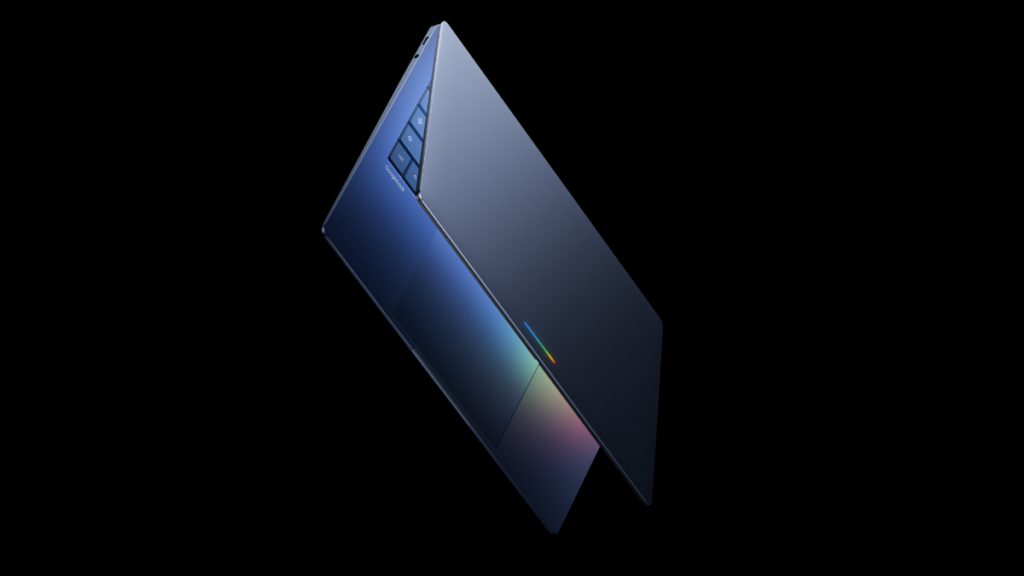
Table of Contents
A Departure from the Chromebook Formula
During the Android Show: I/O Edition on Tuesday, Google signaled a fundamental shift in its computing strategy by announcing the Googlebook. While it may look like a laptop on the surface, Google is positioning this as a new category of hardware entirely—one where the operating system is secondary to the artificial intelligence driving it.
For over a decade, the Chromebook was the avatar of the “cloud-first” era, stripping away local complexity in favor of a browser-centric experience. Now, Google is attempting to pivot toward an “intelligence-first” era. According to Alex Kuscher, Google Senior Director, the shift is a response to the evolving nature of computing. “As computing shifts from an operating system to an intelligence system, we see an opportunity to rethink laptops again,” Kuscher stated in a company blog post.
The Googlebook is effectively Google’s answer to the Copilot+ PC ecosystem pioneered by Microsoft. However, unlike Windows laptops that have AI layered on top of a legacy OS, Google is suggesting that the Googlebook is built from the ground up for Gemini.
The ‘Project Aluminum’ Mystery
One of the most significant reveals—though left intentionally vague—is the software. Google confirmed that Googlebooks will not run ChromeOS. Instead, they will utilize a “modern OS designed for Intelligence.” While Google has not officially named the platform, the description aligns closely with Project Aluminum, the long-rumored initiative to merge the Android and ChromeOS kernels into a single, unified experience.
This architectural shift would allow Googlebooks to run Android apps natively with much higher efficiency than the current Chromebook implementation, while providing a desktop-class environment tailored for LLM (Large Language Model) interactions. By unifying the stack, Google can ensure that Gemini has deep, system-level access to user data and app contexts, reducing the friction between a user’s intent and the AI’s execution.
The ‘Magic Pointer’ and Contextual AI
The hardware’s flagship feature is the Magic Pointer. Rather than acting as a simple input device, the cursor serves as a trigger for Gemini’s multimodal capabilities. By wiggling the cursor over specific onscreen elements, users can invoke AI actions without navigating menus. Google highlighted use cases such as pointing at a date in an email to automatically trigger a Calendar invite, or selecting a photo of a room and a product image of furniture to instantly generate a composite visualization of the item in that space.
The device also introduces a prompt-based widget system. Instead of choosing from a pre-set list of clocks or weather trackers, users can use Gemini to “Create your Widget,” describing the exact data and layout they want the system to track in real-time.
Ecosystem Integration and Hardware Partners
Google is leaning heavily into its vertical integration with Android. The Googlebook will allow users to cast apps from their phones directly to the laptop without installation, and a “Quick Access” feature will enable seamless file searching across mobile and desktop environments. This suggests a goal of creating a “fluid canvas” where the device used is less important than the task being performed.
On the hardware front, Google is not going it alone. The first wave of Googlebooks will be produced by a consortium of established OEMs, including Acer, Asus, Dell, HP, and Lenovo. While detailed spec sheets remain under wraps, Google’s “Featherweight Design” and “Heavyweight Power” marketing suggests a focus on the ultraportable premium segment. A distinct “glowbar” lightstrip on the lid will serve as the visual identifier for the new line.
Positioning in a Crowded Market
The Googlebook represents a gamble on the “AI PC” trend. While high-end Chromebooks have already pushed into the $750 to $1,000 range, the Googlebook is expected to target an even higher price point to justify its premium materials and specialized AI hardware.
The success of the device will likely depend on whether users view a Gemini-centric OS as a productivity leap or simply another layer of software abstraction. By moving away from the budget-friendly identity of the Chromebook, Google is finally attempting to compete directly with the MacBook Air and the latest Snapdragon-powered Windows laptops in the premium productivity space.