Hyundai’s Georgia Metaplant is More Than an EV Factory—It’s a Bet on Software-Defined Manufacturing
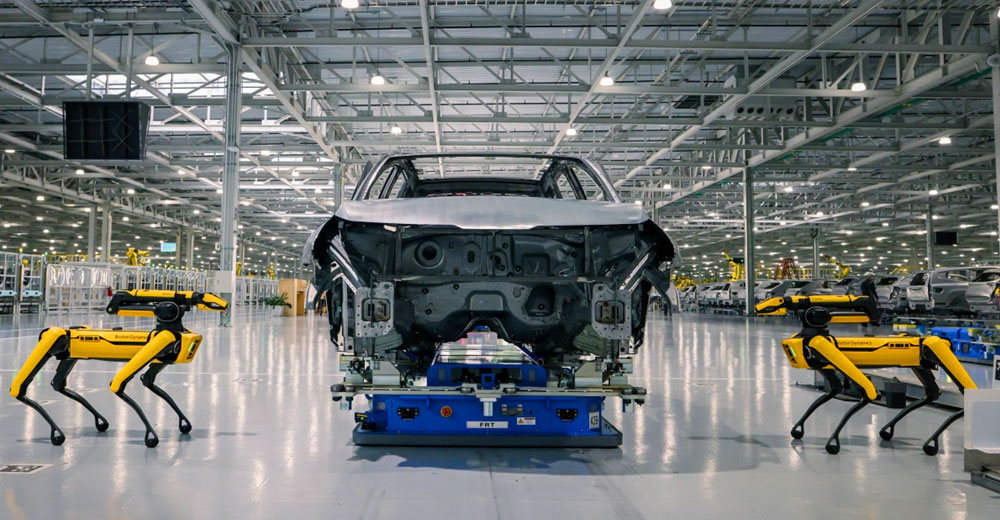
Table of Contents
A Departure from the Traditional Assembly Line
For decades, automotive manufacturing has followed a rigid, linear logic: a chassis moves forward, parts are bolted on, and the car exits the line. But inside Hyundai Motor Group’s massive Metaplant America in Bryan County, Georgia, that playbook is being rewritten. The facility isn’t just a scale-up of existing capacity; it is an experiment in what the company calls ‘software-defined manufacturing.’
The sheer scale of the $7.6 billion investment is staggering, designed to produce 300,000 electric vehicles annually. However, the real story lies in the logistics. Unlike traditional plants that rely on fixed conveyor belts for every stage of movement, the Metaplant heavily integrates Autonomous Mobile Robots (AMRs) and AI-driven orchestration. This allows Hyundai to pivot production lines more fluidly, adjusting to shifts in consumer demand between different EV models without the months-long downtime typically required for re-tooling.
Integrating the ‘Software-Defined Vehicle’ (SDV) Philosophy
Hyundai is currently obsessed with the transition to SDVs—vehicles where hardware is standardized, and features, performance, and user experience are controlled via software updates. The Georgia plant is the first facility designed from the ground up to support this architecture. By integrating the software stack directly into the manufacturing process, Hyundai can customize vehicle configurations via code rather than manual hardware swaps on the line.
This shift is a direct response to the competitive pressure from Tesla and the emerging Chinese giants like BYD, who have optimized the vertical integration of software and hardware. For Hyundai, the Metaplant is the physical manifestation of their goal to move away from being a mere hardware provider to becoming a mobility service provider.
The Logistics of Intelligence
One of the most striking elements of the facility is the use of digital twin technology. Before a single bolt was tightened in Georgia, the entire plant existed as a high-fidelity digital mirror. This allowed engineers to simulate bottlenecks and optimize the flow of parts in real-time. In the physical plant, this translates to a leaner operation where AI predicts part shortages before they happen, reducing the ‘just-in-time’ stress that often plagues legacy automotive supply chains.
Addressing the Infrastructure Gap
The Metaplant is also a strategic hedge against volatile regulatory environments and supply chain disruptions. By localizing production in the U.S., Hyundai isn’t just chasing Inflation Reduction Act (IRA) tax credits; they are shortening the feedback loop between American consumers and the engineering teams. The facility is designed to be modular, meaning as battery chemistry evolves—perhaps shifting from NCM to solid-state—the plant can integrate new battery assembly modules without a total overhaul.
However, the transition isn’t without friction. Moving from a mechanical engineering culture to a software-first culture requires a massive workforce pivot. Hyundai is investing heavily in regional training centers, acknowledging that the workers managing the Metaplant need to be as comfortable with data dashboards as they are with torque wrenches.
As the plant ramps up to full capacity, it will serve as the blueprint for Hyundai’s global expansion. If the Georgia experiment succeeds, the era of the static car factory is officially over, replaced by an agile, algorithmic hub that treats cars more like smartphones on wheels than traditional machinery.