The Mechanics of a Miracle: How the Knicks Engineered the Largest Comeback in NBA Finals History
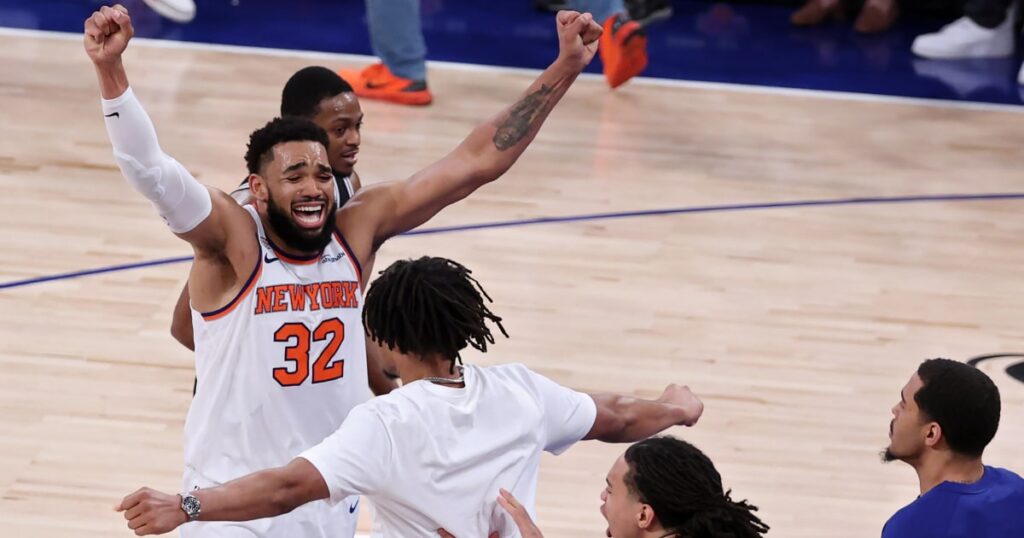
Table of Contents
The Anatomy of a Collapse
Madison Square Garden has hosted countless historic moments, but the sonic environment during the closing minutes of Game 4 on Wednesday reached a frequency rarely seen in professional sports. When Jalen Brunson launched a three-pointer over the towering frame of Victor Wembanyama with 2:21 remaining, the arena didn’t just cheer—it vibrated. The shot reduced a lead that had peaked at 29 points down to a single digit, signaling a systemic failure in the San Antonio Spurs’ ability to close out a dominant lead.
The resulting 107-106 victory for the New York Knicks represents the largest comeback in NBA Finals history. While the headlines will focus on the drama, the victory was a product of a sustained tactical shift that began long before the final buzzer. Trailing by 27 points at halftime, the Knicks entered the third quarter with a desperate need to disrupt the Spurs’ rhythm. They succeeded by locking San Antonio into a stifling defensive shell, holding the Spurs to a dismal 20% shooting across the third frame while converting 50% of their own attempts from beyond the arc.
The Fourth Quarter Volatility
Despite the third-quarter surge, San Antonio maintained a 20-point cushion with just 9:33 left in the game. What followed was a clinical 20-4 run by New York, a stretch of basketball that shifted the psychological momentum entirely. This run, capped by an OG Anunoby three-pointer, turned a comfortable victory into a chaotic scramble.
The final four minutes became a masterclass in high-stakes volatility. After the Spurs pushed the lead back to seven at the 3:31 mark, Jose Alvarado and Jalen Brunson responded with consecutive triples. The momentum swung violently when Josh Hart intercepted a De’Aaron Fox pass and drove the length of the floor, only to miss a wide-open layup—a mistake that nearly derailed the comeback. However, the Spurs failed to capitalize on the error, as Victor Wembanyama—usually a reliable 86.2% free-throw shooter—missed two consecutive shots, leaving the door open for New York.
The Final Sequence
The closing 30 seconds provided a sequence of errors and instincts that will be studied for years. After Stephon Castle converted two free throws to give San Antonio a 106-105 lead with 30.3 seconds remaining, the Spurs had a chance to ice the game. Instead of playing the clock and forcing the Knicks to foul, De’Aaron Fox attempted a risky layup with 14 seconds left, which was promptly blocked by Anunoby.
The game-winning sequence began with a missed deep three by Brunson. In a moment of pure fundamental aggression, OG Anunoby secured the offensive rebound and tipped the ball in with 1.2 seconds left. The play was the culmination of a specific directive from coach Mike Brown, who had challenged Anunoby during the pre-game shootaround to dominate the offensive glass.
“I don’t know if there was a play bigger than any other play in the history of Knicks basketball,” Brown stated post-game. “He took on the challenge, and he went and won the game for us doing exactly what I called him out for.”
While the Knicks now head into Game 5 with the possibility of claiming their first NBA title in 53 years, Anunoby remained characteristically understated. When asked about the weight of the moment, he simply noted that he tried to tip the ball in softly after realizing a dunk wasn’t feasible. For a franchise that has waited over five decades, the victory was more than just a win; it was a tactical demolition of a presumptive champion.