Xiaomi Pushes Mini LED to the Masses With New FX Series Launch in India
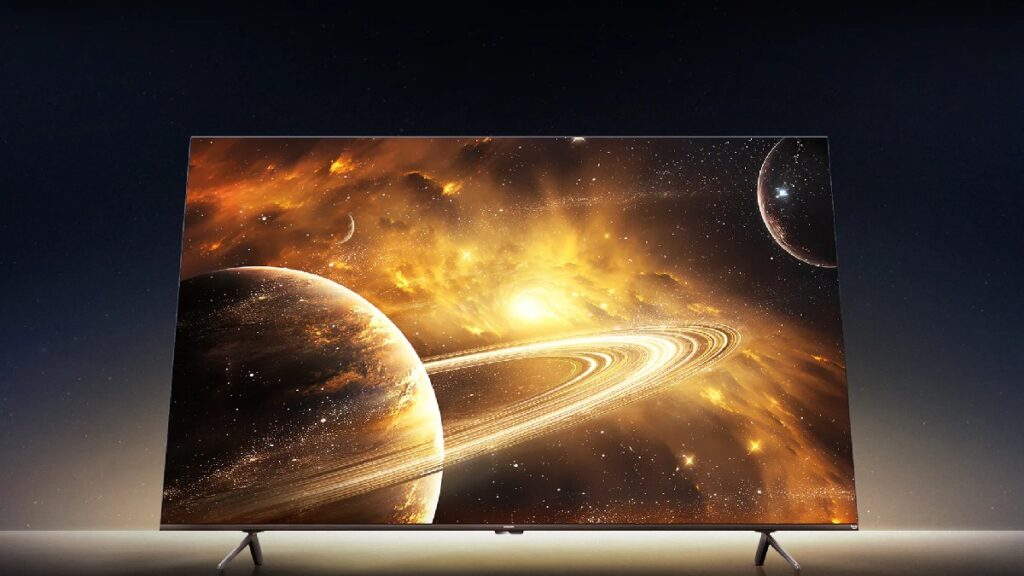
Table of Contents
Aggressive Pricing for Premium Panel Tech
Xiaomi is making a calculated play for the mid-range home cinema market in India with the official rollout of the TV FX Mini LED series. By pairing QD Mini LED technology with Amazon’s Fire TV OS, the company is attempting to bridge the gap between budget-friendly LED panels and the prohibitively expensive OLED sets that typically dominate the high-end segment.
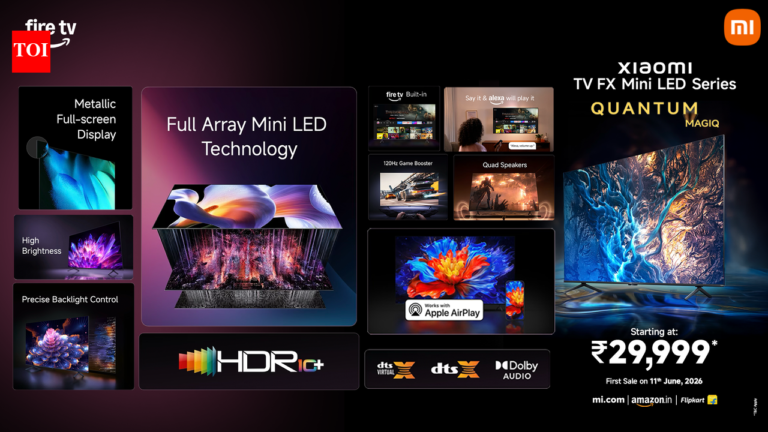
The lineup arrives in four distinct sizes—43, 55, 65, and 75 inches—targeting different room scales while maintaining a consistent feature set across the board. In a move typical of Xiaomi’s aggressive pricing strategy, the company has introduced the series with a tiered pricing structure and an immediate limited-time introductory discount to gain early market share.
The 43-inch entry model is positioned at a standard retail price of Rs. 32,999, but is currently available for Rs. 29,999. The 55-inch model follows at Rs. 44,999 (discounted to Rs. 39,999), the 65-inch at Rs. 64,999 (discounted to Rs. 59,999), and the flagship 75-inch panel at Rs. 84,999 (discounted to Rs. 79,999).
Breaking Down the QD Mini LED Implementation
The core appeal of the FX series is the implementation of Quantum Dot (QD) Mini LEDs. Unlike standard LEDs, which rely on a few large backlight zones, Mini LEDs use thousands of tiny diodes to provide much more granular control over brightness and contrast. When combined with Full Array Local Dimming (FALD), the TV can shut off specific clusters of LEDs to achieve deeper blacks, reducing the “blooming” effect often seen in cheaper HDR displays.
To complement the hardware, Xiaomi has integrated HDR10+ support, ensuring that the high peak brightness of the Mini LED panels is actually utilized when streaming content from platforms like Netflix or Prime Video. While Xiaomi hasn’t released the exact number of dimming zones for each size, the inclusion of QD technology suggests a focus on color volume and vibrancy that exceeds standard 4K LED TVs.
The Fire TV Pivot and Gaming Performance
Perhaps the most significant strategic shift here is the deep integration of Fire TV. By moving away from a proprietary or basic Android skin in favor of Amazon’s ecosystem, Xiaomi is leaning into a more streamlined, app-centric user experience. This gives users native access to the Alexa voice ecosystem and a curated app store that is generally more stable than the fragmented Android TV landscape.
For the gaming community, the FX series introduces a “DLG 120Hz game mode” on select higher-end variants. This is likely a Dual Line Gate implementation, which allows the TV to simulate a 120Hz refresh rate by sacrificing some vertical resolution. While not a native 120Hz panel in the same vein as LG’s C-series OLEDs, it provides a smoother motion experience for PS5 and Xbox Series X users who want a more responsive feel without spending six figures on a display.
Hardware and Connectivity
Under the hood, the FX series is powered by a quad-core processor designed to handle the demands of 4K upscaling and the Fire TV interface. The inclusion of 32GB of onboard storage is a pragmatic choice—enough to keep the OS snappy and hold several essential apps without the sluggishness associated with 8GB or 16GB budget sets. Connectivity is rounded out with dual-band Wi-Fi, which is critical for maintaining a stable 4K stream in households with multiple connected devices.
The audio side of the equation relies on Dolby Audio-backed speakers. While built-in TV speakers rarely compete with dedicated soundbars, the Dolby certification ensures a baseline of clarity and spatial positioning for dialogue-heavy content.