Canon Targets Prosumers in India With EOS R6 V and First L-Series Power Zoom Lens
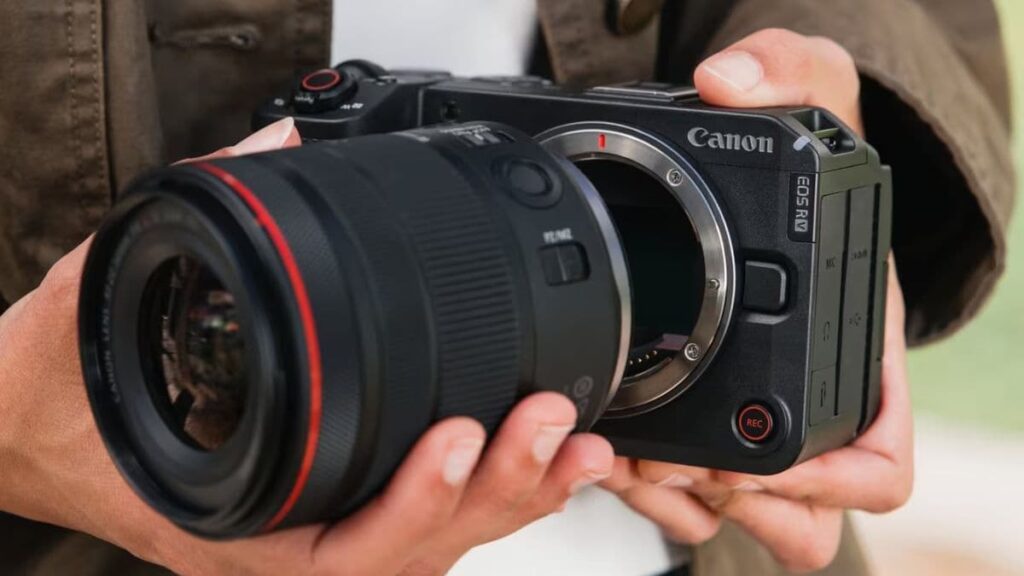
Table of Contents
A Strategic Pivot Toward the ‘Creator’ Economy
Canon is doubling down on the convergence of cinema and stills in the Indian market. On Wednesday, the company officially expanded its mirrorless ecosystem with the launch of the EOS R6 V, a full-frame camera designed specifically to bridge the gap between a traditional enthusiast DSLR and a dedicated cinema line. While the R6 series has historically been a powerhouse for hybrid shooters, the ‘V’ iteration signals a more aggressive push into high-end video production.
The EOS R6 V arrives at a time when the Indian content creation market is seeing a surge in demand for professional-grade equipment that doesn’t require a full cinema crew to operate. By integrating the DIGIC X image processor and the refined Dual Pixel CMOS AF II autofocus system, Canon is targeting filmmakers who need reliable tracking and rapid focus shifts without sacrificing the portability of a mirrorless body.
The Power Zoom Innovation
The most significant piece of hardware accompanying the R6 V launch is the RF 20-50mm f/4L IS USM PZ. For those unfamiliar with the terminology, ‘PZ’ stands for Power Zoom. This is a notable milestone for Canon, marking the first professional-grade full-frame L-series lens to feature a built-in electronic zoom system.
In traditional zoom lenses, the focal length is changed manually by rotating the lens barrel, which can lead to jerky movements or ‘zoom drift’ in video. The RF 20-50mm allows for smooth, electronically controlled zooming, mimicking the functionality of a cinema zoom. This makes it an essential tool for gimbal work and scripted productions where a consistent, linear zoom is required for professional aesthetics. The L-series designation ensures that this isn’t just a novelty feature; it carries the build quality and optical precision Canon is known for in its professional glass.
Pricing and Market Positioning
Canon’s pricing strategy for the Indian market reflects its positioning of the R6 V as a high-end tool for professionals rather than a casual hobbyist device. The body-only configuration is priced at Rs. 2,35,995. For those looking to complete the setup, the RF 20-50mm f/4L IS USM PZ lens is available individually for Rs. 1,42,995.
To incentivize the adoption of the new power zoom ecosystem, Canon is offering a combined kit consisting of the EOS R6 V and the RF 20-50mm lens for Rs. 3,55,995. This bundle is aimed directly at the ‘one-man-band’ production house—creators who handle everything from cinematography to editing.
Technical Synergy
The synergy between the DIGIC X processor and the new lens is where the R6 V is expected to shine. The Dual Pixel CMOS AF II is designed to work in tandem with the electronic zoom, ensuring that as the focal length shifts from 20mm to 50mm, the autofocus remains locked on the subject without the ‘hunting’ effect often seen in cheaper mirrorless setups. This level of integration is critical for the high-paced environment of digital content creation, where missing a focus point can mean a ruined take.
Availability and Reach
The new hardware is currently available through the Canon e-Shop and a network of authorized retail partners across India. By leveraging both digital and physical retail channels, Canon is attempting to capture the fragmented market of independent filmmakers and corporate videographers who prefer a hands-on demo before investing in L-series glass.
As Sony and Panasonic continue to iterate on their video-centric mirrorless lines, Canon’s introduction of a professional power zoom lens shows that the company is no longer just playing catch-up in the video space—it is actively attempting to redefine the ergonomics of the hybrid camera.