Hate Symbol Ignites in Chicago’s Grant Park Ahead of Obama Center Opening
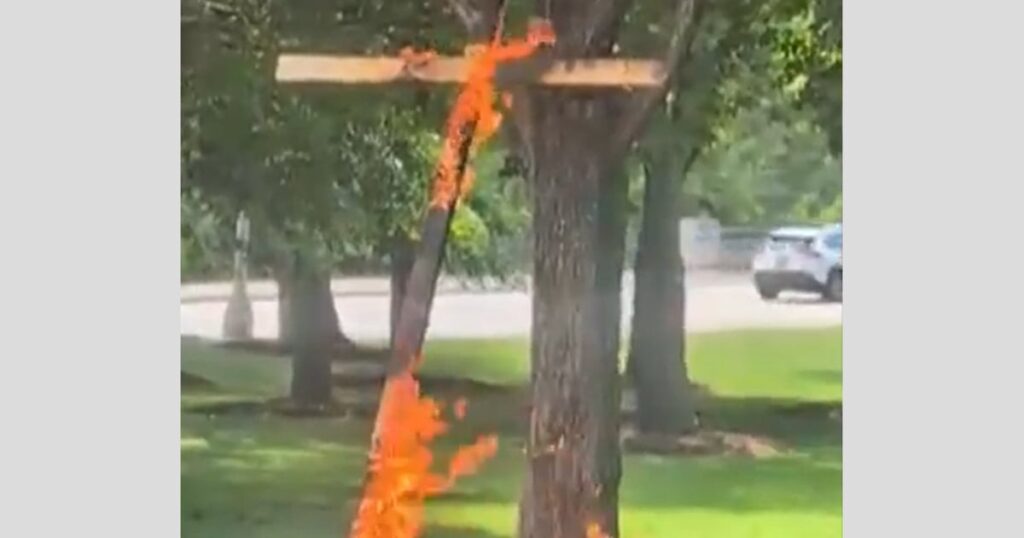
Table of Contents
A Targeted Act of Intimidation in the Heart of Downtown
Chicago authorities are searching for a suspect after a large wooden cross was set ablaze in Grant Park on Tuesday afternoon. The act, a historic symbol of white supremacy and terror against Black Americans, occurred in one of the city’s most prominent public spaces—a location deeply entwined with the city’s political identity and the site where Barack Obama once delivered his 2008 election acceptance speech.
The incident was first brought to public attention via social media, where a motorist’s video showed a cross, estimated to be at least six feet tall, engulfed in orange flames while leaning against a tree. The sight drew a crowd of stunned commuters and pedestrians, many of whom slowed their vehicles to document the scene, reflecting a mixture of disbelief and alarm.
The Chicago Fire Department responded quickly to extinguish the blaze, while the Chicago Police Department (CPD) launched an immediate investigation. In a community alert issued Wednesday, police released an image of an individual seen fleeing the scene after the object was constructed and ignited. As of the latest update, no arrests have been made, and the motive remains officially unconfirmed, though the nature of the object strongly suggests a targeted act of hate.
The Weight of Symbolism and Timing
The timing of the incident has added a layer of tension to an already sensitive political climate. Next week, the city prepares for the dedication of the Obama Center, a sprawling presidential library and museum complex located less than ten miles south of Grant Park. The center is scheduled to open to the public on Juneteenth, the federal holiday commemorating the end of slavery in the United States.
For residents, the visceral nature of the symbol was not lost. Keinika Carlton, who witnessed the fire while driving with her family, described the experience as a combination of shock and disgust. “As Black women, of course, our first thought is racial,” Carlton said, noting the cross’s long history as a tactic of violence in the American South.
The Faith Community of Saint Sabina has stepped in to accelerate the investigation. Senior Pastor Rev. Michael Pfleger announced a $10,000 reward for information leading to the arrest and conviction of those responsible. Pfleger has been vocal in his demand that the incident be classified as a hate crime, drawing a direct parallel to the use of swastikas in public spaces.
Legal Precedent and Societal Context
From a legal standpoint, cross-burning occupies a complex space in American jurisprudence. In a landmark 2003 Supreme Court decision, the late Justice Sandra Day O’Connor wrote that while the First Amendment protects various forms of expression, bans on cross-burning are permissible when the act is intended to intimidate. The court recognized the practice as a “particularly virulent form of intimidation” inextricably linked to the Ku Klux Klan.
Academic perspectives on the event vary. Gina Miranda Samuels, faculty director of the Center for the Study of Race, Politics and Culture at the University of Chicago, suggested that while such an act may not instill the same systemic terror it did decades ago, it serves as a grim reminder of persistent hatred. She attributed the boldness of such acts to a political environment where extremist rhetoric has become increasingly mainstream.
Frank Chapman, executive director of the National Alliance Against Racist and Political Repression, echoed this sentiment, suggesting that a perceived lack of accountability for political violence—specifically citing the pardons and dismissed cases following the January 6 Capitol riot—has created a sense of impunity among white supremacist actors. According to Chapman, this environment provides a “license” for individuals to bring hate symbols back into the public square.