Fable’s ‘Living Population’ System Aims to Move Beyond Static NPCs
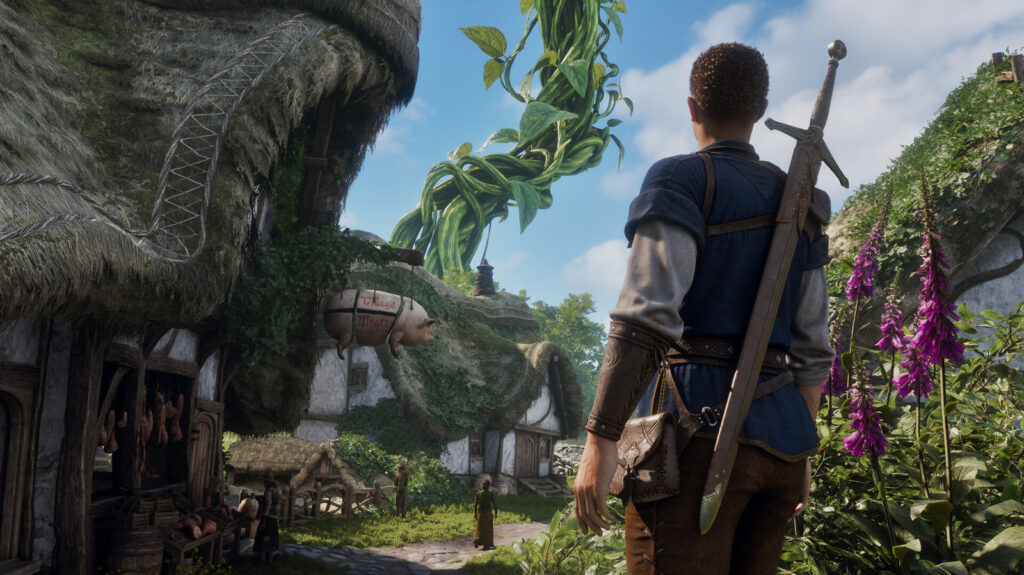
Table of Contents
Beyond the Quest Marker: The Mechanics of Fable’s Living World
For years, the ‘living world’ has been a staple of RPG marketing, usually manifesting as NPCs who walk in circles or offer the same three lines of dialogue regardless of whether the player just saved the city or burned it down. With the latest gameplay deep dive for the upcoming Fable reboot, Playground Games is attempting to bridge that gap with its “Living Population” system.
The centerpiece of this reveal is the scale of the social simulation. According to Xbox, the game features over 1,000 non-playable characters (NPCs), each fully voiced and endowed with a distinct personality and a hand-crafted daily routine. Unlike procedurally generated crowds found in many open-world titles, Playground asserts that these characters are designed with intentionality, meaning their reactions to the player—referred to in-game as the Hero—are tied to a complex web of reputation and memory.
The Economy of Reputation
The gameplay footage illustrates a world where social capital is as valuable as gold. The interaction model extends far beyond simple dialogue trees; players can form genuine friendships, enter romantic relationships, or hire NPCs as employees. However, these bonds are fragile. The system tracks not just what you do, but who sees you do it.
In one sequence, the Hero is seen purchasing a local pub, a move that shifts the player’s status from a wandering adventurer to a property owner and employer. This transition alters how the local population interacts with the character, moving the needle from curiosity to respect—or perhaps resentment, depending on how the Hero manages their new business.
Interestingly, the game introduces a layer of social manipulation. Players can pay off the town crier to spread favorable rumors, effectively gaming the reputation system to sway the perceptions of characters they haven’t even met yet. It is a cynical, clever touch that evokes the dark humor of the original Fable trilogy while utilizing modern hardware to track these variables in real-time.
Technical Pedigree and World Design
There is a visible influence from Playground Games’ work on the Forza Horizon series here. While the genres couldn’t be more different, the studio’s obsession with environmental fidelity and seamless world-streaming is evident. The lush landscapes of Albion are not merely backdrops but functional parts of the simulation, where the Hero’s crimes and chaotic interventions leave a lasting mark on the settlement’s atmosphere.
The branching dialogue system appears to be the primary driver of this experience. Decisions made in a casual conversation can ripple outward, affecting the Hero’s ability to secure housing or impress love interests. By tying financial success (like taking on odd jobs to afford a home) to social standing, the game leans heavily into a “life sim” philosophy that is often secondary in traditional action RPGs.
Fable is scheduled to launch on February 23 for Xbox Series X/S, PC, and PS5. While the project has faced delays, the depth of the systems shown in this latest reveal suggests a studio that is prioritizing the systemic interaction of its world over a simple checklist of quests.