Rare Great White Sighting in the Mediterranean Highlights the Peril of ‘Ghost Gear’
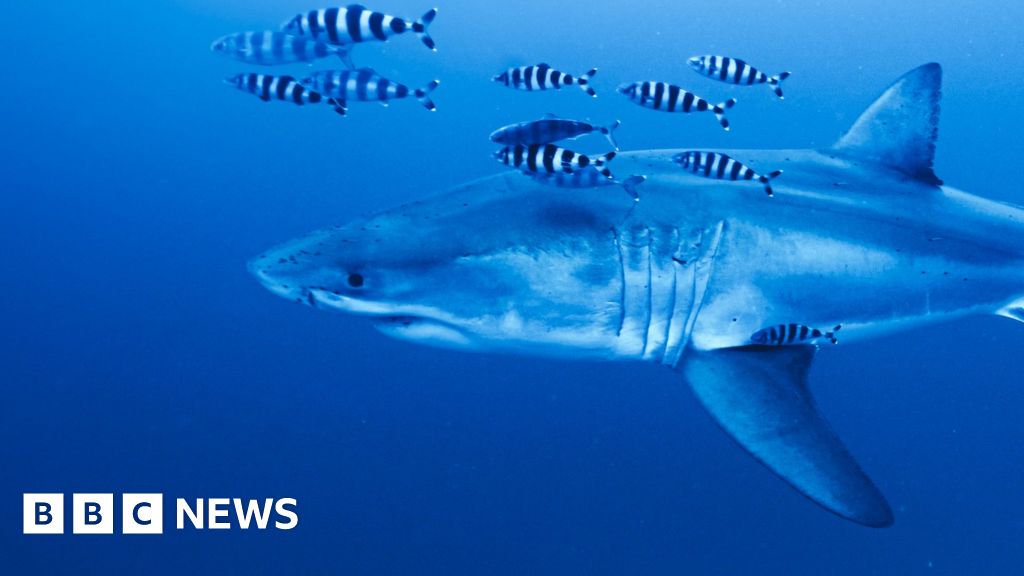
Table of Contents
An Unexpected Encounter in Open Waters
In a region where the apex predator of the ocean has become a ghost, a rare sighting of a Great White shark has provided a visceral reminder of the Mediterranean’s fragile ecosystem. The encounter, which took place in May between the coasts of Tunisia and Sicily, was captured on film by a team of volunteer divers who were not looking for sharks, but for the remnants of industrial fishing.
Derk Remmers, a volunteer diver with the non-profit organization Healthy Seas, described the moment of contact as an overwhelming experience. “The shark was pretty close to us,” Remmers recalled, noting that the sheer proximity of the animal caused his hands to shake as he struggled to operate his camera. The footage captures an adult male, a sighting that is statistically improbable given the species’ precipitous decline in these waters.
The Invisible Threat: Ghost Fishing Nets
The presence of the shark was an incidental discovery. The Healthy Seas team was deployed on a mission to combat ‘ghost fishing’—the phenomenon where abandoned, lost, or discarded fishing gear continues to trap and kill marine life indefinitely. These synthetic nets, often made of durable plastics, do not decompose, turning stretches of the seafloor into lethal traps for everything from sea turtles to rare sharks.
For the Mediterranean, the stakes are particularly high. Overfishing and habitat degradation have driven the Great White to the brink of local extinction. While the sighting of a single adult male does not signal a population recovery, it underscores the resilience of the species and the critical necessity of removing the anthropogenic debris that makes their survival even more precarious.
The Case for Marine Protected Areas (MPAs)
Conservationists are now leveraging this rare footage to push for more aggressive governmental intervention. The argument is simple: if a Great White can still be found in the open waters between Tunisia and Sicily, there is a biological imperative to protect these corridors.
Current efforts to establish Marine Protected Areas (MPAs) in the Mediterranean often face political and economic headwinds from the fishing and tourism industries. However, the appearance of a high-profile species like the Great White serves as a powerful symbolic tool. By creating sanctuary zones where industrial fishing and netting are strictly prohibited, authorities could provide a refugium for the few remaining apex predators, which in turn helps regulate the entire marine food web.
Navigating the Risk
Despite the excitement surrounding the footage, marine biologists have been quick to temper public anxiety. Because the shark was spotted many miles offshore, far from the popular swimming beaches of the Mediterranean coast, experts maintain that there is no immediate risk to humans. The focus, they argue, should remain on the shark’s survival rather than the perceived danger it poses.
As the scientific community continues to analyze the movement of these rare visitors, the mission of organizations like Healthy Seas becomes even more vital. The removal of ghost gear is not merely a cleanup effort; it is a prerequisite for the return of a healthy, balanced ocean where the Mediterranean’s most formidable predator can once again roam without entanglement.