From E-Scooters to Orbit: Orbital Secures $5M to Solve AI’s Compute Crisis in Space
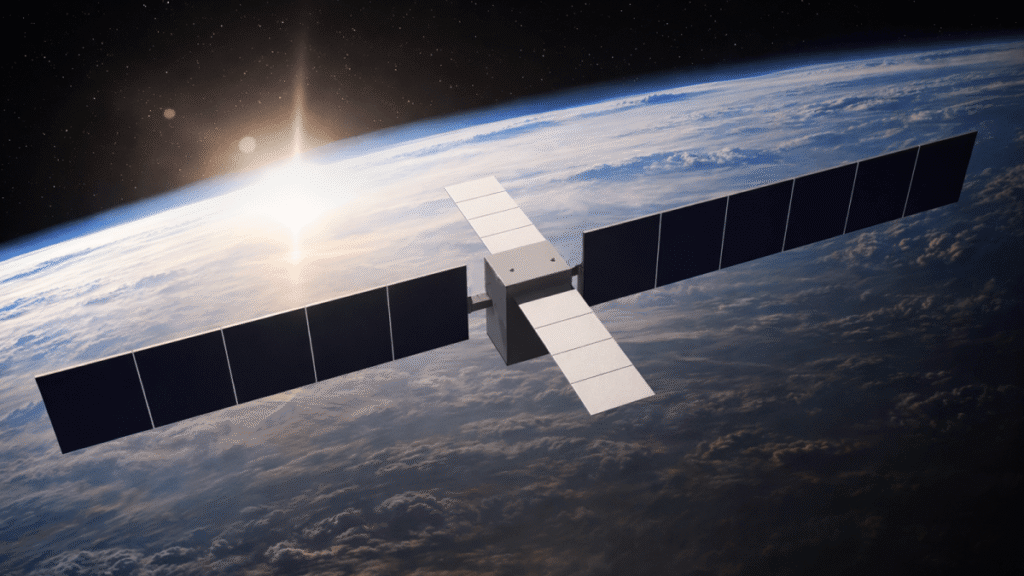
Table of Contents
The New Frontier of Compute
For the last decade, the venture capital playbook was dominated by the ‘lean startup’—software apps that could scale globally with minimal physical overhead. But a new wave of ‘hard tech’ is emerging, where the goal isn’t just a better user interface, but the physical infrastructure required to sustain the AI revolution. The latest example is Orbital, a startup emerging from a16z’s Speedrun accelerator with a $5 million seed round aimed at moving AI inference from terrestrial data centers to the vacuum of space.
The company is led by Euwyn Poon, a founder who knows a thing or two about scaling physical hardware. In 2017, Poon launched Spin, the e-scooter service he eventually sold to Ford. While the leap from urban mobility to orbital infrastructure seems jarring, the connective tissue is the ability to manage complex, capital-intensive deployments. According to a16z partner Andrew Chen, Poon’s experience managing 250,000 scooters across 100 cities is exactly the kind of operational rigor needed to orchestrate a satellite constellation.
The Starship Dependency
The premise of Orbital is grounded in a simple, if daunting, problem: AI compute demand is outstripping the availability of land, power, and cooling on Earth. Space offers limitless solar energy and removes the bureaucratic friction of environmental reviews and zoning laws. However, the physics of the ‘launch cost’ has historically killed this business model. Currently, using a SpaceX Falcon 9 is too expensive to make large-scale orbital data centers economically viable.
Orbital is essentially placing a massive bet on the maturity of SpaceX’s Starship. The promise of a fully reusable, heavy-lift vehicle could crash the cost per kilogram of payload, turning a theoretical curiosity into a scalable business. “We will get to full scale when Starship comes online,” Poon noted, acknowledging that current launch economics are the primary bottleneck.
Technical Milestones and Hardware
Orbital isn’t starting from zero. The team in Los Angeles comprises veterans from SpaceX, Northrop Grumman, and Amazon LEO. Their immediate roadmap involves a high-stakes demonstration: flying an Nvidia Blackwell chip on a partner satellite. This test is less about processing power and more about survival—specifically, testing radiation shielding and thermal management in an environment where heat cannot be dissipated via traditional air cooling.
Looking further ahead, Orbital aims to launch its first dedicated data-processing spacecraft in 2028, utilizing Nvidia’s Space-1 Vera Rubin-class GPUs. The long-term vision is an ambitious deployment of 10,000 satellites providing a distributed gigawatt of computing power, with each unit rated at 100 kW. This puts them in direct competition with other orbit-focused compute plays, such as Starcloud, which already has a GPU in orbit, and Blue Origin’s plans for data centers launched via the New Glenn vehicle.
A Shift in Venture Risk
The funding of Orbital signals a broader shift in how Silicon Valley views risk. Ten years ago, a project requiring billions of dollars and a decade-long horizon would have been dismissed as too speculative for traditional VC. Today, the insatiable hunger for GPU clusters has made the “space data center” a legitimate strategic hedge.
Poon’s own path to this venture was serendipitous. After leaving Ford, he purchased an Nvidia A100 and collocated it in a Santa Clara facility to serve open-weight models. That hands-on experience with the fragility and demand of terrestrial compute convinced him that the next logical step for the industry wasn’t just more chips, but a completely new location for them to live.