The Orbital Gamble: Inside SpaceX’s $1.8 Trillion Valuation and the Push for Space-Based AI
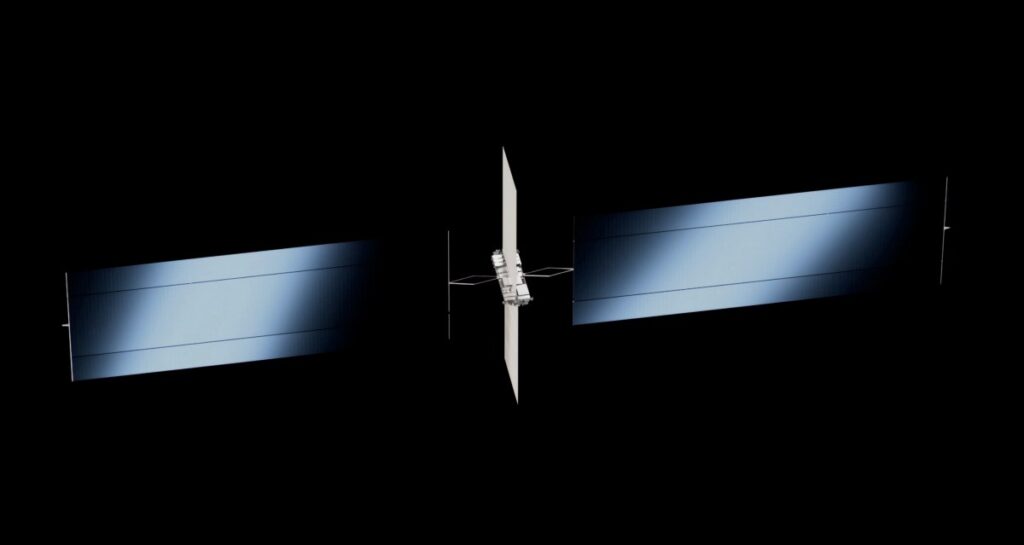
Table of Contents
The Trillion-Dollar Disconnect
SpaceX is heading toward a market debut that defies traditional financial gravity. With a reported $75 billion stock offering that is already deeply oversubscribed, institutional investors are scrambling for blocks of equity in Elon Musk’s aerospace empire. However, a widening gap has emerged between the company’s internal valuation and the sobriety of independent analysts.
While SpaceX’s bankers are pushing a valuation near $1.8 trillion, analysts from Morningstar and NYU professor Aswath Damodaran have offered significantly lower assessments, placing the company between $825 billion and $1.2 trillion. This discrepancy isn’t just about accounting; it’s a fundamental disagreement over whether SpaceX is a launch company or an AI infrastructure play.
The core of this valuation surge is a bold, high-stakes pivot toward orbital data centers—a vision Musk has championed over the last 18 months to unify the company’s disparate goals ahead of the public offering.
The ‘Neocloud’ Strategy and the AI Pivot
In its S-1 filings, SpaceX describes an ambitious foray into enterprise AI, suggesting its models will power advanced coding tools and digital agents capable of performing white-collar labor through projects like ‘Macrohard.’ The company has pegged the total addressable market for this AI business at a staggering $22.7 trillion, dwarfing the $2.4 trillion estimated for traditional AI infrastructure and the $2 trillion attributed to its space operations.
This strategic framing creates a curious contradiction. While SpaceX claims it will build frontier models, it simultaneously acts as a ‘neocloud’ provider, selling massive amounts of compute to companies like Google and Anthropic—entities that are direct competitors in the model-building race. This duality raises a critical question about where the value actually accrues in the AI stack: is it more profitable to own the chips and the power, or the intelligence running on them?
To solve this, Musk is betting on a massive expansion of compute capacity that exists entirely outside Earth’s atmosphere, potentially shielding the business from terrestrial energy constraints and regulatory hurdles.
Engineering the Impossible: Terafab and Starship
Executing a space-based AI network requires solving three monumental engineering challenges simultaneously. First is the production of hardware. Musk has teased ‘Terafab,’ a planned chip foundry designed to scale compute production toward a terawatt level. Historically, semiconductor fabs are among the most complex industrial undertakings on Earth, often requiring decades of development and billions in capital expenditure.
Second is the sheer volume of hardware deployment. In a recent video, Musk suggested an annualized target of one gigawatt of space AI compute by the end of next year. Based on a projected 150 kW per satellite, this would require SpaceX to launch roughly 6,666 satellites per year—or about 556 per month. This is a massive leap from the current Starlink production rate of approximately 70 satellites per week.
Finally, there is the Starship variable. The entire economic model for orbital data centers relies on the total reusability of the Starship system to lower the cost per kilogram to orbit. While recent test flights have shown progress, the system has not yet achieved the rapid, reliable reusability required for this scale of deployment. SpaceX is currently navigating a mishap investigation with the FAA regarding a booster stage that failed to make a controlled reentry, highlighting the volatile nature of the technology that underpins the company’s trillion-dollar ambitions.
The Call Option on Orbit
For investors, the current offering price of $135 per share—far above Morningstar’s fair value estimate of $63—functions essentially as a call option. It is a bet that Musk can do what he always claims: collapse the timeline of industrial evolution through sheer force of will. If Starship becomes a routine ferry and Terafab delivers on its promises, SpaceX becomes the backbone of the next century’s digital economy. If not, the company may find itself as a world-beating launch monopoly that overextended itself into a trillion-dollar AI fantasy.