The Race for Orbital Data Centers: Why AI is Pushing Compute Into Low Earth Orbit
Table of Contents
Beyond the Terrestrial Cloud
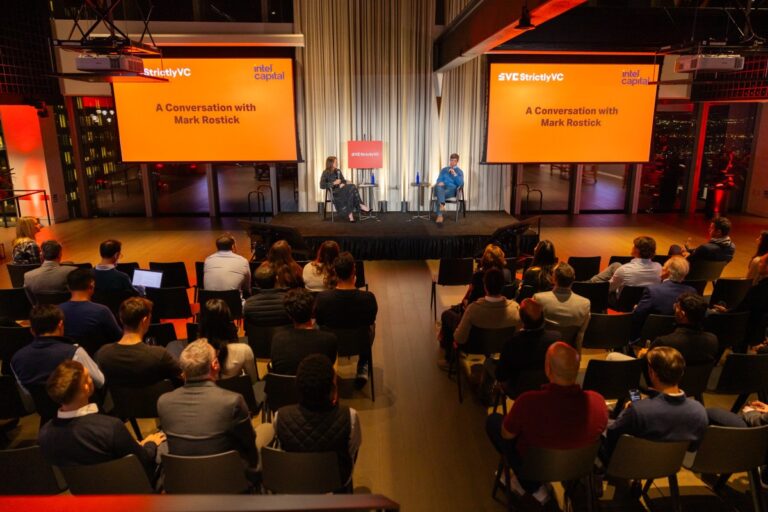
For decades, the conceptual leap from ground-based servers to orbital data centers felt like a trope of hard science fiction. However, a recent convergence of satellite proliferation and the aggressive demands of artificial intelligence has shifted the conversation from ‘if’ to ‘how.’ At a recent industry summit in Washington, D.C., convened by SpaceNews, a cohort of aerospace and compute specialists outlined a blueprint for an infrastructure that doesn’t just transmit data to Earth, but processes it in the vacuum of space.
The core problem driving this shift is latency and bandwidth. Current satellite constellations, such as those operated by Planet or SpaceX, generate staggering amounts of raw telemetry and imagery. Historically, this data has been ‘bent-piped’—downlinked to ground stations for processing. This creates a massive bottleneck. By implementing on-orbit computing, the industry can move toward a model where only the refined, actionable intelligence is sent back to Earth, drastically reducing the load on limited RF spectrums.
The AI Calculus: Processing at the Edge
The rise of Large Language Models (LLMs) and complex computer vision has fundamentally changed the calculus of space-based compute. AI requires immense processing power, but its real-world utility in space—such as detecting a wildfire in real-time or identifying a vessel in the South China Sea—depends on speed. If a satellite has to wait for a ground-station pass to process an image via a terrestrial GPU cluster, the window for a timely response closes.
Companies like Varda Space Industries and Starcloud are exploring the hardware limitations of this transition. The challenge is not just the software, but the physical environment. Space is a brutal place for silicon; cosmic radiation can cause single-event upsets (SEUs), flipping bits in memory and crashing systems. Traditional radiation-hardened chips are often generations behind in performance, creating a tension between the need for cutting-edge AI acceleration and the requirement for extreme reliability.
Powering the Void
Compute requires power, and in LEO (Low Earth Orbit), power is the ultimate currency. Overview Energy and other specialists are tackling the thermal management problem. In a vacuum, heat cannot be dissipated through convection; it can only be radiated. High-performance GPUs generate immense heat, and without sophisticated active cooling or massive radiator arrays, an orbital data center would effectively melt its own circuits under a heavy AI workload.
The goal is to create a sustainable ‘compute layer’ in space—a decentralized network of servers that can share loads, similar to how terrestrial cloud providers use availability zones. This would allow a satellite with a low-power processor to offload a complex task to a nearby, high-capacity orbital node, effectively creating a space-based internet of things (IoT) at a planetary scale.
A New Industrial Ecosystem
The shift toward on-orbit infrastructure is attracting a diverse range of players, from established entities like The Aerospace Corporation to agile startups like Star Catcher and Voyager Technologies. This ecosystem is no longer just about launching hardware; it is about managing data lifecycles in an environment where the hardware cannot be easily serviced or replaced.
This transition mirrors the early days of the terrestrial cloud. Just as AWS transformed compute from a capital expense (buying servers) into an operational expense (renting capacity), the emerging orbital market is looking toward ‘Compute-as-a-Service’ in space. For government and commercial users, the ability to rent a slice of a radiation-hardened GPU cluster in orbit could democratize space intelligence, allowing smaller firms to run complex analytics without owning their own constellation.
As the industry moves toward the deployment of these nodes, the focus remains on the interplay between orbital mechanics and data throughput. The race is no longer just about who can get to space, but who can think while they are there.