Rivian’s R2 Gamble: Scaling Down the Adventure Aesthetic for the Mass Market
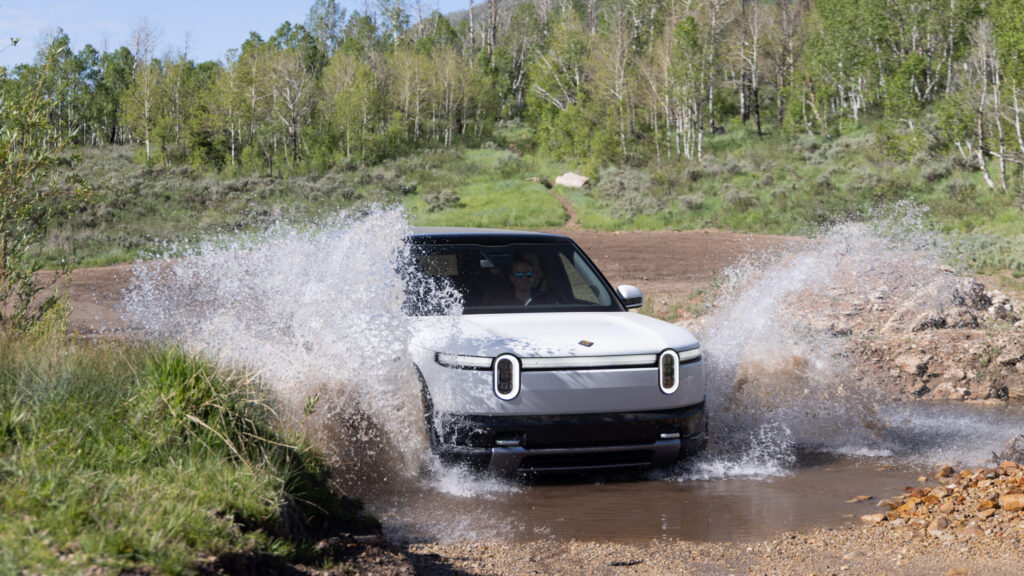
Table of Contents
The Pivot to Mainstream
For years, Rivian has built its brand on the ‘aspirational adventure’—high-priced, high-capability electric vehicles designed for the kind of outdoor excursions most owners only actually take twice a year. With the rollout of the R2, the company is attempting a precarious pivot: transitioning from a niche luxury startup into a mass-market automaker. The challenge isn’t just engineering a smaller car; it’s scaling production and slashing costs without eroding the rugged identity that makes the brand desirable.
During a recent media event in Utah, Rivian showcased the R2 Launch Edition, a vehicle that signals a departure from the R1’s uncompromising luxury. Starting just under $60,000 for the Launch spec—with entry-level models eventually dipping below $45,000—the R2 is designed to compete directly with the likes of the Tesla Model Y and the Honda CR-V. In person, the R2 feels more compact than its specs suggest, largely because Rivian has abandoned the traditional ‘skateboard’ chassis in favor of a semi-monocoque and sandwich battery layout. This architectural shift allows for a wheelbase nearly 9 inches longer than a Toyota RAV4, maximizing interior volume despite a smaller exterior footprint.
Engineering the Cost Out
The most significant stories of the R2 aren’t found in the exterior styling, but in the wiring looms and electronic control units (ECUs). To reach a sub-$45k price point, Rivian has aggressively simplified its electrical architecture. The transition to OS 2.0 has allowed the company to strip away miles of copper wiring. While the R1’s Gen 2 facelift reduced ECU counts from 17 to 7, the R2 pushes this further, eliminating another 2.3 miles of wiring harness and reducing incline connectors by 60%. This isn’t just a manufacturing win; it removes roughly 44 lbs of dead weight from the vehicle.
However, cost-cutting has led to some pragmatic compromises. Most notably, Rivian has eschewed the 800V architecture currently trending among high-end EVs in favor of a 400V system. While this keeps the vehicle affordable and potentially increases battery longevity, it caps DC fast charging at 230 kW. A 10% to 80% charge will take approximately 29 minutes—respectable, but trailing the bleeding edge of the industry. To offset this, Rivian has integrated the NACS charge port natively and added 11 kW bidirectional charging, allowing the R2 to serve as a mobile power bank for homes or other gear.
Performance and the ‘Maximus’ Motor
Under the hood, the R2 introduces ‘Maximus’ permanent-magnet radial-flux motors. These are distinct from the units found in the R1, utilizing side-mounted inverters and direct oil cooling to optimize efficiency. In the dual-motor Launch Edition, these produce a potent 656 horsepower and 609 lb-ft of torque. One critical improvement over its larger sibling is the front motor’s full disconnect capability, which significantly boosts highway efficiency by eliminating drag when all-wheel drive isn’t required.
The aerodynamics of a boxy SUV are naturally challenging, but Rivian has managed a 0.3 coefficient of drag through a raked windshield and a discreet rear spoiler. This efficiency allows the 88 kWh battery to stretch up to 345 miles of EPA-estimated range in the upcoming RWD Long Range variant. During the Utah trials, real-world efficiency varied wildly depending on the drive cycle, with readouts fluctuating between 2.0 mi/kWh during aggressive acceleration and significantly higher marks at cruising speeds.
Ultimately, the R2 represents a shift in philosophy. By mirroring the dimensions of the best-selling US crossovers and prioritizing architectural simplicity over raw charging speed, Rivian is betting that the average consumer values a ‘capable-enough’ adventure vehicle over a specialized tool for the wilderness. The success of the R2 will determine if Rivian can move beyond the ‘enthusiast’ phase and enter the era of sustainable, high-volume manufacturing.


