LibreOffice Slams ‘Euro-Office’ Launch as Deceptive Move Against Digital Sovereignty
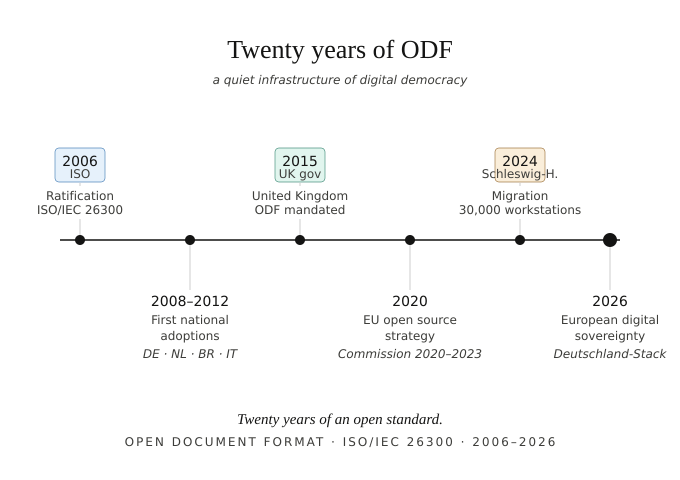
Table of Contents
A Battle Over ‘Firsts’ and Provenance
The launch of Euro-Office, marketed as the first open-source office suite developed in Europe, has ignited a fierce ideological and technical battle within the open-source community. The Document Foundation (TDF), the entity behind LibreOffice, has responded to the launch with an open letter that characterizes the new suite’s claims not as a milestone, but as a calculated deception.
In a scathing critique, TDF asserts that the title of ‘first’ belongs to OpenOffice.org, which debuted in 2001 based on StarOffice code, and subsequently LibreOffice in 2010. For the TDF, the arrival of Euro-Office is not an evolution of European tech autonomy, but rather an opportunistic attempt to ride the current political wave of ‘Digital Sovereignty’—a movement aimed at reducing Europe’s reliance on American big tech infrastructure.
The tension highlights a growing friction in the EU’s tech landscape: the difference between software that is merely ‘free to use’ and software that is fundamentally open and community-driven.
The OOXML Paradox
Beyond the dispute over historical priority, the TDF’s primary grievance is technical and strategic. The central pillar of Digital Sovereignty is the ability for users and governments to own and control their data without being locked into a proprietary ecosystem. This is typically achieved through the Open Document Format (ODF), an ISO/IEC standard that LibreOffice champions.
However, TDF points out a glaring contradiction in Euro-Office’s architecture: the suite defaults to Office Open XML (OOXML). OOXML is the proprietary format developed and controlled by Microsoft. By making OOXML the default, the TDF argues that Euro-Office is not challenging the hegemony of Redmond, but is instead acting as a ‘de facto ally’ in Microsoft’s content lock-in strategy.
“Document formats are a subject still rife with misinformation,” the TDF stated, suggesting that while Microsoft’s control of OOXML is expected, it is unacceptable for a project claiming to advocate for open source to do the same.
The Politics of Digital Sovereignty
The open letter also takes a personal tone, reminding the industry that the struggle for open standards in Europe did not begin with the current trend. TDF claims that many of the figures now championing Digital Sovereignty were silent or dismissive during the 2006 announcement of the ODF standard. To the LibreOffice community, the current enthusiasm for ‘European’ software feels hollow when it ignores the decades of groundwork laid by volunteer developers who fought against the demise of open-source productivity tools.
By prioritizing proprietary formats over open standards, the TDF contends that Euro-Office undermines the very freedom it claims to provide. If the underlying data remains in a format controlled by a single US-based corporation, the ‘European’ nature of the software wrapper becomes irrelevant.
A Fragmented Front
This dispute reveals a deeper schism in how ‘open source’ is being used as a branding tool. On one side is the community-led model of LibreOffice, which prioritizes standards and transparency. On the other is a newer breed of ‘sovereign’ tech that may use open-source licenses but remains tethered to proprietary ecosystems for the sake of market compatibility.
As European governments continue to seek alternatives to Microsoft 365 and Google Workspace, the conflict between Euro-Office and LibreOffice suggests that the path to true digital independence may be more complicated than simply building a local alternative. The real battle, it seems, is not over who writes the code, but who controls the files.


