Hyundai’s Georgia Metaplant: A Massive Bet on Software-Defined Manufacturing
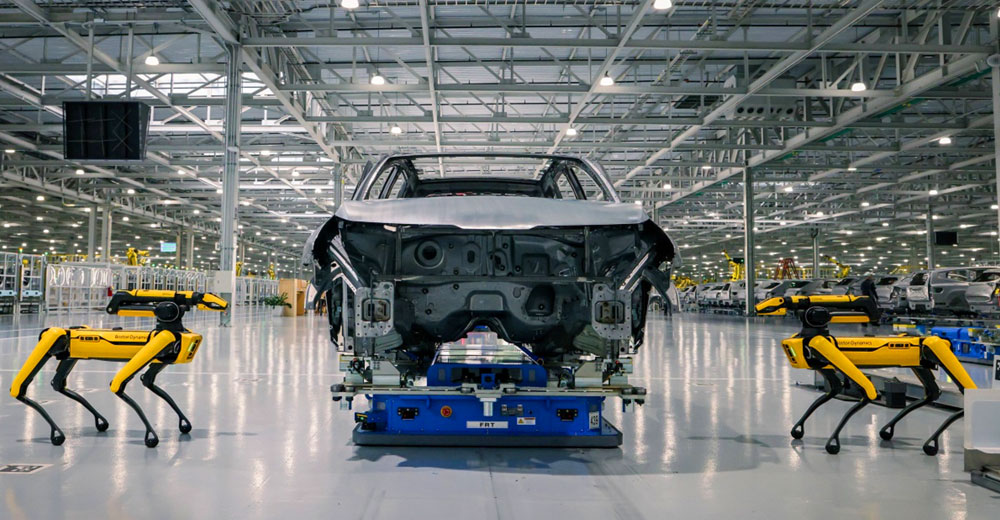
Table of Contents
A Departure from the Traditional Assembly Line
For decades, automotive manufacturing has followed a rigid, linear progression: a chassis moves down a belt, parts are bolted on, and the vehicle exits the line. But inside the Hyundai Motor Group Metaplant America (HMGMA) in Georgia, that legacy is being systematically dismantled. The facility isn’t just a place to build electric vehicles; it is a physical manifestation of Hyundai’s pivot toward ‘software-defined manufacturing.’
The scale of the project is staggering, but the real story lies in the flexibility of the floor. Unlike older plants designed for a single model, HMGMA utilizes a modular production system. This allows Hyundai to pivot production between different EV models—including the IONIQ series and Genesis luxury lines—without the months of downtime typically required for retooling. By integrating autonomous mobile robots (AMRs) and AI-driven quality control, the plant can shift its output based on real-time market demand rather than rigid annual forecasts.
The Integration of the ‘Digital Twin’
One of the most critical components of the Metaplant isn’t actually on the factory floor—it exists in a virtual mirror. Hyundai has leaned heavily into digital twin technology, creating a high-fidelity virtual replica of the entire facility. This allows engineers to simulate every movement of a robotic arm and every flow of logistics before a single piece of hardware is bolted down.
This isn’t just a fancy 3D map. By running simulations through the digital twin, Hyundai can identify bottlenecks in the assembly process and test new battery installation methods in a virtual environment, reducing the risk of costly physical errors. This approach mirrors the ‘digital first’ philosophy seen in companies like Tesla, but Hyundai is applying it to a more diverse portfolio of vehicle architectures.
Solving the Battery Bottleneck
The Metaplant’s strategic importance is tied directly to the US Inflation Reduction Act (IRA). To qualify for federal tax credits, EVs must meet strict North American assembly and battery sourcing requirements. HMGMA is the centerpiece of Hyundai’s strategy to decouple its supply chain from overseas dependencies.
By co-locating battery cell production and vehicle assembly, Hyundai is drastically reducing the logistical overhead and carbon footprint of transporting massive battery packs. The integration allows for a tighter feedback loop between the cell chemistry and the vehicle’s thermal management systems, potentially increasing the efficiency of the next generation of IONIQ models.
Labor and the Automation Tension
The transition to a high-automation environment hasn’t been without friction. The shift toward smart factories inevitably raises questions about the role of the human worker. While Hyundai emphasizes that the Metaplant creates thousands of high-tech jobs, the nature of those jobs is changing. The ‘line worker’ is increasingly becoming a ‘system operator,’ managing fleets of robots rather than manually turning wrenches.
This evolution puts Hyundai at a crossroads of labor relations and technological ambition. The ability to scale production rapidly depends on how well the company can upskill its workforce to handle the software-heavy environment of a modern Metaplant.


