NASA Names Artemis III Crew, Setting the Stage for First Human Return to Lunar South Pole
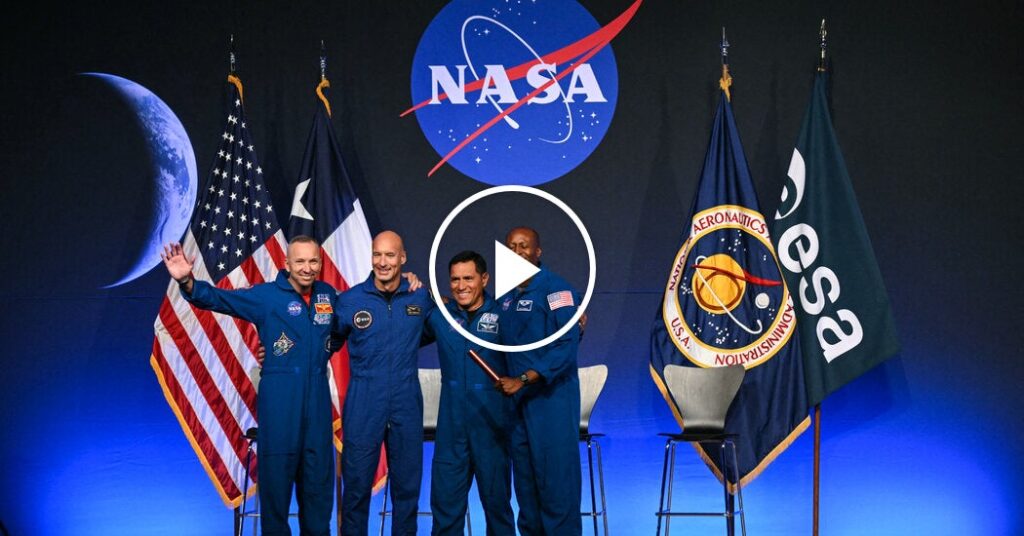
Table of Contents
A New Generation of Lunar Exploration
NASA has officially announced the crew selected for Artemis III, the high-stakes mission designed to return humans to the lunar surface for the first time since Apollo 17 in 1972. The announcement marks a pivotal shift from the orbital testing phase of Artemis II to the actual execution of a crewed landing, specifically targeting the uncharted territory of the lunar south pole.
The selection comes at a critical juncture for the agency as it attempts to transition from a series of short-term visits to a sustainable human presence on the Moon. In the official announcement, NASA leadership emphasized that this crew is not merely visiting the lunar surface but is laying the groundwork for a permanent base of operations. “I am excited to welcome you as the next crew in the Artemis journey to successfully return to the moon — this time to stay,” stated NASA officials during the reveal.
The crew members expressed a mix of professional humility and readiness for the daunting technical challenges ahead. One of the selected astronauts noted the weight of the legacy they are inheriting, stating, “I’m honored by the role that I’ve been given. I’m also very humbled by the task in front of us.” This sentiment underscores the psychological and physical toll of a mission that requires precise coordination between the Orion spacecraft and the SpaceX-developed Human Landing System (HLS).
Overcoming Technical Hurdles and Launch Complex Anomalies
The path to the Moon has not been without setbacks. NASA acknowledged a recent setback at Launch Complex 36A, referencing a “significant anomaly” that occurred on May 28. While the agency did not provide exhaustive details on the nature of the anomaly in the immediate announcement, the admission highlights the volatility of deep-space hardware integration. The agency confirmed that it has “redoubled efforts” to rectify the issue, ensuring that the infrastructure supporting the Artemis pipeline is flight-ready.
These technical glitches are a recurring theme in the Artemis program, which relies on a complex web of contractors. The mission’s success hinges on the successful docking of the Orion capsule with the Starship HLS in lunar orbit—a maneuver that has yet to be fully tested with a human crew. If the docking fails or the Starship fails to maintain stability, the crew’s return to Earth becomes a critical rescue operation rather than a planned extraction.
The Strategic Pivot to the South Pole
Unlike the Apollo missions, which largely landed in the lunar equatorial regions, Artemis III is eyeing the lunar south pole. This region is of immense scientific interest due to the presence of water ice in permanently shadowed regions (PSRs). Water is the “oil” of the space economy; if it can be harvested and split into hydrogen and oxygen, it provides both breathable air and rocket fuel for deeper journeys into the solar system, such as a crewed mission to Mars.
The transition of leadership from the Artemis II crew to the Artemis III team was framed as a passing of the torch. “The Artemis II crew, comrade, hands you the baton. You got the controls,” the agency noted, signaling that the preliminary orbital tests are nearing completion and the focus is now shifting entirely toward the landing phase.
As NASA pushes forward, the international community and commercial partners are watching closely. The integration of the Lunar Gateway—a planned small space station in orbit around the Moon—will eventually serve as the communication and logistics hub for these crews, further cementing the shift from “flags and footprints” to a functioning lunar economy.


