Apple’s AI Pivot: WWDC 2026 Reveals a Siri That Finally Understands Context
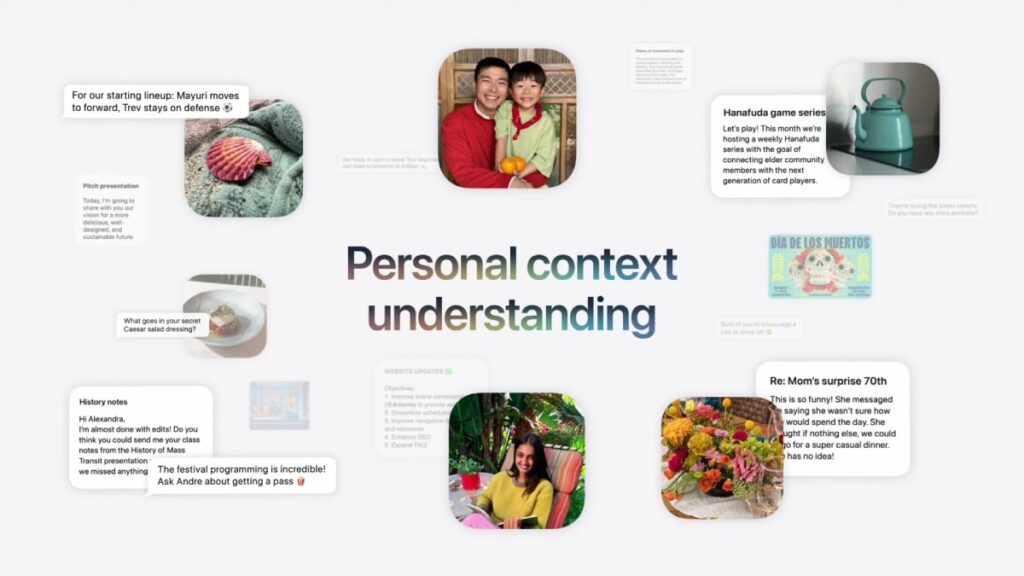
Table of Contents
The end of the ‘I found this on the web’ era
For years, Siri has been the Achilles’ heel of the Apple ecosystem—a voice assistant that often felt like a glorified timer and weather reporter. But at WWDC 2026, Apple signaled a fundamental shift in its approach to ambient computing. The centerpiece of the keynote wasn’t a new piece of hardware, but the introduction of Siri AI, a rebuilt version of the assistant that marks the full maturation of the Apple Intelligence framework.
Siri AI isn’t just a firmware update; it is a systemic overhaul of how Apple’s devices interact with user data. While previous iterations of Siri relied on rigid intent-matching, the new system is built atop the second generation of Apple Foundation Models. These models allow Siri to process multimodal inputs—simultaneously analyzing text, speech, and on-screen imagery—to execute complex tasks that previously required manual navigation across multiple apps.
Cross-app orchestration and screen awareness
The most tangible improvement is what Apple calls ‘cross-app orchestration.’ In a series of live demonstrations, Apple showed Siri AI pulling a flight number from a Mail thread, checking the real-time status via a third-party travel app, and then automatically updating a shared Calendar event and notifying a contact via Messages—all through a single voice command. This represents a shift from a command-and-control interface to an agentic one.
This is powered by a deeper integration with the on-screen state. Siri AI can now ‘see’ what is currently displayed on the user’s screen across iPhone, iPad, Mac, and Vision Pro. If a user is looking at a photo of a restaurant in a text message, they can simply ask, “Is this place open?” without specifying the restaurant’s name. The assistant identifies the entity on the screen, cross-references it with online data, and provides a direct answer.
The architecture behind the intelligence
Under the hood, the second-gen Apple Foundation Models are designed to balance the tension between high-performance reasoning and the company’s strict privacy mandates. By splitting workloads between on-device processing and Private Cloud Compute, Apple is attempting to maintain a competitive edge against the cloud-heavy models of Google and OpenAI.
The updated models are optimized for a broader range of modalities, meaning the assistant can now interpret nuanced vocal tones and complex visual layouts. This enables a more fluid interaction model where the transition between typing and speaking feels less like a switch and more like a continuous conversation.
Integration across the 2026 software stack
The rollout of Siri AI is tied directly to the release of the company’s latest software cycle. The capabilities are woven into the fabric of iOS 27, iPadOS 27, macOS 27, watchOS 27, tvOS 27, and visionOS 27. For developers, this means new APIs that allow third-party apps to expose specific ‘intents’ to Siri AI, effectively letting the assistant act as a universal UI for the App Store.
While the feature set is impressive, the real test will be the hardware requirements. Given the computational demands of the second-gen foundation models, there is lingering speculation regarding which older devices will be left behind in the transition to this more intensive AI architecture. For now, Apple is positioning Siri AI not as a feature, but as the primary lens through which users will interact with their devices.