The Hollow Middle: How AI and Inflation are Killing the Mid-Range Laptop
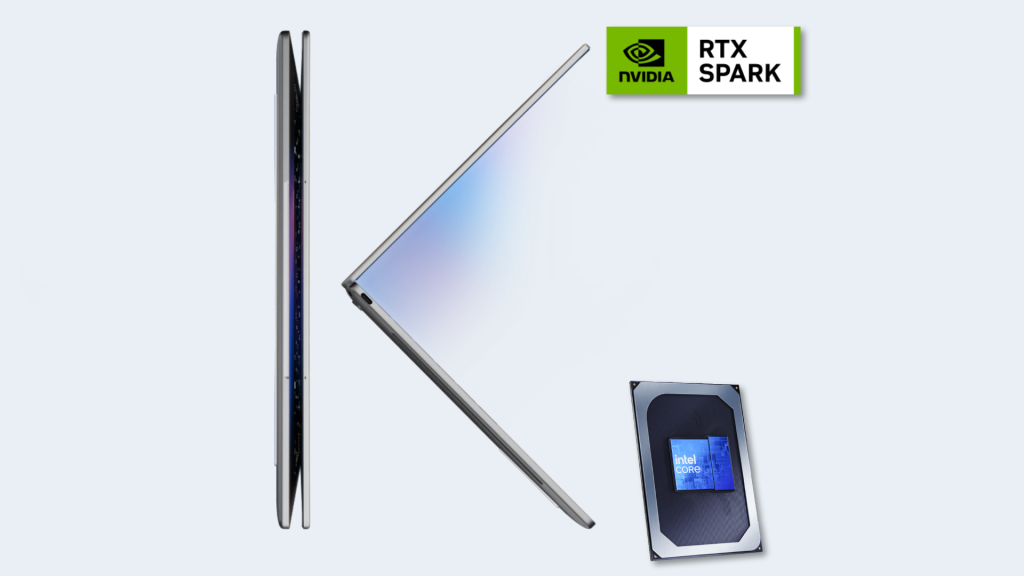
Table of Contents
The Great Hardware Divide
For decades, the laptop market operated on a predictable tiered system: budget machines for students, a robust mid-range for professionals, and high-end rigs for enthusiasts. But as we move through 2026, that middle ground is effectively evaporating. We are witnessing a ‘K-shaped’ recovery in hardware, where the market is splitting into two distinct directions—ultra-affordable, compromised entry-level devices and exorbitant, AI-powered workstations—with almost nothing left in between.
The recent flurry of announcements at Computex highlights this divergence. On one end, manufacturers are scrambling to compete with the MacBook Neo. On the other, they are pushing the boundaries of price and performance with Nvidia’s new RTX Spark silicon. The result is a ghost town in the $800 to $1,200 range, a segment that used to be the bedrock of the consumer PC market.
The 8GB RAM Trap
The battle for the bottom of the market is currently being won by Apple, though perhaps by accident. The MacBook Neo is a clever piece of engineering, repurposing older iPhone-class processors to create a highly efficient, $600 entry point. It arrives at a critical moment: as inflation squeezes consumer spending and AI-driven software begins to demand more memory than ever before.
However, for Windows OEMs, the budget sector has become a minefield. The revived Dell XPS 13 is a prime example. Once the gold standard for Windows productivity, the new base model arrives at roughly $700, powered by an Intel Core Series 3 ‘Wildcat Lake’ processor. While the chassis remains premium, the internals are a step backward. Most damning is the inclusion of 8GB of LPDDR5 RAM.
In 2026, 8GB of RAM on a Windows 11 machine is no longer a viable baseline; it is a bottleneck. While macOS handles unified memory with relative efficiency, Windows 11 struggles to maintain basic browser stability with 8GB. More importantly, Microsoft’s own Copilot+ program—the centerpiece of their AI strategy—essentially requires 16GB of RAM to function fully. By shipping 8GB machines, OEMs are selling hardware that is fundamentally incompatible with the very AI features they use in their marketing.
The $1,000 Ghost Town
If you move up from the budget tier, the gap becomes startling. A few years ago, $1,000 bought you a high-spec productivity machine. Today, that price point is a vacuum. Recent reviews of Core Ultra Series 2 and Snapdragon X2 laptops show a consistent trend: the ‘standard’ professional build now starts closer to $1,300.
For the average consumer, this shift forces a difficult choice. You either settle for a budget machine that will likely struggle with multitasking within two years, or you move into the luxury bracket. Even Google’s recent foray into Android-based hardware, the ‘Googlebook,’ leans heavily into ‘premium craftsmanship’ and high-end materials, signaling that they too are avoiding the precarious mid-range.
Nvidia and the AI Ceiling
At the top of the pyramid, the ceiling is rising. Nvidia is officially entering the laptop fray with its RTX Spark chip. Unlike Qualcomm’s Snapdragon X series, which focuses on battery life and ARM efficiency, the RTX Spark is designed as an AI powerhouse. It targets a demographic that views a $2,000 price tag as a starting point rather than a ceiling.
This shift reflects a broader industry pivot. Silicon is no longer just about clock speeds; it is about NPU (Neural Processing Unit) performance. Because AI hardware is expensive to integrate, manufacturers are baking those costs into ‘Pro’ and ‘Ultra’ tiers, further distancing the high-end from the average user. As the market bifurcates, the ‘practical’ laptop—the one that is powerful enough for everything but doesn’t require a financing plan—is becoming a relic of the past.


